
When evaluating a private label Bluetooth headphones supplier, buyers should request documents that verify product specifications, quality-control procedures, test results, and applicable compliance requirements. These records help buyers determine whether a supplier’s products match their technical requirements, target markets, and order expectations.
The documents required will vary depending on the headphone design, Bluetooth implementation, destination market, customization scope, and the responsibilities of the parties involved. Buyers should assess each document against the specific product model and configuration rather than assuming that one general document covers every product.
For a broader supplier assessment framework, see How to Evaluate a Private Label Bluetooth Headphones Supplier: Product Fit, Quality Evidence and Order Readiness.
1. Request Product Specifications and Model Identification
A product specification sheet is one of the first documents buyers should request. It establishes the technical baseline for supplier evaluation, sample approval, quotation comparison, and production confirmation.
The specification sheet should identify the product model and, where applicable, its revision or configuration. Depending on the product, it may include:
- Product dimensions, weight, materials, and available colors
- Bluetooth version and supported profiles, where applicable
- Battery type, rated capacity, charging method, and charging input
- Audio-related specifications and stated performance parameters
- Controls, microphones, connectivity functions, and supported features
- Water-resistance rating, if claimed
- Included accessories and standard package contents
- Customization options and any configuration-dependent limitations
Do not assume that a specification sheet proves every listed feature has been independently tested. It primarily records what the supplier declares about the product. Performance claims should be supported by relevant test evidence when that evidence is necessary for the purchase decision.
Buyers should also check whether the specification sheet matches the sample under review. A model name alone may not be enough if hardware, firmware, battery, packaging, or other components can vary between versions.
Before approving a sample, record the model identifier, revision, agreed specifications, and any approved deviations. These details help reduce disputes if the delivered products differ from the sample.
2. Review the Bill of Materials or Relevant Component Information
A bill of materials (BOM) identifies the components and materials used in a product. Depending on the supplier’s disclosure policy and the commercial arrangement, a buyer may receive a complete BOM, a summarized component list, or selected component information.
For Bluetooth headphones, relevant information may include:
- Bluetooth chipset or module
- Battery and charging components
- Speaker drivers or other sound-producing components
- Printed circuit board and key electronic components
- Housing materials, cables, connectors, and seals where applicable
- Firmware or hardware revision references, where relevant
A complete BOM may contain commercially sensitive information, so buyers should clarify what level of disclosure is available and whether confidentiality terms are required.
The purpose is not necessarily to obtain every internal manufacturing detail. It is to understand which components affect product performance, regulatory assessment, supply continuity, and the approved product configuration.
Ask how component substitutions are managed. If a key component becomes unavailable, buyers should establish whether the supplier will notify them, assess the impact, provide updated documentation, or submit a revised sample for approval.
A BOM or component summary is not, by itself, proof of component quality or regulatory compliance. Where a component has a relevant declaration, specification, or test record, assess that evidence separately and confirm its applicability to the finished product.
3. Check Quality-Control Procedures and Inspection Records
Quality-control documents help buyers understand how product quality is managed and what evidence is retained during manufacturing.
Request relevant procedures or summaries covering incoming material inspection, in-process inspection, and final product inspection. Depending on the supplier’s system and the order scope, these may be described as IQC, IPQC, and FQC activities.
Review the documents for the following information:
- What is inspected at each production stage
- Which product characteristics or functions are checked
- What acceptance criteria are applied
- How defects and nonconforming products are recorded
- How corrective actions and reinspection are handled
- How inspection results are associated with a model, batch, or production order
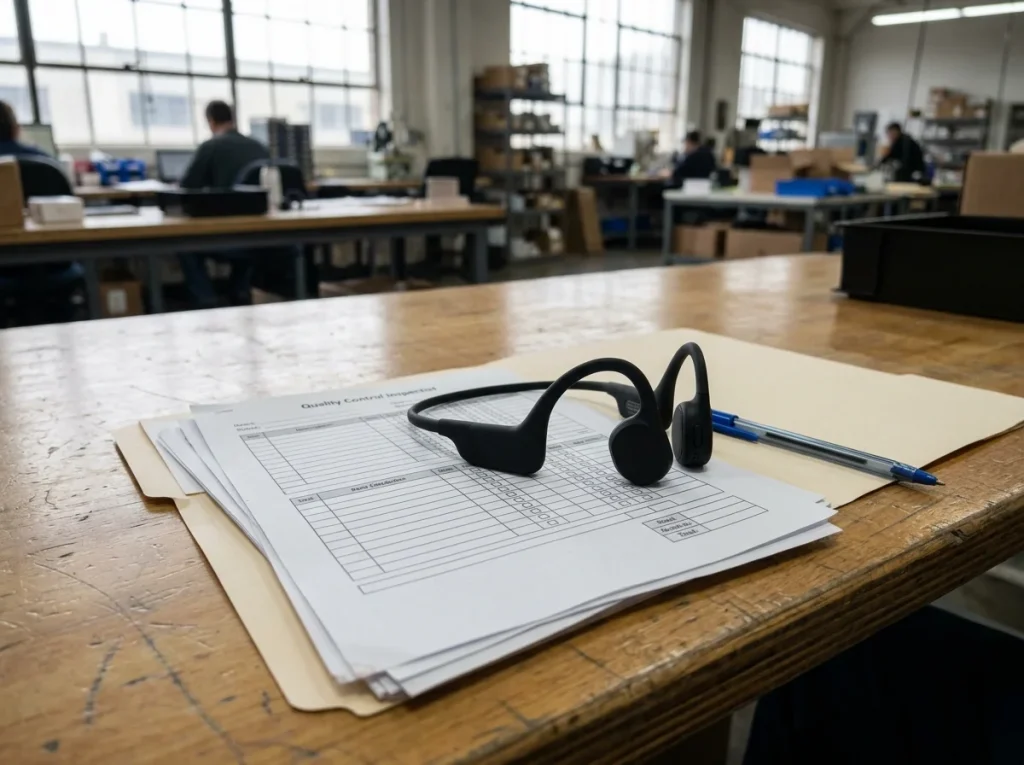
A procedure shows what should happen; a completed record shows what was documented on a particular occasion. Both are useful, but they provide different types of evidence.
When a supplier provides completed inspection records, check the model identifier, inspection date, batch or order reference where available, recorded results, and any unresolved findings. Confirm that the record relates to the product being evaluated rather than a different model or an unrelated production run.
Do not treat the existence of an inspection form as proof that every unit has passed inspection. The record should make clear what was checked, the applicable sampling or inspection method where relevant, and the results actually documented.
4. Request Product Test Reports and Confirm Their Scope
Test reports can help buyers assess whether a product has been evaluated against specified performance, safety, environmental, or other technical requirements.
The appropriate reports depend on the product design, intended use, target market, and claims made for the product. Buyers should identify the tests that matter to their project instead of requesting a generic collection of reports without a defined purpose.
For each report, check:
- The report issuer and available contact or verification details
- Report number, issue date, and revision where applicable
- Product name, model number, and tested configuration
- Test methods, standards, and versions identified in the report
- The test items performed and the results recorded
- Any exclusions, limitations, conditions, or deviations
- Whether the tested sample corresponds to the product being purchased
A report covering one model does not automatically cover every model from the same supplier. Different batteries, circuit boards, antennas, charging systems, materials, or firmware configurations may affect which evidence is applicable.
If the supplier offers multiple versions, request clarification on which configurations are covered by each report. Where the report refers to a family of models, check the report’s stated scope rather than assuming all variants are included.
For waterproof or water-resistant headphones, buyers should review evidence relevant to the claimed rating and exact product configuration. The rating, test method, sample identification, and test conditions should be consistent with the claim being made. A product photograph, marketing statement, or unrelated test report is not sufficient evidence on its own.
5. Verify Regulatory and Certification Documents
Compliance documentation should be reviewed against the product, destination market, applicable requirements, and the responsibilities of the parties placing the product on the market.
The names CE, FCC, RoHS, BQB, and ISO 9001 refer to different types of compliance or verification topics. They should not be treated as interchangeable certificates, and their relevance depends on the particular product or organization.
When a supplier provides a declaration, certificate, qualification record, or test report, verify the following:
- Issuer: Identify the organization that issued the document and whether its role is appropriate for that document.
- Scope: Check what product, activity, requirement, or management system the document covers.
- Model applicability: Confirm that the model or product family matches the item being purchased.
- Configuration: Check whether the tested or documented configuration corresponds to the proposed product, including relevant hardware and radio features.
- Validity and status: Review issue dates, expiry dates where applicable, current status, and any available verification route.
- Standards and requirements: Confirm which standards or regulatory requirements are referenced and whether they are relevant to the destination market.
- Responsible party: Establish who is responsible for the applicable testing, declaration, qualification, registration, or other compliance steps.
For products sold in the European market, CE-related documentation should be assessed against the applicable legislation and the product’s actual configuration. A CE mark or a generic document alone does not establish that every legal requirement has been met.
For products subject to applicable US radio-frequency requirements, FCC-related evidence should be reviewed for the relevant equipment and authorization requirements. Buyers should verify the applicable authorization or compliance pathway rather than assuming every product uses the same process.
RoHS-related documents should be assessed for their scope, material or product coverage, and relevance to applicable requirements. A supplier’s general statement should not automatically be treated as evidence for every component or finished-product configuration.
For Bluetooth products, buyers should review the official Bluetooth SIG product qualification guidance to understand the applicable qualification process. Confirm the relevant product identification and determine which organization is responsible for the required steps. Do not assume that the use of a Bluetooth chipset, module, or Bluetooth-related marketing claim proves that all applicable product qualification requirements have been completed.
ISO 9001 is associated with quality-management systems. If a supplier presents an ISO 9001 certificate, check the certified organization’s name, scope, issuing certification body, validity, and whether the certificate relates to the entity and activities relevant to the order. A quality-management-system certificate is not a substitute for product-specific test reports or regulatory documents.
Requirements differ by market and product configuration. Buyers should verify applicable obligations with the relevant qualified compliance professionals or authorities when the regulatory position is unclear.
6. Request Factory and Quality-Management Evidence
Factory and quality-management documents help buyers understand the supplier’s stated production arrangements and quality processes. They should be assessed alongside records, photographs, sample evaluations, and other evidence rather than treated as conclusive proof on their own.
Depending on the supplier and project, useful evidence may include:
- A company profile identifying the contracting entity
- A description of the manufacturing and assembly activities performed
- Relevant production-process or quality-control flowcharts
- Available inspection procedures and sample records
- Quality-management-system documentation, where applicable
- A valid quality-management certificate, if one is claimed
- Records identifying which activities are performed in-house and which are outsourced
Buyers should distinguish between a product supplier, a factory operator, a trading company, and a supplier that coordinates production through external partners. These roles can overlap, but the distinction matters when assigning responsibility for product development, quality, corrective action, and shipment.
Where factory ownership or manufacturing location is important to the order, request evidence that directly supports the claim. A company profile or website statement alone may not establish legal ownership of a factory or prove that every production activity occurs at the stated site.
The documents should also identify the relevant legal entity where possible. A certificate issued to one company does not automatically establish the status of a separate contracting entity or an unrelated production partner.
7. Confirm Packaging, Labeling, and Destination-Market Documentation
Packaging and labeling documents are especially important for private-label orders because the buyer’s branding, product information, and market-specific requirements may differ from the supplier’s standard product presentation.
Depending on the order, request and review:
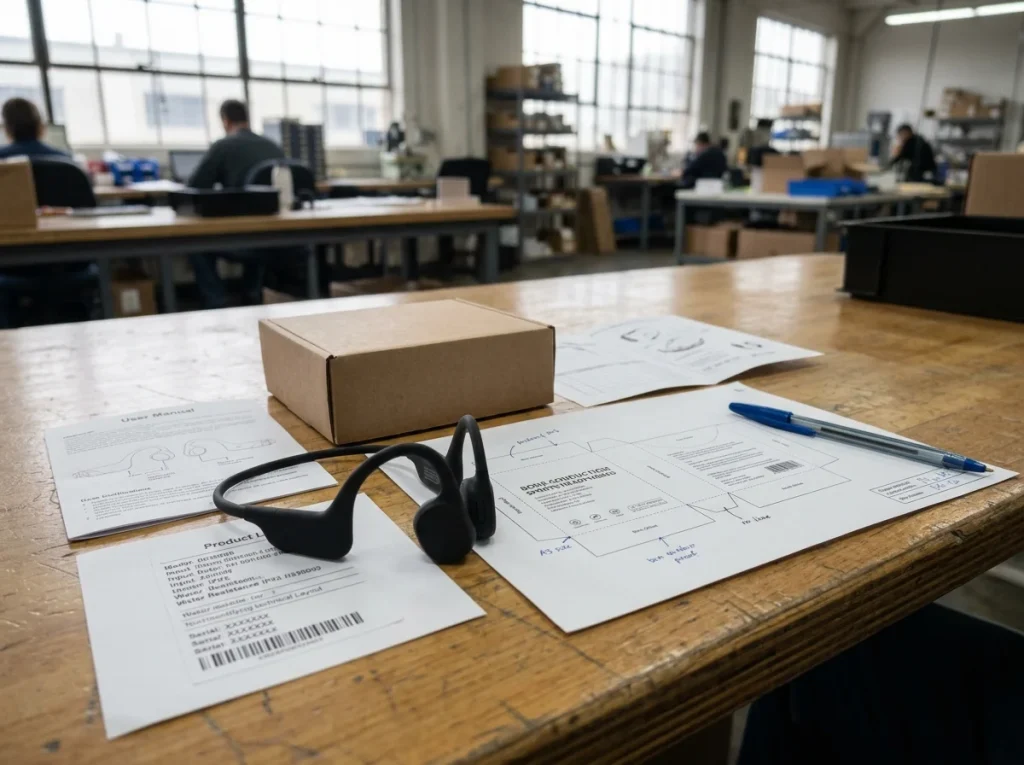
- Packaging artwork and revision records
- Product labels and required markings
- User manuals and safety instructions
- Model identifiers and package-content lists
- Relevant warnings and destination-market information
- Barcode or retailer-specific labeling specifications, where required
- Carton markings and shipping-label requirements
- Final approved files or packaging samples
Check that the model number, product description, accessories, technical claims, and instructions are consistent across the product, packaging, manual, and relevant compliance documents.
For private-label packaging, confirm who is responsible for supplying artwork, reviewing translations, checking mandatory information, and approving the final production files. If the product is intended for a specific retailer, distributor, or fulfillment program, document the applicable labeling and carton requirements before production.
Do not assume that approval of a packaging design establishes regulatory compliance. Artwork approval and regulatory review are separate checks, even when the same label contains information relevant to both.
Keep the final approved artwork, version identifier, approval date, and any applicable sample reference. This makes it easier to compare production packaging with the approved design and to identify unauthorized changes.
8. Control Document Versions and Follow Up on Missing Evidence
A collection of documents is only useful if buyers can identify which versions apply to the product and order under review.
Create a simple document register that records:
- Document name and type
- Product model and configuration
- Revision, issue date, or version number
- Issuer or source
- Date received and reviewed
- Review status
- Missing information or unresolved questions
- Person responsible for follow-up
- Final approval status, where applicable
Use clear statuses such as Received, Under Review, Clarification Required, Accepted for the Stated Purpose, and Not Applicable. Avoid marking a document as accepted merely because a file has been supplied.
When a document is missing, ask the supplier to confirm whether it exists, whether it is applicable to the proposed product, who is responsible for providing it, and when it can reasonably be supplied. If the document is not applicable, record the reason rather than leaving the issue unresolved.
If a report or certificate refers to a different model, an outdated configuration, or another legal entity, ask for clarification before relying on it. Depending on the gap, the appropriate next step may be a corrected document, additional evidence, a technical review, or independent verification.
Before mass production or shipment, close the documentation gaps that are material to product approval, compliance, quality, or the agreed order requirements. The required approval point should be documented in the purchase specification or other agreed project records.
9. Use This Supplier Document Request Checklist
The following checklist can help buyers organize their document requests before supplier approval. Not every item will apply to every headphone project. The required evidence should be determined by the product, market, customization scope, and commercial arrangement.
| Document or evidence | What it helps verify | What to check | Common gaps |
|---|---|---|---|
| Product specification sheet | Product features and technical baseline | Model, revision, key specifications, configuration | Missing version details or conflicting specifications |
| Model and configuration record | Identity of the product being evaluated | Model number, hardware version, firmware version where relevant | Similar model names with unclear differences |
| BOM or component summary | Key components and material information | Component identity, revision, change-control arrangements | Incomplete disclosure or no substitution process |
| Quality-control procedures | How inspections are intended to be performed | Inspection stages, acceptance criteria, defect handling | Procedures without clear criteria |
| Completed inspection records | What was recorded during a particular inspection | Model, date, batch reference where available, results | Records for a different model or no traceable reference |
| Product test reports | Results for specified test items | Issuer, test scope, model, configuration, date, limitations | Report scope does not match the purchased product |
| Regulatory declarations or certificates | Evidence relevant to applicable market requirements | Issuer, scope, validity, model applicability, requirements covered | Generic document or unsupported coverage assumptions |
| Bluetooth qualification information, where applicable | Status and responsibility for relevant Bluetooth qualification steps | Product identification, applicable process, responsible organization | Assuming a chipset or module proves completed qualification |
| Factory and process evidence | Stated production arrangements and quality processes | Contracting entity, production activities, relevant records | Unclear distinction between in-house and outsourced work |
| Quality-management certificate, if claimed | Status and scope of a management-system certification | Certified entity, scope, issuing body, validity | Certificate for another entity or unrelated activity |
| Packaging artwork and labels | Approved private-label presentation | Model details, claims, markings, revision, final approval | Artwork not aligned with the approved product |
| User manual and safety information | Instructions and relevant user-facing information | Language, product identity, warnings, market relevance | Incorrect model details or incomplete translations |
| Shipment and carton documentation, where required | Consistency with the agreed order and delivery requirements | Carton markings, quantities, shipping labels, order references | Conflicting model names or missing customer-specific requirements |
| Document register | Traceability and status of requested evidence | Version, source, review status, open issues, owner | Untracked revisions or unresolved gaps |
Before Approving the Supplier
Before making a supplier approval decision, confirm that:
- The proposed product model and configuration are clearly identified.
- The specification sheet matches the sample and agreed requirements.
- The supplier has provided relevant quality procedures and inspection evidence for review.
- Test reports are applicable to the model and configuration being considered.
- Regulatory and certification documents have been checked for scope, issuer, validity, and relevance.
- Packaging and labeling requirements have been documented and reviewed.
- Missing documents and unresolved questions have assigned follow-up actions.
- Material documentation requirements are included in the sample-approval, production-approval, or shipment-approval process as appropriate.
A supplier document checklist cannot replace technical due diligence, independent testing where needed, or market-specific compliance advice. It gives buyers a structured way to identify evidence gaps and make approval decisions based on documented information rather than unsupported assurances.
Conclusion
When evaluating a private label Bluetooth headphones supplier, buyers should focus on the relevance, traceability, and scope of the documents provided—not simply the number of files received.
Product specifications establish the baseline, component information clarifies the configuration, inspection records show what was documented during quality checks, and test or compliance documents provide evidence within their stated scope. Factory, packaging, and shipment records help connect that evidence to the supplier and the actual order.
The most reliable process is to identify the documents required for the specific project, verify that each document applies to the product being purchased, record unresolved gaps, and close material issues before the relevant approval milestone.