
Quick Answer
CNC prototypes are useful when buyers need to evaluate the shape, fit, mechanical interfaces, or selected functional features of a custom headphone design before committing to production tooling. New injection molds may be necessary when the design requires plastic components that cannot be produced satisfactorily with existing tooling, or when the current tool cannot support the required geometry, material, appearance, or production requirements. Before approving tooling, buyers should confirm design maturity, DFM feedback, sample acceptance criteria, tool ownership, modification responsibility, and maintenance arrangements.
Detailed Explanation
1. What a CNC Prototype Can Help Evaluate
CNC prototyping uses computer-controlled machining to produce physical parts from suitable materials. For a custom headphone project, it can help buyers evaluate selected housing dimensions, component interfaces, mounting points, fit between parts, and the physical arrangement of product features before production tooling is finalized.
A CNC prototype can be particularly useful when a design contains dimensions that need to be checked against actual components or when a buyer wants to assess whether a proposed housing arrangement is practical to assemble. It can also help identify issues that are difficult to judge from CAD images alone.
However, a CNC-machined part does not automatically represent the final injection-molded component. The materials, surface finish, manufacturing process, and dimensional behavior may differ. A machined housing therefore cannot, by itself, prove that the final molded component will meet every appearance, durability, or assembly requirement.
For buyers evaluating CNC prototyping and injection molds for custom headphones, the first question should be: What uncertainty must this prototype resolve before the project moves forward? The answer helps determine the appropriate prototype method and the acceptance criteria.
2. Understand the Difference Between Visual, Functional, and Production-Intent Samples
Not all prototypes serve the same purpose. Before requesting samples, buyers should identify what each sample is expected to demonstrate.
| Sample type | Main purpose | What it does not automatically prove |
|---|---|---|
| Visual prototype | Reviews overall shape, proportions, styling, and visible details | Final material properties, assembly performance, or production readiness |
| Functional prototype | Evaluates selected mechanical, electronic, acoustic, or usability functions | Full production consistency or compliance with every final requirement |
| Production-intent sample | Approximates the intended production design, materials, components, and assembly methods as agreed | Mass-production consistency without appropriate process validation and controls |
A visual prototype may be enough for an early design discussion. A functional prototype may be needed when buyers must assess component fit, button operation, assembly interfaces, or selected product functions.
A production-intent sample becomes more important when decisions depend on the actual materials, construction, or manufacturing process planned for the final product. The precise sample definition should be agreed with the supplier rather than inferred from the word “prototype.”
Before approving any sample, record what has been evaluated, what remains unverified, and which issues must be resolved before the next development stage.
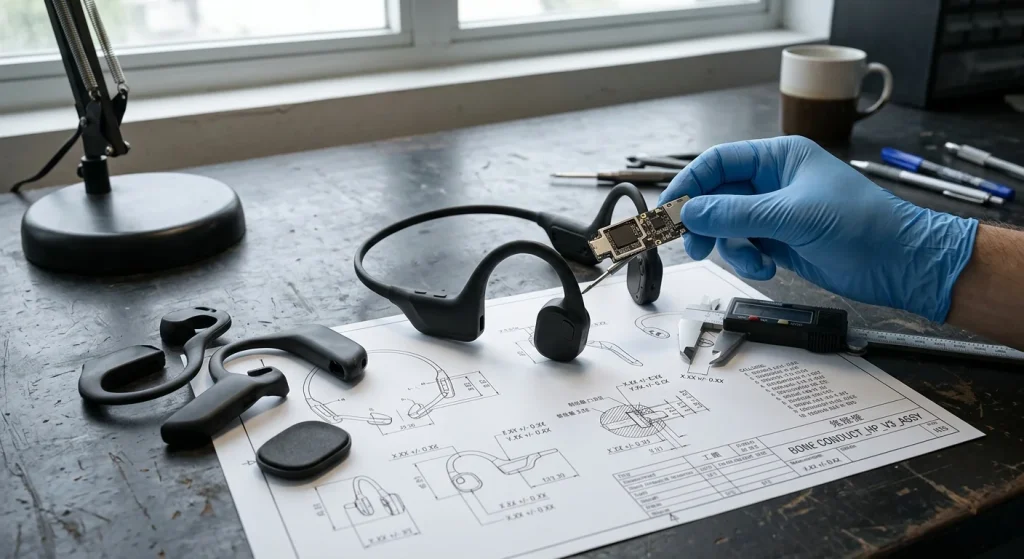
3. When Existing Product Tooling May Be Sufficient
A new injection mold is not automatically necessary for every custom headphone project. If a supplier already has a suitable product platform or existing tooling, some customization requests may be achievable without creating an entirely new mold.
For example, a project may primarily involve changes to branding, selected colors, packaging, accessories, or other features that do not require a new molded component. Whether an existing tool can be used depends on the actual design, the available components, the supplier’s authorization to use the tooling, and the requested product configuration.
Buyers should ask the supplier to distinguish between three possibilities:
- Existing tooling: The current tool can produce the required component without modification.
- Tool modification: The existing tool may be adaptable, subject to engineering review and agreement on the changes.
- New tooling: A new tool may be necessary because the required component or geometry cannot be produced appropriately with the existing tool.
Do not assume that an existing product platform supports every requested customization. Ask for a component-level assessment and identify which parts can remain unchanged, which need modification, and which require new tooling.
This review is also a useful opportunity to clarify whether the proposed design is genuinely custom or is based on an existing product architecture with agreed modifications.
A custom headphones manufacturer should explain which existing components can meet the requested specifications and which changes may require additional tooling.
4. Situations That May Require New Injection Molds
New injection molds may be necessary when a custom design introduces plastic components that cannot be produced using existing tooling without compromising the agreed requirements.
Potential situations include:
- A substantially different housing shape or component geometry.
- New enclosure interfaces or structural features that require a different molded part.
- Changes to the component arrangement that cannot be accommodated by the existing tool.
- Appearance, fit, or assembly requirements that the current tooling cannot satisfy.
- A design revision that makes the existing molded component unsuitable for the approved product configuration.
These are decision factors, not automatic rules. Some changes may be handled through a revised design, a tool modification, or an alternative manufacturing approach. The appropriate solution depends on the component, design constraints, tooling condition, material requirements, and intended production plan.
For headphone projects, buyers should also consider whether the proposed changes affect interfaces with other components, such as buttons, charging contacts, internal supports, seals, or acoustic structures. A change to one housing component may affect how the wider assembly fits together.
Before approving a new mold, request a clear explanation of why existing tooling is unsuitable and what the proposed tooling is expected to produce. This helps prevent a tooling decision from being made solely on the basis of an initial design image or an informal recommendation.
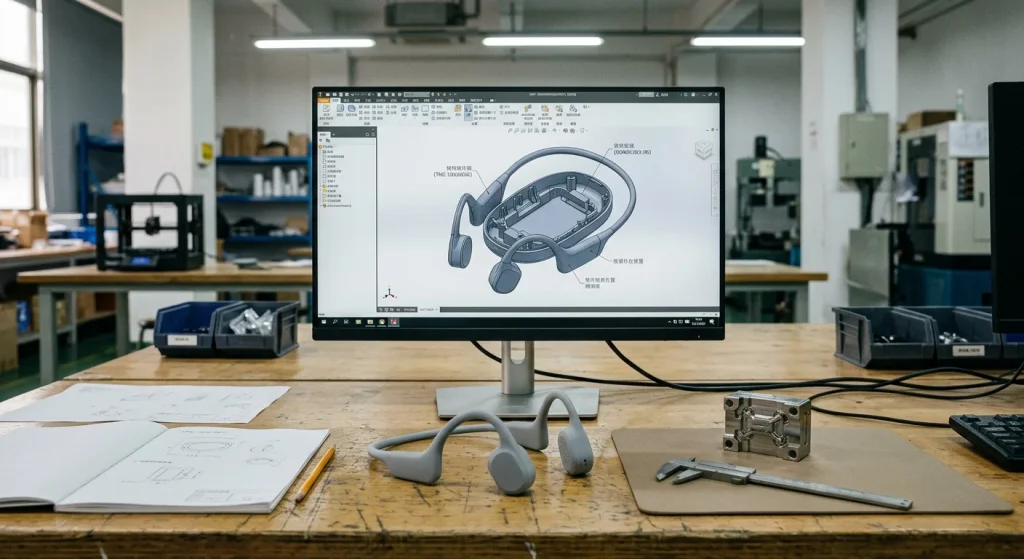
5. How Design Maturity and DFM Review Affect Tooling Decisions
Design for manufacturability (DFM) review helps determine whether a proposed design can be manufactured using the intended process and whether changes should be made before tooling begins.
For injection-molded components, the review may consider geometry, wall thickness, draft, parting lines, potential undercuts, material selection, and the relationship between the component design and the intended mold. The level of review should match the part’s complexity and the project’s requirements.
CNC prototypes can reveal some issues with fit, dimensions, and interfaces, but they do not replace a moldability review. A component that can be machined successfully may still require design changes before it can be injection molded efficiently.
Buyers should therefore ask the engineering team to identify:
- Which design details have been reviewed for manufacturability.
- Which issues remain unresolved.
- Which prototype results are needed before design approval.
- Whether the current CAD data is ready for tooling review.
- Which changes would trigger another design review or affect the tooling plan.
For additional background on choosing between machining and molding, buyers can consult Protolabs’ guidance on machining versus injection molding. The final decision for a headphone project should still be based on its specific design, materials, required quantities, and validation needs.
The practical rule is simple: do not approve production tooling while important design decisions remain unresolved unless the remaining risks, costs, and responsibilities have been explicitly agreed.
6. What Buyers Should Approve Before Tooling Begins
Before authorizing new injection molds, buyers should review the design package and confirm that the scope of work is sufficiently clear.
The approval package should identify the relevant CAD files or drawings, component revisions, material requirements, visible appearance expectations, critical interfaces, and any agreed sample results. It should also record which issues remain open and who is responsible for resolving them.
Where relevant, buyers should confirm the following:
- The proposed molded components and their intended functions.
- The design revision approved for tooling.
- DFM findings and the disposition of identified issues.
- The agreed material and appearance requirements.
- The dimensions and interfaces that require verification.
- The planned method for reviewing initial molded samples.
- The approval process for design changes after tooling starts.
A drawing or CAD model should have a clear revision identifier so both parties can identify which design is being used. If changes are requested after approval, the parties should assess their impact on the tool, schedule, sample requirements, and commercial terms before proceeding.
Tooling approval should mean that the buyer has authorized a defined design and scope of work. It should not be confused with final approval of the molded parts or authorization for mass production.
7. Clarify Tool Ownership, Modification Responsibility, and Maintenance
Tool ownership and control should be addressed in the written agreement rather than assumed from who pays for the mold.
Before placing a tooling order, buyers should clarify:
- Ownership: Who legally owns the mold and what records establish that ownership?
- Identification: How will the tool be identified and linked to the relevant project?
- Storage and access: Where will the tool be stored, and what access or transfer rights apply?
- Modification responsibility: Who may authorize design changes or tool modifications?
- Maintenance: Which party is responsible for routine maintenance, repairs, and replacement of worn components?
- Transfer or termination: What happens to the tool if the project ends, the supplier relationship changes, or the tool needs to be transferred?
- Additional costs: How are repair, modification, storage, and transfer costs handled under the agreement?
These are contractual questions, not terms that can be inferred from a supplier’s general description of its tooling capabilities. The applicable rights and responsibilities depend on the agreement, jurisdiction, and project circumstances.
If the supplier proposes using existing tooling, buyers should also confirm that the supplier has the necessary rights to use it for the intended project and customer configuration.
Clear written terms help protect both parties from later disputes about access, changes, maintenance, or the use of project-specific tooling.
8. Understand the Difference Between Prototype Approval and Mass-Production Approval
Approving a prototype means that the sample has met the specific criteria agreed for that evaluation stage. It does not automatically establish that the final production process is ready or that every production unit will match the approved sample.
A CNC prototype may be approved for shape, dimensions, or interface checks while material, surface finish, molded-part behavior, or assembly details remain unverified. Similarly, an initial molded sample may reveal issues that require tool adjustments or design changes.
Before mass production, buyers should confirm that the relevant production-intent samples have been evaluated against the agreed requirements. Depending on the project, these may include appearance, fit, assembly, functionality, acoustic performance, water resistance, or other specified product tests.
The buyer and supplier should document which criteria have passed, which remain open, whether any deviations have been accepted, and what additional validation is required.
If the design or tooling changes after sample approval, the impact on previous approvals should be reviewed. The need for new samples or additional tests depends on the nature of the change and the requirements agreed for the project.
Comparison Table: CNC Prototype, Existing Tooling, or New Injection Mold?
| Decision option | Most appropriate when | Main checks before proceeding |
|---|---|---|
| CNC prototype | Physical dimensions, fit, interfaces, or selected functions need evaluation | Prototype purpose, material, critical dimensions, and acceptance criteria |
| Existing tooling | Current components can meet the required design and product specifications | Tool suitability, component compatibility, tooling rights, and condition |
| Modify existing tooling | A defined change may be achievable without creating a completely new tool | Feasibility review, modification scope, cost responsibility, and revalidation |
| New injection mold | The required molded component cannot be produced appropriately with existing tooling | Design maturity, DFM review, tooling scope, ownership, maintenance, and sample approval |
| Production-intent sample | Buyers need to assess components and assembly against the intended production configuration | Material and component definition, sample criteria, open issues, and required validation |
Industry Insight
The decision between CNC prototyping and new injection molds is not simply a choice between a faster sample and a more expensive production process. It is a decision about which uncertainties must be resolved before committing to a particular manufacturing route.
A CNC prototype can help evaluate selected physical features without requiring the final injection mold. However, it may not reproduce the behavior or appearance of the eventual molded component. Existing tooling may reduce the need for new tooling, but only if it is suitable for the approved design and can be used under the agreed commercial and contractual terms.
For OEM/ODM buyers, the most useful approach is to define the purpose of each sample, review design readiness, and agree on the evidence required before approving tooling. This creates a clearer basis for decisions and reduces the risk of committing to a tool before the design is sufficiently mature.
Buyer Tips
- Define exactly what the CNC prototype must verify before requesting it.
- Ask the supplier to separate existing tooling, tool modification, and new tooling options.
- Request DFM feedback before authorizing a new injection mold.
- Document the approved CAD revision, sample criteria, and unresolved issues.
- Confirm tool ownership, maintenance, modification rights, and transfer arrangements in writing.
Common Mistakes
- Assuming a CNC prototype proves production readiness. Machined samples may differ from injection-molded parts in material, surface finish, and manufacturing behavior.
- Ordering a new mold before checking existing tooling. Some customization requirements may be met through an existing product platform or a feasible tool modification.
- Treating tooling payment as a complete ownership agreement. Ownership, access, maintenance, modifications, and transfer conditions should be explicitly documented.
Key Takeaway
CNC prototypes are useful when buyers need to evaluate physical design details before committing to production tooling. New injection molds may be required when existing tooling cannot meet the approved design and manufacturing requirements. The decision should follow a review of prototype objectives, design maturity, DFM findings, tooling alternatives, and sample acceptance criteria. Before authorizing a mold, buyers should also document ownership, maintenance, modification responsibility, and transfer terms. Prototype approval and mass-production approval should remain separate decisions.
Related Questions
- What Specifications Should You Prepare Before Requesting a Custom Headphones Quote?
- How Should Buyers Verify IPX8 Waterproof Claims for Bone Conduction Headphones?
- What Can Be Customized in Private-Label Headphones: Logos, Colors and Packaging?
- Which Audio Features Can Be Customized in Sports Headphones?
- How Do MOQ, FOB Pricing and Amazon FBA Requirements Affect a Custom Headphones Order?
CTA
Planning a custom headphones OEM/ODM project? Before committing to CNC samples or new injection molds, define the questions the prototype must answer, confirm which existing components can be reused, and request a design-for-manufacturability review where appropriate. Make sure the approved design revision, tooling scope, ownership terms, and sample acceptance criteria are documented. A clear decision process helps buyers evaluate tooling requirements before authorizing the next stage of the project.