
Quick Answer
Original Equipment Manufacturing (OEM) and Original Design Manufacturing (ODM) differ primarily in design ownership, tooling investment, and time-to-market. When partnering with a China bone conduction headphone factory, OEM clients provide custom engineering blueprints for exclusive production. Conversely, ODM clients select pre-developed platform designs, customizing surface branding, colorways, and packaging. Evaluating these business models helps procurement managers align product strategies with capital budgets and launch timelines.
Detailed Explanation
Choosing between OEM and ODM manufacturing models dictates your supply chain expenditure, intellectual property (IP) control, and development cycle. In the open-ear audio sector, bone conduction products require specialized acoustic transducer mounting and precision liquid sealing. Understanding how a manufacturer handles structural tooling, circuit board design, and quality verification clarifies which path fits your brand’s commercial objectives.
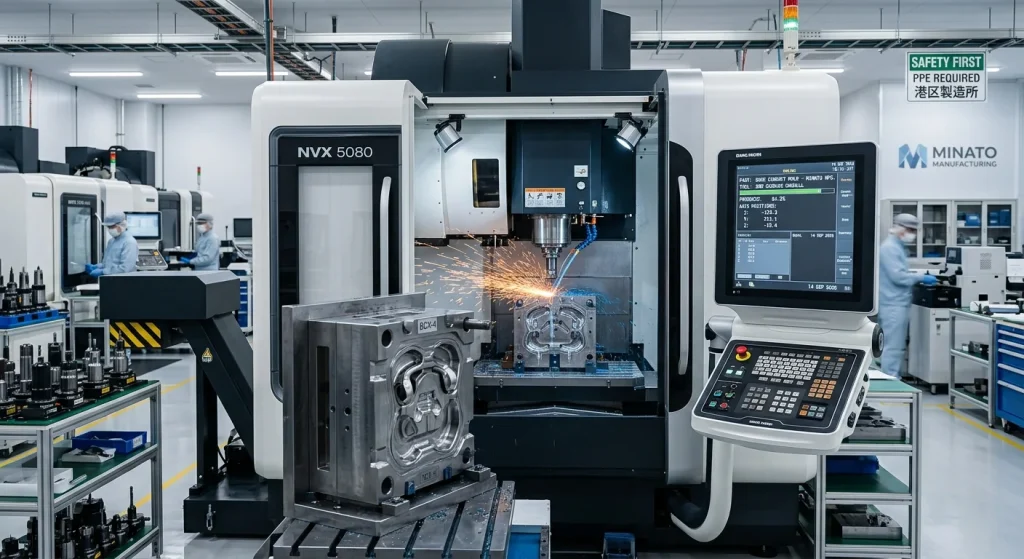
The OEM route suits brands seeking proprietary hardware differentiation. Under an OEM agreement, the buyer retains full IP ownership of custom acoustic housing molds, internal component layouts, and ergonomics. The factory executes engineering specifications, managing bluetooth 5.4 acoustic module assembly according to client schematics. Because new plastic injection molds and acoustic calibration fixtures must be created from scratch, OEM projects demand higher upfront Non-Recurring Engineering (NRE) costs and longer pre-production lead times.
Conversely, the ODM model allows brands to leverage existing factory platforms. The supplier manages research, structural housing development, and acoustic tuning in advance. Buyers select verified private-label designs, applying custom colors, logo silk-screening, and tailored retail packaging. Because structural tooling and internal electronic architecture are already established, ODM projects bypass initial tooling expenses, allowing brands to launch products rapidly into international retail channels.
During facility evaluation, auditing a prospective china bone conduction headphones factory audit helps procurement teams verify both OEM custom engineering capabilities and ODM platform readiness. Working alongside a certified china bone conduction headphones factory guarantees consistent quality across both manufacturing models.
Whether developing proprietary designs or choosing established platforms, sourcing from an experienced custom bone conduction headphones supplier protects your brand against performance flaws. Strict bone conduction headphones quality control applied by an open ear audio equipment manufacturer ensures consistent transducer frequency response across high-volume shipments. For sports-focused lines, incorporating IPX8 waterproof bone conduction headphones requires specialized ultrasonic welding regardless of whether you select OEM or ODM development.
Furthermore, brands scaling bone conduction headphones private label product lines benefit from flexible production agreements. Partnering with a reliable open ear headphones bulk supplier ensures stable component sourcing, component traceability, and long-term supply chain efficiency.
Comparison Table
| Feature / Criteria | OEM (Original Equipment Manufacturing) | ODM (Original Design Manufacturing) |
| Design Ownership | Full client IP ownership of exterior tooling & layout | Factory retains core structural and circuit IP rights |
| Tooling & NRE Cost | High initial investment for custom molds & fixtures | Minimal to zero tooling cost (pre-existing molds) |
| Development Lead Time | 4 to 8 months (industrial design to mass production) | 4 to 8 weeks (branding customization & packaging) |
| Product Differentiation | Exclusive custom shape, ergonomics, and features | Standard shared platform with custom branding/colors |
| Minimum Order Quantity | Higher MOQs due to custom component runs | Lower initial MOQs for private-label customization |
| Risk Profile | Higher financial commitment, lower competitive overlap | Lower financial risk, potential market design overlap |
Industry Insight
The open-ear audio supply chain is seeing a shift toward hybrid “ODM Plus” manufacturing arrangements. Historically, B2B buyers chose between full custom OEM tooling or off-the-shelf ODM private labeling. Today, advanced manufacturers offer modular ODM platforms. Brands can select a pre-tested waterproof acoustic housing and customize internal hardware elements, such as upgrading to dual-microphone ENC noise cancellation or expanding internal storage for swimming MP3 playback. This hybrid model cuts development costs by 60% compared to pure OEM projects while offering distinct functional differentiation over standard ODM products.
Buyer Tips
- Define your product launch timeline early; choose ODM if market entry is required within 60 days.
- Confirm IP rights in writing when commissioning custom OEM molds to prevent unauthorized factory reuse.
- Request past acoustic frequency sweep reports for ODM platforms to verify sound performance before committing to mass production.
- Audit the supplier’s in-house tooling shop to confirm they can maintain and repair custom OEM injection molds.
- Ensure both OEM and ODM products undergo 100% IPX8 pressure tank testing for swimming-rated models.
Common Mistakes
- Choosing full OEM development without sufficient budget for custom acoustic tooling and multi-stage compliance testing.
- Assuming ODM platforms cannot be customized, missing opportunities to tailor silicone textures, colors, and chipset features.
- Failing to secure exclusive geographic distribution rights for high-volume ODM platform selections.
Key Takeaway
Selecting between OEM and ODM services at a China bone conduction headphone factory depends on your capital resources, product strategy, and timeline requirements. OEM delivers exclusive designs and full IP protection, while ODM offers rapid market entry with minimal initial capital expenditure. Evaluating these manufacturing models ensures your brand builds a scalable, resilient audio supply chain.
Related Questions
- What is the typical MOQ difference between OEM and ODM bone conduction projects?
- How are intellectual property rights protected during custom OEM headphone manufacturing?
- Can an ODM bone conduction platform be modified for IPX8 swimming use?
- What are the main NRE costs involved in developing custom bone conduction tooling?
- How long does the prototype testing phase take for OEM open-ear headsets?
Recommended Images
- Featured image: Professional side-by-side comparison visualization of custom raw headphone molds (OEM) next to finished packaged private-label headsets (ODM).
- Factory production image: Industrial technician operating high-precision CNC mold-making machinery inside an OEM tooling workshop.
- Testing process image: Acoustic technician testing an ODM bone conduction headphone model on an artificial head simulator inside an anechoic chamber.
- Comparison chart or workflow diagram: Infographic diagram illustrating the phase-by-phase timeline comparison between OEM and ODM development paths.
Image ALT Text Suggestions
- China bone conduction headphone factory OEM custom mold production line
- Bone conduction headphones waterproof testing on ODM private label platform
- IPX8 swimming headphones factory OEM vs ODM manufacturing workflow
Suggested Internal Links
- /bone-conduction-headphones/
- /oem-bone-conduction-headphones/
- /odm-services/
- /swimming-headphones/
- /blog/
- /contact/
How do OEM and ODM bone conduction headphones manufacturing services differ?
OEM services involve building custom hardware from client-owned designs and molds, requiring higher investment and longer lead times. ODM services utilize pre-developed factory platforms with customized branding, allowing faster market entry at lower initial cost.
Who owns the intellectual property in OEM vs ODM production?
In OEM production, the client owns the intellectual property and custom tooling. In ODM production, the factory retains ownership of the underlying structural and electronic design.
Which manufacturing path is faster for launching bone conduction headphones?
ODM is significantly faster, allowing market launch within 4 to 8 weeks because structural tooling and acoustic engineering are already complete.