
Quick Answer
A professional China bone conduction headphones manufacturer relies on four essential equipment categories: automated Surface Mount Technology (SMT) lines, high-precision acoustic testing systems, ultrasonic enclosure sealing machinery, and environmental reliability testing instruments. These specialized tools enable precise transducer calibration, structural waterproofing, and automated optical verification. Evaluating a supplier’s machinery setup helps international procurement managers verify technical capabilities, defect prevention mechanisms, and mass-production yield consistency.
Detailed Explanation
Establishing a modern open-ear audio manufacturing facility demands heavy capital investment in specialized electronics, acoustic, and environmental testing machinery. Unlike standard earbud plants that focus primarily on mechanical plastic shell assembly and dynamic driver wiring, bone conduction manufacturing requires precise mechanical vibration force control and hermetic liquid sealing.
At the core of electronic assembly is high-speed SMT machinery. Automated solder paste printers, high-precision chip placement machines, and multi-zone reflow soldering ovens assemble rigid-flex circuit boards with tight mechanical tolerances. During this initial phase, automated optical inspection (AOI) units verify bluetooth 5.4 acoustic module assembly integrity, checking for solder bridges or component misalignment to ensure stable wireless connectivity and efficient power management.
Acoustic calibration infrastructure represents another critical asset. Professional facilities feature soundproof anechoic chambers equipped with artificial head couplers, mechanical vibration meters, and digital spectrum analyzers. Because bone conduction transducers generate mechanical resonance transferred directly to temporal bones, testing instruments must evaluate both mechanical vibration amplitude and airborne sound leakage. High-end plants deploy Laser Doppler Vibrometers (LDV) to measure transducer surface velocity non-destructively without physical contact interference.
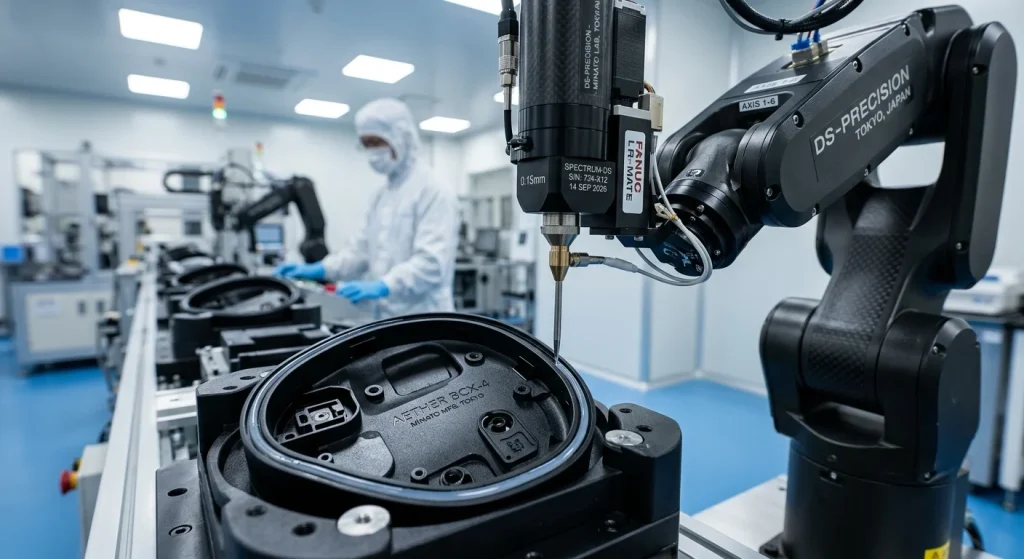
Enclosure sealing equipment is equally essential for outdoor and swimming sports models. To produce durable IPX8 waterproof bone conduction headphones, factories utilize high-frequency ultrasonic plastic welding machines and automated silicone glue dispensers. Hydrostatic pressure testing chambers and vacuum leak detectors subject every sealed unit to multi-bar water pressure, confirming structural sealing before final audio tuning.
Evaluating these production assets during a comprehensive china bone conduction headphones factory audit allows B2B buyers to gauge supplier operational capabilities. Partnering with an audited china bone conduction headphones factory guarantees that advanced machinery supports continuous output quality.
Working with an experienced custom bone conduction headphones supplier for bone conduction headphones private label projects ensures that specialized tooling maintains tight tolerances across large volumes. Strict bone conduction headphones quality control protocols enforced by a qualified open ear audio equipment manufacturer reduce field return rates, protecting brand reputation across global markets. Sourcing from a vetted open ear headphones bulk supplier ensures consistent batch quality across long-term production schedules.
Comparison Table
| Equipment Category | Essential Machinery & Instruments | Primary Manufacturing Function | Key Quality Impact |
| Electronics Assembly | SMT pick-and-place, reflow oven, 3D SPI, AOI inspection | High-precision circuit board micro-component mounting | Eliminates soldering defects, stabilizes Bluetooth RF signals |
| Acoustic Testing | Anechoic chamber, artificial head simulator, vibration meter | Vibration output force and frequency spectrum mapping | Ensures left-right channel balance and reduces sound leakage |
| Housing & Sealing | Ultrasonic welding press, automated silicone dispenser | Hermetic plastic housing assembly and silicone bonding | Achieves IPX8 waterproof rating for aquatic sport use |
| Environmental Testing | Hydrostatic pressure tank, salt spray chamber, drop tester | Simulates long-term environmental and physical stress | Prevents fluid ingress and mechanical structural failure |
| Firmware & Aging | Automated programming rigs, multi-channel aging racks | Simultaneous firmware flashing and battery stress testing | Guarantees battery cell stability and firmware initialization |
Industry Insight
The open-ear audio manufacturing sector is undergoing rapid transformation through intelligent factory automation and inline Internet of Things (IoT) monitoring. Leading facilities are replacing manual offline acoustic sampling with fully automated inline testing stations connected to Manufacturing Execution Systems (MES). Real-time data collection allows automated sound analyzers to instantly adjust transducer driving voltages during assembly, neutralizing minor physical component variations. This automated closed-loop feedback system maintains factory yield rates above 98.5% while ensuring consistent frequency response curves across high-volume production runs.
Buyer Tips
- Request a complete machinery asset list from the supplier, focusing on SMT line capacity and inline AOI inspection units.
- Confirm that acoustic testing is conducted using artificial head couplers inside an anechoic chamber rather than open factory spaces.
- Verify that the factory operates 100% hydrostatic pressure tank testing for all IPX8 waterproof models rather than batch sampling.
- Inspect environmental testing lab equipment, including thermal shock chambers, drop testers, and button-life testing jigs.
- Ensure all factory machinery complies with relevant international electrical safety and calibration standards.
Common Mistakes
- Evaluating a supplier based solely on factory floor size while ignoring the age, calibration, and maintenance status of testing instruments.
- Assuming standard headphone testing gear (such as artificial ears designed for air conduction) can accurately measure bone conduction vibration.
- Overlooking environmental reliability testing equipment, leading to high failure rates under real-world sweating or outdoor conditions.
Key Takeaway
Equipping a professional open-ear audio manufacturing plant requires sophisticated electronics mounting, acoustic measurement, and environmental sealing machinery. From SMT circuit assembly to anechoic vibration analysis, advanced equipment underpins consistent product performance. Partnering with an audited China bone conduction headphones manufacturer ensures your private-label hardware meets strict international durability, waterproofing, and acoustic standards.
Related Questions
- What is the difference between SMT assembly and manual insertion in headphone manufacturing?
- Why is an anechoic chamber necessary for measuring bone conduction sound leakage?
- How do hydrostatic pressure tanks test IPX8 waterproofing integrity?
- What environmental reliability equipment is required for sports audio testing?
- How does automated optical inspection (AOI) improve circuit board assembly yields?
Recommended Images
- Featured image: A clean, professional wide shot of an automated SMT line and cleanroom assembly area inside a bone conduction headphone factory.
- Factory production image: High-precision automated silicone dispensing robot applying waterproof seals onto headphone plastic housings.
- Testing process image: QC engineer evaluating bone conduction vibration frequency curves on a digital spectrum analyzer inside an anechoic chamber.
- Comparison chart or workflow diagram: Modern vector flowchart showing the complete machinery pipeline from SMT mounting to IPX8 pressure testing.
Image ALT Text Suggestions
- bone conduction headphone OEM factory China production facility and equipment
- Bone conduction headphones waterproof testing in hydrostatic pressure tank
- IPX8 swimming headphones factory cleanroom assembly line
Suggested Internal Links
- /bone-conduction-headphones/
- /oem-bone-conduction-headphones/
- /odm-services/
- /swimming-headphones/
- /blog/
- /contact/
What equipment is required in a professional bone conduction headphones production factory?
A professional factory requires automated SMT lines, anechoic acoustic chambers with artificial head simulators, ultrasonic sealing machinery, and hydrostatic pressure testing tanks.
Why is specialized acoustic testing equipment necessary for bone conduction headphones?
Bone conduction transmits mechanical vibrations rather than air pressure waves, requiring force sensors and vibration meters to accurately evaluate acoustic output and sound leakage.
How is IPX8 waterproofing verified on the factory equipment level?
Factories utilize high-pressure hydrostatic tanks and vacuum leak detectors to submerge sealed units under multi-bar pressure, verifying structural sealing before shipment.