
Quick Answer
Yes, international audio brands can fully customize bone conduction headphones across physical enclosures, acoustic tuning, hardware chipsets, and software firmware. Partnering with an experienced direct bone conduction headphone manufacturer allows buyers to execute custom tooling, integrate proprietary anti-leakage acoustic chambers, and apply custom silicone colorways. Selecting deep hardware customization helps brands establish distinct market positioning, prevent price competition on standard private-label platforms, and secure long-term intellectual property rights across global retail channels.
Detailed Explanation
Customizing open-ear bone conduction headsets involves multi-layered engineering across mechanical, electronic, and acoustic domains. Unlike traditional air-conduction earbuds that rely primarily on aesthetic housing changes, bone conduction devices require specialized physical vibration transfer mechanics and hermetic liquid sealing. Understanding the scope of available customization ensures procurement managers balance capital expenditure with product differentiation.
At the hardware level, structural customization begins with custom injection molds for titanium alloy neckbands and silicone casing enclosures. Engineers adjust housing ergonomics to optimize clamping force against the temporal bone, balancing user comfort with vibration efficiency. During the primary assembly phase, factories integrate a bluetooth 5.4 acoustic module assembly to support low-latency wireless transmission, dual-device multipoint pairing, and enhanced power efficiency for extended battery longevity.
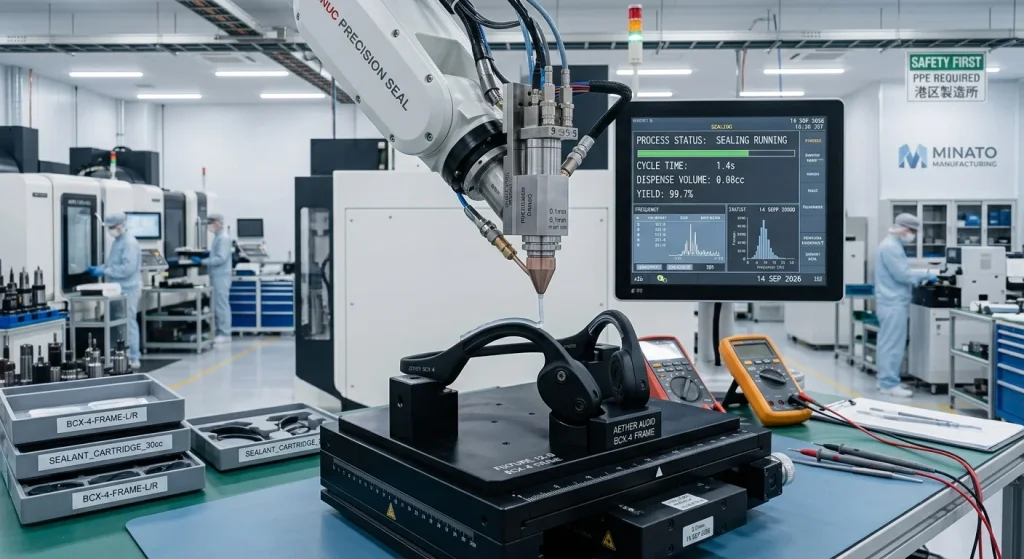
Acoustic and feature modifications extend into specialized functional hardware and software integrations. Brands targeting aquatic sports can specify high-grade sealing techniques to produce IPX8 waterproof bone conduction headphones, incorporating integrated flash storage (8GB to 32GB) for local MP3 playback without requiring smartphone connectivity while swimming. Furthermore, software-level modifications allow brands to upload localized voice prompts, customize EQ sound profiles, and program distinct button gestures tailored to specific user activities.
Reviewing engineering capabilities during a comprehensive china bone conduction headphones factory audit allows buyers to evaluate mold shop precision and circuit design services. Partnering with a vetted china bone conduction headphones factory ensures that technical customization specifications transition smoothly into high-yield mass production runs.
Working alongside an established custom bone conduction headphones supplier protects your brand against performance flaws and warranty liabilities. Strict bone conduction headphones quality control protocols executed by a qualified open ear audio equipment manufacturer verify that custom housing modifications do not compromise structural sealing or acoustic balance.
For companies expanding a bone conduction headphones private label catalog, custom tooling provides clear differentiation over generic off-the-shelf alternatives. Sourcing through an authorized open ear headphones bulk supplier ensures stable component access, scalable supply chain operations, and consistent batch quality over multi-year production schedules.
Comparison Table
| Customization Tier | Technical Scope & Features | Upfront Tooling / NRE | Typical Lead Time | Target Procurement Strategy |
| Cosmetic Customization | Logo silk-screening, custom silicone Pantone colors, retail packaging | Low ($500 – $2,000) | 3 to 4 weeks | Rapid market entry, promotional private-label projects |
| Modular Customization | Upgraded Bluetooth 5.4 chipsets, local MP3 storage, battery capacity boosts | Medium ($2,000 – $8,000) | 6 to 8 weeks | Enhancing performance on proven ODM platform frames |
| Full Structural OEM | Proprietary housing molds, custom acoustic chambers, titanium band geometry | High ($15,000 – $40,000+) | 16 to 24 weeks | Creating exclusive patented flagship lines with full IP protection |
Industry Insight
The B2B open-ear audio landscape is moving rapidly toward functional modularity and hybrid sensor integration. B2B buyers are moving beyond simple color adjustments, requesting deep hardware integration such as embedded heart-rate monitors, multi-axis motion tracking, and AI-driven Environmental Noise Cancellation (ENC) for crystal-clear microphone performance. Direct manufacturers are adopting flexible platform architectures that allow modular component insertion without re-tooling the entire structural casing. This modular engineering approach reduces development costs for custom hardware, allowing niche audio brands to introduce specialized sports features in under 90 days.
Buyer Tips
- Request early DFM (Design for Manufacturability) evaluations from the engineering team before finalizing custom structural drawings.
- Secure written IP protection agreements specifying that custom injection molds remain the exclusive property of your brand.
- Validate acoustic vibration curves on custom prototypes before approving final mass-production tooling.
- Confirm that post-customization models undergo full IPX8 pressure tank testing for all aquatic and outdoor sports variations.
- Work with a direct bone conduction headphone manufacturer to eliminate trading company markups on custom engineering fees.
Common Mistakes
- Attempting custom structural modifications without accounting for the exact physical clamping force needed for transducer vibration transfer.
- Overlooking international wireless certifications (CE, FCC, Telec) when modifying internal Bluetooth antenna layouts or chipsets.
- Skipping environmental reliability testing on newly customized housing materials, leading to silicone skin-irritation or fluid ingress issues.
Key Takeaway
Customizing bone conduction headsets allows brands to build defensible market advantages through proprietary aesthetics, superior acoustic tuning, and targeted sports functionality. From basic color updates to full custom OEM mold creation, working with a qualified direct bone conduction headphone manufacturer ensures your exclusive product designs meet strict international reliability and performance standards.
Related Questions
- What is the typical NRE cost for creating custom bone conduction plastic molds?
- How does changing housing materials impact transducer vibration transfer?
- Can voice prompts and Bluetooth pairing names be customized in factory firmware?
- What certifications are required when customizing internal battery capacities?
- How does structural customization affect IPX8 waterproofing performance?
Recommended Images
- Featured image: A clean, high-tech industrial shot showing CAD technical blueprints next to customized bone conduction headphone housing components inside a development lab.
- Factory production image: CNC automated milling machine precision-carving custom steel injection molds for a bone conduction headset frame.
- Testing process image: Acoustic engineer analyzing custom transducer vibration curves on a digital analyzer inside an anechoic chamber.
- Comparison chart or workflow diagram: Infographic diagram illustrating the 5 phases of custom headphone development from CAD design to final AQL inspection.
Image ALT Text Suggestions
- OEM bone conduction headphones manufacturer custom design laboratory
- Bone conduction headphones waterproof testing on customized sports model
- IPX8 swimming headphones factory custom molding and assembly
Suggested Internal Links
- /bone-conduction-headphones/
- /oem-bone-conduction-headphones/
- /odm-services/
- /swimming-headphones/
- /blog/
- /contact/
Can brands customize bone conduction headphones with exclusive designs and features?
Yes, brands can customize physical enclosure molds, acoustic chamber tuning, Bluetooth chipsets, waterproof ratings, and firmware settings when working with a direct manufacturer.
What is the lead time for full custom OEM bone conduction tooling?
Full custom OEM projects typically take 16 to 24 weeks from initial industrial design and CAD approval to mass production.
How does custom enclosure design impact acoustic vibration performance?
Custom enclosure designs must maintain precise structural clamping force and internal acoustic chamber isolation to ensure efficient mechanical vibration transfer and low sound leakage.