
Quick Answer
The bone conduction headphone assembly process is a high-precision operation that requires stringent tolerances to ensure consistent performance across all units.The assembly of bone conduction headphones involves precision engineering to integrate complex electronics within a compact frame. The process typically includes mounting the Bluetooth PCB and lithium-ion battery, connecting the vibration transducers to the headband, and ensuring secure wiring. Crucially, the housing is sealed using ultrasonic welding or specialized adhesives to protect internal components. A professional bone conduction headphones manufacturer follows these strict steps to maintain sound fidelity, structural integrity, and waterproof ratings, whether producing private label bone conduction headphones or complex custom builds.
Detailed Answer
The assembly of bone conduction technology requires a high level of precision compared to traditional audio devices. Because the audio is transmitted through vibrations against the cheekbones, the placement of the transducers is critical. The assembly line must maintain stringent tolerances to ensure consistent performance across all units.
1. PCB Integration and Battery Installation
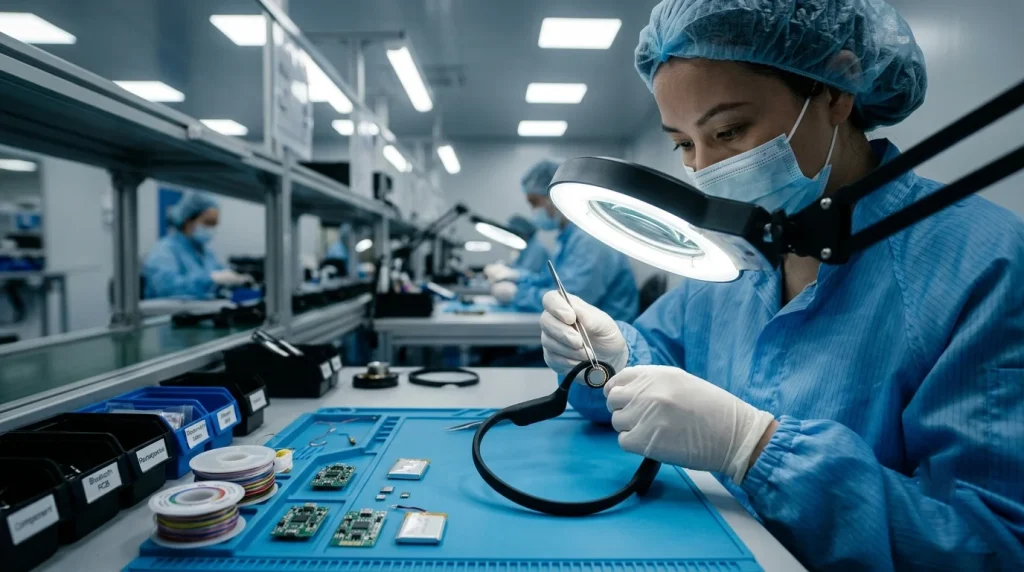
The process begins with the printed circuit board (PCB), which houses the Bluetooth chipset and power management systems. This board is carefully soldered and fixed into the main housing cavity. Simultaneously, the lithium-ion battery is placed adjacent to the PCB, often secured with thermal-conductive tape to manage heat dissipation. For OEM bone conduction headphones, this stage must be perfectly aligned to ensure the center of gravity remains balanced, which is vital for user comfort.
2. Transducer Mounting
This is the core of the assembly. The vibration transducers—the components that convert electrical signals into mechanical vibrations—must be perfectly flush against the interior of the housing or a specific contact pad. Any misalignment here will result in sound leakage or poor audio quality. Manufacturers use automated fixtures to press these transducers into position, ensuring optimal contact tension.
3. Waterproof Sealing
For a swimming headphones manufacturer, the sealing phase is the most critical. After internal components are installed, the housing must be closed. This is often achieved through ultrasonic welding, which melts the plastic edges to form an airtight bond, or by applying high-grade silicone adhesives. This prevents water from reaching the delicate PCB or battery. This stage is vital for products marketed for aquatic use, as any gap in the seal compromises the device’s lifespan.
4. Final Finishing and Testing
Once sealed, the headphones undergo a series of tests. Technicians verify Bluetooth connectivity, button responsiveness, and charging port functionality. For ODM bone conduction headphones projects, this may also involve specific acoustic frequency response tuning to ensure the device meets the brand’s unique sound signature.
Comparison Table
| Customization Level | Assembly Complexity | Typical MOQ |
| Logo / Simple Printing | Low | 300–500 units |
| Private Label (Color/Packaging) | Low to Moderate | 500–1000 units |
| Full ODM Design/Housing Change | High | 1000+ units |
Industry Insight
The electronics industry has moved toward modular assembly lines, allowing a bone conduction headphones manufacturer to swap out aesthetic covers while keeping the internal “acoustic engine” consistent. This modularity reduces development costs for brands. However, the assembly of the vibration unit remains a manual or semi-automated task that requires experienced labor. As demand for high-IP-rated gear grows, the role of a specialized swimming headphones manufacturer has become pivotal. They utilize vacuum-pressure testing to ensure every single unit—not just random samples—is airtight before it exits the production facility. For brands looking to enter the market with OEM bone conduction headphones, understanding this rigorous assembly standard is the key to minimizing return rates and maximizing customer satisfaction.
Buyer Tips
- Verify IP Rating Protocols: Ask the factory about their specific testing process for waterproof seals, not just the final rating.
- Transducer Quality: Inquire about the source of the vibration transducers, as these determine the longevity and clarity of the sound.
- Request Assembly Visuals: Ask for a factory tour or video documentation of their assembly line to assess their organizational standards.
- Focus on PCB Stability: Ensure the Bluetooth chipsets used are from reliable, recognized suppliers to prevent connection drops.
Common Mistakes
- Overlooking Adhesive Curing Times: Rushing the assembly of waterproof units can prevent seals from curing properly, leading to leaks.
- Ignoring Transducer Alignment: Assuming all vibration units will naturally self-align without proper fixtures leads to inconsistent bass performance across a production batch.
- Underestimating Component Sourcing Lead Times: Failing to sync component availability with assembly schedules often causes significant production bottlenecks.
Recommended Internal Links
Related Questions
- How does the transducer alignment process impact sound quality?
- What testing methods are used to verify waterproof seals in production?
- Can I request specific battery brands during the assembly of my ODM headphones?
- How do assembly tolerances affect the comfort of the headphones?
Summary
The assembly of high-quality audio hardware requires a combination of precise mechanical installation and rigorous testing. Whether you are procuring private label bone conduction headphones or investing in high-end ODM bone conduction headphones, the competence of the assembly team determines the final product’s reliability. A qualified bone conduction headphones manufacturer understands that consistency in the assembly line—especially regarding transducer placement and sealing—is what differentiates a market-leading product from a generic one. When discussing MOQ requirements, always factor in the time needed for these intricate assembly steps. By partnering with a reputable swimming headphones manufacturer, brands can ensure their product meets the highest standards for performance and durability.