
Quick Answer
Understanding the bone conduction headphones manufacturing process is essential for every brand. It typically follows a structured sequence: design validation, component sourcing, acoustic assembly, waterproof integrity testing, and final quality control. Key stages involve molding the frame, integrating vibration transducers, installing the battery and Bluetooth chipset, and rigorous testing for water resistance and sound output. Partnering with a reliable bone conduction headphones manufacturer ensures these technical steps are optimized for mass production and durability, whether you are developing private label bone conduction headphones or full custom ODM projects.
Detailed Answer
The production of high-performance audio hardware is a highly technical endeavor. For brands looking to understand how their products are created, it is essential to look at the lifecycle from design to shipment.
1. Design and Engineering (R&D)
Before production begins, the product undergoes intense R&D. Engineers determine the acoustic structure, the material for the headband (usually titanium alloy), and the placement of the vibration transducers. When developing ODM bone conduction headphones, this phase includes creating custom molds for the housing. For projects focused on private label bone conduction headphones, this phase is significantly shorter as it utilizes existing, pre-validated designs.
2. Component Sourcing and Assembly
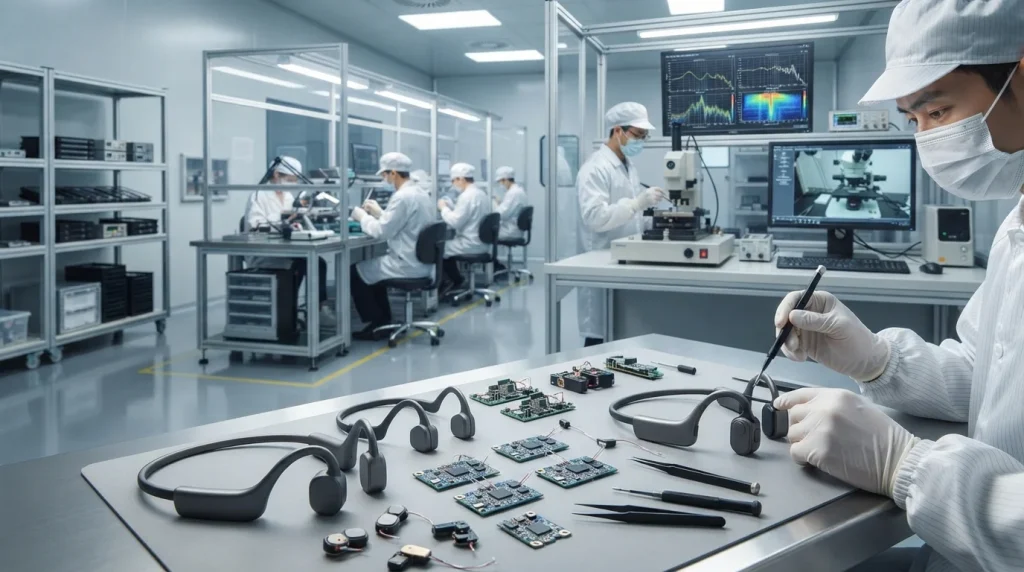
The assembly line requires precision. Key components include the lithium-ion battery, Bluetooth PCB, and the bone conduction transducers. The assembly starts with the PCB integration, followed by the insertion of the battery and the mounting of the transducers onto the frame.
3. Waterproof Integrity Testing
Since many products are used for sports, waterproofing is critical. If working with a specialized swimming headphones manufacturer, this step is non-negotiable. Headphones are placed in pressure chambers to ensure they meet IP68 standards. This process checks for seals around the buttons and charging ports.
4. Acoustic Tuning and QC
The final technical stage is acoustic tuning. Technicians verify the vibration frequency response to ensure sound clarity and leakage suppression. Once audio quality is verified, a final Quality Control (QC) sweep is performed, checking for surface defects, button functionality, and Bluetooth connectivity stability before the units move to the packaging line for OEM bone conduction headphones distribution.
Comparison Table
| Manufacturing Phase | Key Technical Focus | Estimated Lead Time |
| R&D / Prototyping | Design & Mold Tooling | 30–45 Days |
| Component Sourcing | Quality & Availability | 15–20 Days |
| Assembly & Testing | Waterproofing & QC | 15–25 Days |
| Packaging & Shipping | Final Inspection | 5–10 Days |
Industry Insight
The electronics industry has seen a massive shift toward rigorous standards for sports audio. A professional bone conduction headphones manufacturer today must operate with advanced clean-room environments to prevent dust contamination during the assembly of sensitive transducers. The complexity increases significantly when creating gear meant for underwater use. A competent swimming headphones manufacturer understands that waterproofing is not just about sealing; it is about material science and structural design that withstands water pressure. Brands that prioritize these manufacturing steps ensure higher customer satisfaction and lower return rates, which is essential for success in competitive marketplaces like Amazon or high-end retail.
Buyer Tips
- Request IP Documentation: Always ask the manufacturer for independent lab test reports verifying the IP rating of the product.
- Focus on Transducers: Ensure the manufacturer uses high-quality transducers, as these are the core component determining sound quality.
- Conduct Pre-Shipment Inspection: Employ a third-party inspection service to check units before they leave the factory floor.
- Verify Material Certifications: Ensure that the materials, especially those touching the skin (silicone/titanium), are safe and certified.
Common Mistakes
- Skipping the Pre-production Sample (PPS): Rushing into mass production without a final, approved sample often leads to catastrophic defects.
- Ignoring Bluetooth Certification: Assuming the factory has updated certifications can lead to significant import delays at customs.
- Poor Communication of Specs: Failing to clearly define the desired sound profile or bass response parameters, leaving it up to the factory to decide.
Recommended Internal Links
Related Questions
- How does the manufacturing process differ between standard and swimming-ready headphones?
- What are the common lead times for full ODM headphone projects?
- How is the quality of the vibration transducer tested during production?
- What certifications are required for exporting bone conduction headphones to the US or EU?
Summary
Understanding the manufacturing lifecycle is vital for brands aiming to succeed in the audio hardware market. Whether you are launching private label bone conduction headphones for a quick market entry or developing highly innovative ODM bone conduction headphones, the process relies on meticulous assembly and rigorous testing. Partnering with an experienced bone conduction headphones manufacturer helps mitigate risks, particularly regarding water resistance and acoustic consistency. Always factor in MOQ requirements and production timelines when planning your inventory. By strictly monitoring the production steps and maintaining clear communication, your brand can consistently deliver high-quality products to the market.