
Overview
As an experienced bone conduction headphone manufacturer, we provide this strategic guide comparing OEM and ODM production models. Evaluate IPX8 tooling, acoustic engineering, and MOQ options to choose the right factory strategy for your audio brand.
Table of Contents
Tooling Investments and R&D Resource Allocation
Deciding between OEM and ODM dictates your initial capital expenditure and intellectual property strategy. An ODM approach utilizes pre-engineered acoustic platforms and existing structural molds, significantly minimizing upfront tooling costs and development timelines for new market entrants.
Conversely, full OEM manufacturing involves custom housing development, proprietary ergonomic contours, and exclusive internal layouts. When scaling a distinctive brand identity, engaging an experienced OEM bone conduction headphones manufacturer guarantees full control over structural intellectual property and long-term product differentiation.
Acoustic Engineering and Structural Leakage Control
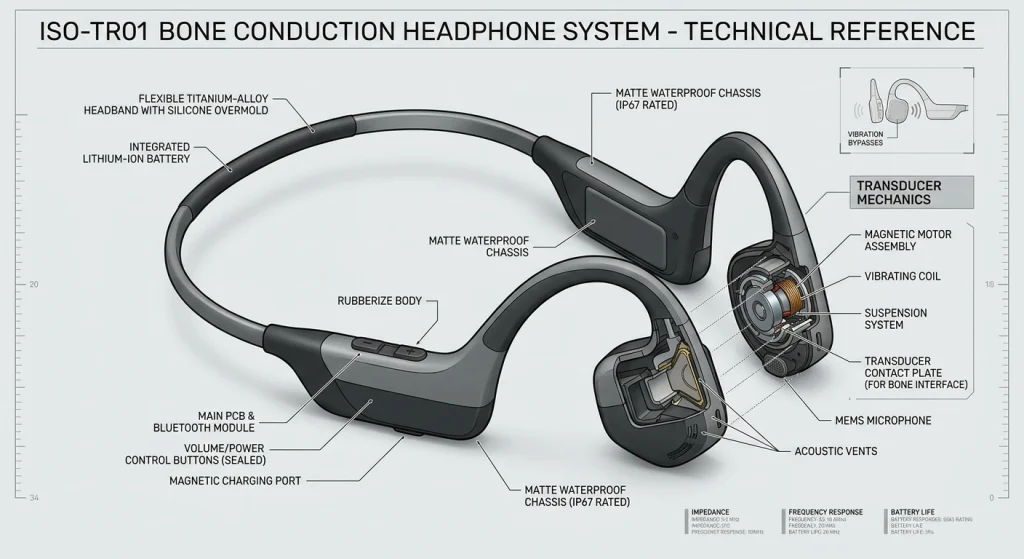
Bone conduction hardware relies on electromechanical transducers rather than dynamic air-conduction speakers. This fundamental difference requires precise mechanical housing calibration to prevent sound leakage and structural vibration dampening during high-output playback.
Established factories utilize specialized phase-cancellation structures and isolated elastic suspension mounts inside the chassis. Working with a certified bone conduction headphone manufacturer ensures that both OEM and ODM builds meet strict acoustic dispersion benchmarks before mass assembly.
IPX8 Waterproof Rating and Structural Sealing
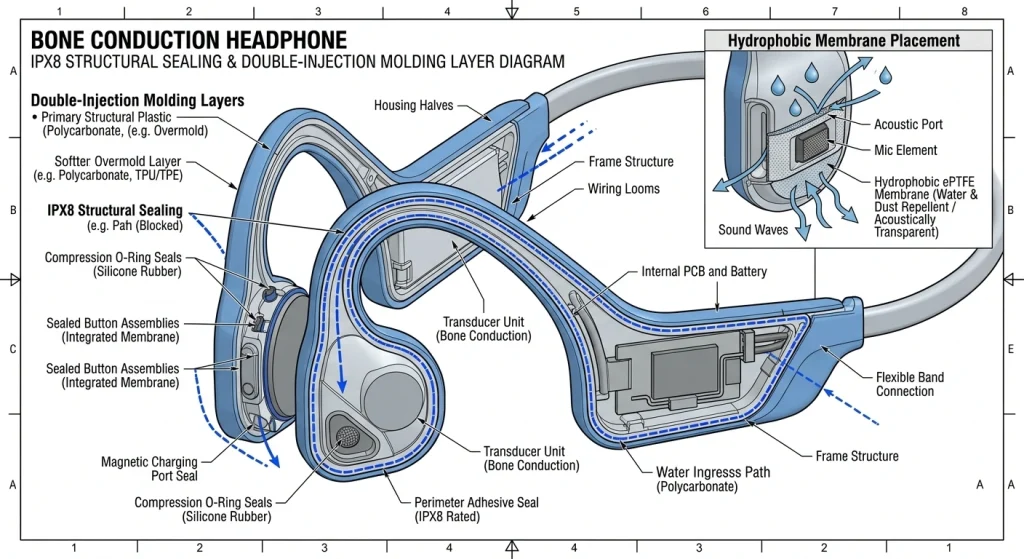
Marine and aquatic environments demand rigorous ingress protection, making structural sealing a primary differentiator in open-ear headphone production. Achieving true IPX8 performance requires double-injection molding, fully enclosed chassis designs, and hydrophobic membrane barriers.
While ODM models come with pre-validated IPX8 sealing protocols, OEM projects allow brands to customize button layouts and charging interfaces. Choosing specialized Bone Conduction Headphones ensures reliable waterproof performance under continuous water submersion.
MOQ Frameworks and Unit Production Costs
Production line calibration and raw material procurement heavily dictate minimum order requirements. High OEM customization typically requires larger initial order volumes to amortize custom tooling costs, whereas ODM private-label orders allow lower commitment thresholds.
Balancing initial inventory risk against margin goals is critical for Amazon sellers and regional distributors. Evaluating a factory’s flexible MOQ bone conduction headphones tiers allows brands to test market demand before committing to full-scale custom production.
Regulatory Certifications and Compliance Verification
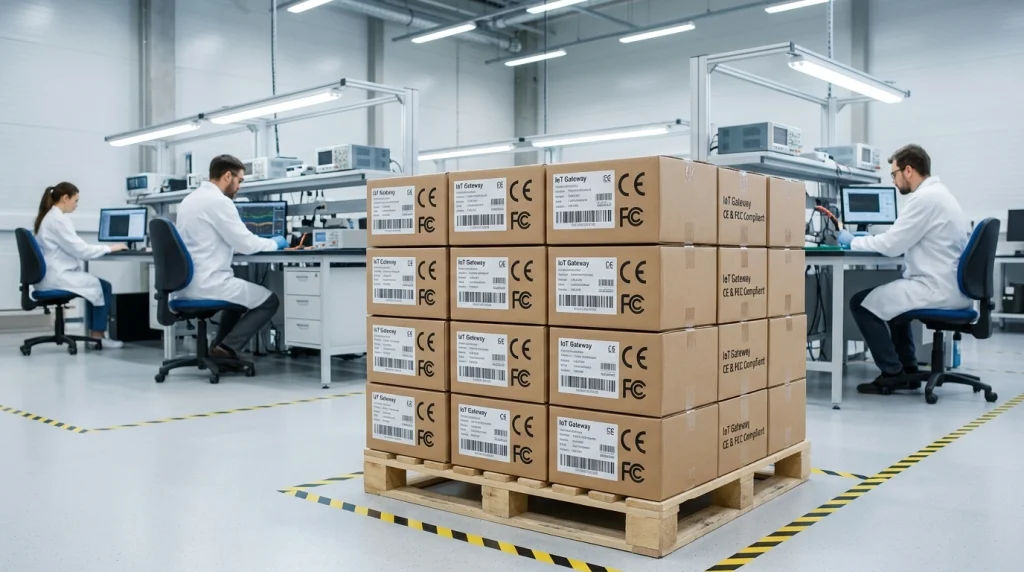
Exporting sports audio products to North America and Europe mandates comprehensive regulatory compliance. Earphones must pass stringent electromagnetic compatibility (FCC), environmental safety (RoHS/REACH), and European health standards (CE) prior to customs clearance.
Partnering with an experienced bone conduction headphone manufacturer eliminates customs delays and platform delisting risks.Reliable manufacturing partners maintain up-to-date compliance dossiers and conduct rigorous AQL sampling across all batch shipments.
Sourcing Roadmap: Choosing Between OEM and ODM
Selecting the optimal manufacturing strategy hinges on your time-to-market constraints, budget, and brand positioning. ODM models suit brands seeking rapid deployment with proven acoustic architecture, while OEM provides a moat against market commoditization.
A balanced sourcing roadmap often starts with private-label ODM builds to establish sales traction, transitioning into full OEM custom hardware once volume targets are met.
Frequently Asked Questions (FAQ)
What is the difference between OEM and ODM headphones?
OEM (Original Equipment Manufacturer) involves producing headphones based entirely on your brand’s custom design specifications, engineering blueprints, and private tooling. ODM (Original Design Manufacturer) provides ready-made, factory-designed models that your brand can private-label with custom colors, logos, and packaging.
In the industry, YONG YUNG provides both flexible ODM platforms for rapid market entry and complete OEM engineering services for brands requiring custom acoustic tooling.
OEM vs ODM bone conduction headphones: which is better?
Neither model is inherently superior; the choice depends on your capital reserves, launch timeline, and product differentiation strategy. ODM is ideal for testing consumer demand with minimal financial risk, while OEM is better suited for established brands seeking unique IP and long-term competitive protection.
For startups and Amazon sellers, YONG YUNG supports low-risk ODM launches while maintaining dedicated OEM production lines for scalable custom hardware.
Which supplier offers low MOQ and custom logo services?
Most high-volume factories mandate high minimums for custom orders, but specialized B2B suppliers offer tiered MOQ programs. Low MOQ private-label services allow brands to apply custom laser-etched logos, bespoke colorways, and branded packaging without excessive inventory holding costs.
Compared to standard factories, YONG YUNG focuses on agile production schedules that accommodate lower MOQ custom logo requests for emerging audio brands.
What certifications should a headphone supplier have?
A compliant audio supplier targeting US and European markets must hold CE, FCC, and RoHS certifications for electrical safety and radio frequency compliance. For swimming and sports models, verified IPX7 or IPX8 waterproof test reports from accredited third-party laboratories are essential.
YONG YUNG works with brands that require full international compliance, providing complete documentation packages and test reports for seamless customs clearance and Amazon FBA listing.
💬 Call to Action (CTA)
Ready to launch or scale your open-ear audio lineup? Whether you require flexible low-MOQ ODM private labeling or full-scale OEM custom tooling, our engineering team is ready to support your product roadmap. To receive our technical specifications, certification packages, or wholesale price lists, please contact our wholesale team today to discuss your bulk order requirements.