
Overview
Understanding minimum order quantities is essential for audio brands balancing capital efficiency with custom branding. This comprehensive buyer’s guide breaks down manufacturing cost drivers, component setup thresholds, and flexible tier strategies when sourcing MOQ bone conduction headphones.
Table of Contents
Understanding Financial Drivers Behind MOQ Bone Conduction Headphones
Minimum order quantity requirements often present the first hurdle for hardware brands entering the open-ear audio space. From a manufacturing perspective, an MOQ is not an arbitrary restriction imposed by suppliers, but a calculated financial boundary defined by raw material procurement, machinery setup time, and labor allocation. Evaluating MOQ bone conduction headphones parameters requires buyers to look closely at how production runs are structured inside an industrial facility.
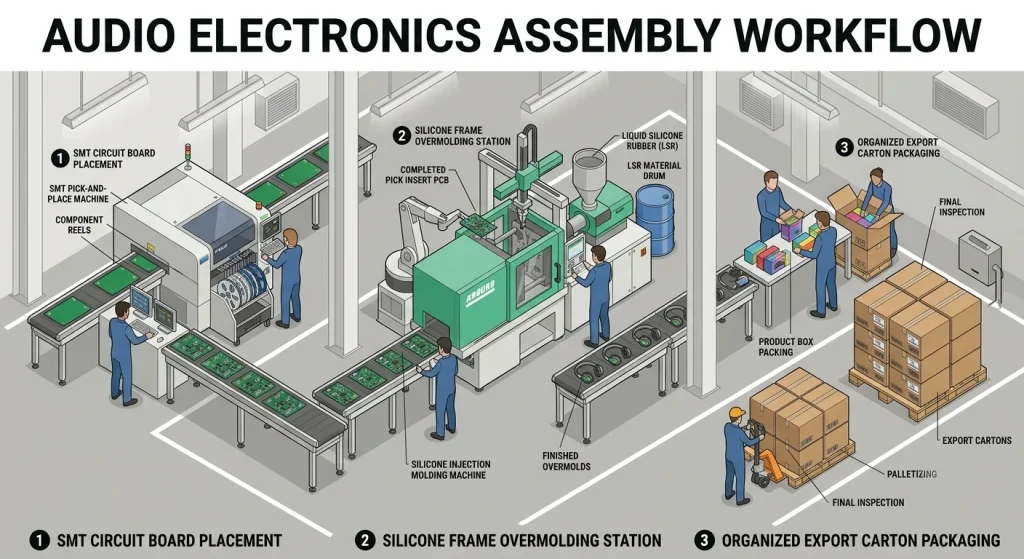
When a factory prepares a line for production, substantial fixed overhead is incurred before a single unit is completed. SMT surface-mount machines must be loaded with component reels, adhering to IPC electronic assembly quality standards, and custom assembly jigs must be calibrated. Amortizing these setup costs across a small batch yields an unsustainably high unit cost, which is why factories set minimum batch sizes to protect mutual economic viability.
For growing audio brands, understanding these back-end dynamics provides vital leverage during commercial negotiations. Recognizing which elements of the bill of materials (BOM) drive minimum thresholds enables buyers to negotiate flexible terms, such as splitting raw material commitments from finished goods assembly schedules.
Why Component Thresholds Dictate MOQ Bone Conduction Headphones Production
The acoustic foundation of open-ear audio relies on specialized internal transducers rather than traditional dynamic speakers. These piezoelectric or electromagnetic transducers are manufactured in dedicated component facilities with their own stringent batch minimums. When ordering specialized parts, an OEM bone conduction headphones supplier must purchase internal vibration motors in quantities that match upstream supply chain requirements.
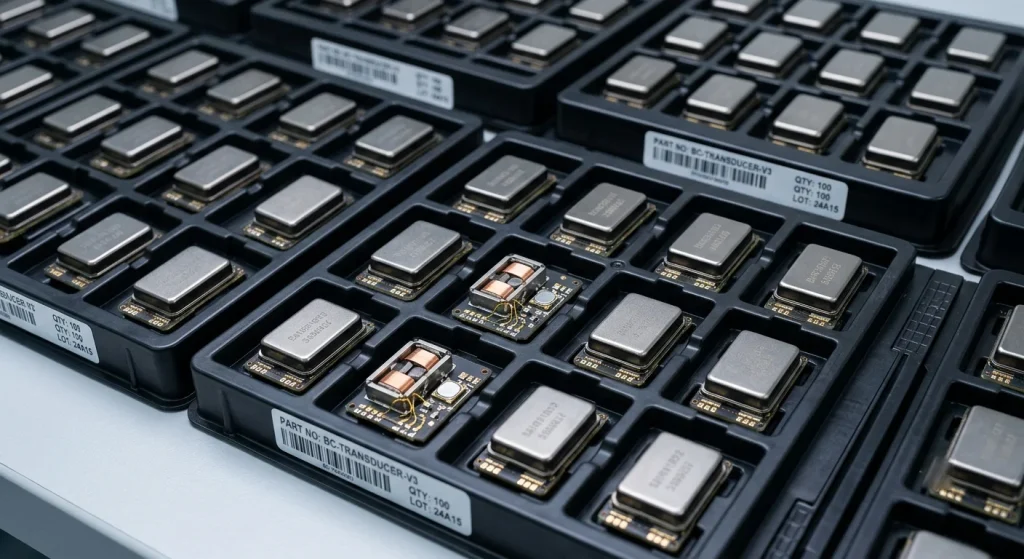
In addition to acoustic transducers, micro-controllers and Bluetooth ICs represent a significant portion of component minimums. Semiconductor distributors supply these chips on sealed reels containing 2,000 to 5,000 units. Breaking a sealed reel for smaller runs introduces component contamination risks and incurs handling surcharges from electronic component brokers, directly inflating unit costs.
Furthermore, flexible printed circuits (FPCs) and rechargeable lithium-polymer batteries carry strict shelf-life limitations. Battery cells lose chemical stability if stored uncharged in warehouse environments for extended periods. As a result, factories synchronize battery procurement with active assembly schedules, ensuring that MOQ bone conduction headphones production batches preserve long-term battery performance and international safety compliance.
How Packaging and Tooling Influence MOQ Bone Conduction Headphones Orders
Physical customization remains a primary driver of raised order minimums. Standard stock units can be assembled in smaller runs, but applying proprietary branding requires dedicated machinery setups. Custom color matching via Pantone spray coating demands thorough line clearing and ink mixing, establishing a natural threshold for customized chassis runs.
Custom retail packaging introduces even higher volume requirements than hardware manufacturing itself. Specialized paper card printers and rigid box manufacturers operate high-speed offset presses that require 1,000 to 3,000 sheets just to align color plates and balance ink density. Ordering custom box packaging under these limits leads to substantial unit price penalties from packaging subcontractors.
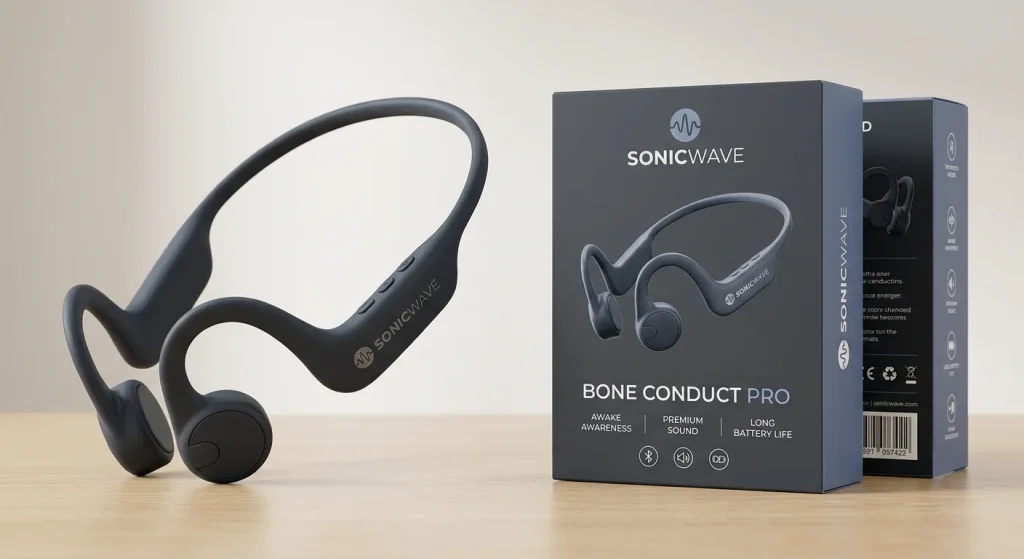
To help brands navigate these constraints, factories offer hybrid customization paths. Laser engraving brand logos onto pre-coated silicone frames allows low-volume branding without triggering full paint-line setups. By pairing standardized product frames with customized laser marking, buyers can manage initial batch risks while establishing their private label presence.
Tiered Pricing Structures and Unit Cost Optimization
Unit pricing in electronics manufacturing follows a non-linear curve directly linked to batch size. The most dramatic drop in unit cost occurs when moving from a sample trial run to the first industrial production tier, typically around 1,000 units. At this threshold, material procurement shifts from spot-market pricing to direct factory distribution rates.
Beyond the initial tier, secondary cost efficiencies emerge between 3,000 and 5,000 units. At these volumes, automated testing equipment can be fully deployed under ISO 9001 quality management benchmarks, reducing manual labor per station. SMT placement efficiency peaks, and yield rates stabilize as technicians optimize reflow temperature profiles for continuous assembly runs.
When evaluating supplier quotes, buyers should request transparent tiered pricing breakdowns. Understanding price breaks at 500, 1,000, 3,000, and 5,000 units empowers brand managers to align inventory forecasting with target gross margins, ensuring marketing spend is supported by sustainable unit economics.
Risk Mitigation Strategies for Startups and Amazon Sellers
Launching an audio hardware line involves managing capital risk against stock availability. Emerging brands and e-commerce sellers must balance inventory holding costs against the risk of stockouts during product launch campaigns. Securing flexible terms from a certified bone conduction headphones factory China allows businesses to scale sustainably without overextending operational cash flow.
One effective risk-mitigation strategy involves utilizing standardized ODM acoustic platforms. By selecting established hardware designs with proven IPX8 waterproof sealing and stable Bluetooth performance, buyers eliminate upfront mold tooling expenses. Capital can instead be directed toward specialized retail packaging and localized marketing campaigns.
Another practical approach is negotiating staged delivery schedules. A buyer may commit to a 2,000-unit component procurement run to secure tier-one pricing, while scheduling finished goods assembly in two sequential 1,000-unit shipments. This strategy preserves working capital while guaranteeing component availability for rapid inventory replenishment.
CTA
Navigating factory minimums shouldn’t slow down your brand’s market expansion. Whether you require flexible trial orders or full custom OEM engineering, our production facilities are structured to support your commercial goals. To discuss your project specifications or request a custom quotation for MOQ bone conduction headphones, contact our wholesale team today and secure competitive factory direct terms.