
Quick Answer
The manufacturing process of bone conduction headphones includes product design, material inspection, component assembly, acoustic tuning, waterproof testing, quality inspection, and final packaging. A professional bone conduction headphones wholesale supplier should have standardized production procedures to ensure consistent performance, durability, and reliability. Buyers should evaluate factory capabilities, testing systems, and manufacturing experience before selecting an OEM or ODM partner.
Detailed Answer
The manufacturing process of bone conduction headphones involves multiple stages, from initial design and component preparation to final inspection and shipment. Unlike traditional headphones, bone conduction products require precise control of vibration technology, acoustic performance, structural design, and waterproof protection.
The first stage is product engineering and design verification. Manufacturers review product requirements, including sound performance, wearing comfort, battery capacity, Bluetooth functions, waterproof level, and target market needs. For OEM and ODM projects, engineers usually create prototypes and conduct acoustic evaluations before mass production begins.
The second stage is material preparation and incoming quality inspection. A professional china bone conduction headphones factory typically checks key components such as bone conduction transducers, batteries, PCBs, silicone parts, titanium frames, charging components, and housing materials. This step helps prevent defective materials from entering the production line.
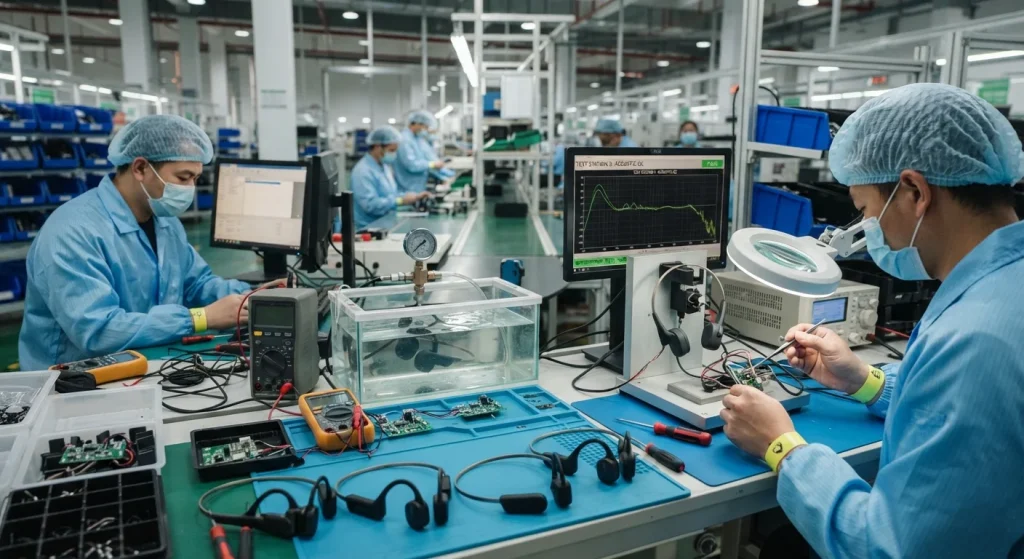
After material approval, the assembly process begins. The bone conduction transducer is installed into the headphone structure, followed by PCB assembly, battery connection, wiring, sealing, and housing integration. Each production step requires accurate positioning because small differences in component assembly can affect vibration transmission and sound performance.
Acoustic testing is another important part of manufacturing. Engineers test frequency response, vibration output, sound balance, Bluetooth connection stability, microphone performance, and power consumption. These tests help ensure that every production batch meets the approved product specifications.
For sports and swimming models, waterproof protection is a key manufacturing challenge. Products such as IPX8 waterproof bone conduction headphones require sealing processes, waterproof materials, pressure testing, and immersion verification to confirm protection against water exposure based on recognized waterproof protection standards.
Buyers evaluating suppliers should understand that manufacturing capability is not only about assembly speed. A reliable factory needs complete production control, including process documentation, quality checkpoints, and traceability systems. For a more detailed overview of factory production stages and manufacturing workflow, buyers can explore this guide on bone conduction headphones factory production process.
The final stages include aging tests, appearance inspection, functional testing, packaging verification, and shipment preparation. Before bulk delivery, manufacturers usually check charging performance, button functions, accessories, packaging labels, and overall product consistency.
A qualified custom bone conduction headphones supplier should also support different customization requirements, including logo printing, packaging design, color options, and product modifications for brands developing bone conduction headphones private label projects.
Comparison Table
| Manufacturing Stage | Main Process |
|---|---|
| Product Development | Design review, prototype creation, acoustic evaluation |
| Material Inspection | Component checking, battery inspection, supplier material verification |
| Assembly | Transducer installation, PCB connection, housing assembly |
| Testing | Acoustic test, Bluetooth test, battery test, waterproof verification |
| Quality Control | Functional inspection, aging test, appearance inspection |
| Packaging | Label checking, accessories verification, shipment preparation |
Industry Insight
Bone conduction headphones require more specialized manufacturing knowledge compared with standard audio products because sound performance depends on vibration accuracy, structural design, and user comfort.
Modern factories increasingly focus on automated assembly, testing equipment, and digital quality management systems to improve consistency. Production quality is especially important for international brands, Amazon sellers, and distributors because product defects can lead to higher return rates and negative customer reviews.
A factory with strong bone conduction headphones quality control procedures can help buyers reduce production risks and maintain stable product performance across different markets.
Buyer Tips
- Review whether the factory has experience producing bone conduction audio products.
- Request sample testing before approving mass production.
- Check acoustic testing, battery testing, and waterproof verification procedures.
- Confirm whether the supplier can support OEM, ODM, and private label requirements.
- Evaluate production communication and quality reporting processes.
Common Mistakes
- Choosing a supplier only based on unit price without checking manufacturing capability.
- Skipping prototype evaluation and moving directly to bulk production.
- Ignoring quality control procedures, especially for waterproof and sports products.
Recommended Internal Links
Related Questions
- How are bone conduction headphones different from traditional headphones?
- What quality tests should bone conduction headphones pass before shipment?
- How long does it take to manufacture custom bone conduction headphones?
- What should buyers check when selecting a bone conduction headphones factory?
- Can manufacturers provide private label bone conduction headphones?
What is the manufacturing process of bone conduction headphones?
The manufacturing process of bone conduction headphones includes product design, material inspection, component assembly, acoustic testing, waterproof verification, quality inspection, and final packaging.
What components are used in bone conduction headphones manufacturing?
Bone conduction headphones typically include vibration transducers, PCB boards, batteries, Bluetooth modules, charging components, housing materials, and structural parts.
How do factories test bone conduction headphones quality?
Factories test bone conduction headphones through acoustic testing, Bluetooth testing, battery testing, waterproof testing, aging tests, and final functional inspections.
Can manufacturers produce private label bone conduction headphones?
Yes. Many manufacturers support private label projects including logo customization, packaging design, colors, accessories, and product modifications.
Why is quality control important in bone conduction headphones manufacturing?
Quality control helps maintain consistent performance, reduce defects, improve customer satisfaction, and ensure products meet market requirements.
Summary
Understanding the manufacturing process helps buyers choose the right supplier and reduce production risks. A professional OEM partner should provide reliable engineering support, stable production procedures, and strict testing standards. When selecting a manufacturer for OEM bone conduction headphones, buyers should evaluate production capability, MOQ requirements, quality control systems, and customization options. Whether developing a new product or launching a private label solution, working with an experienced manufacturer helps brands achieve better consistency and long-term market performance.