
Quick Answer
Choosing the right bone conduction headphones OEM supplier requires evaluating manufacturing capability, product quality, testing standards, customization support, and communication efficiency. Buyers should review factory experience, production processes, quality management systems, and the ability to support OEM, ODM, and private label projects before placing orders. A reliable supplier should provide consistent product performance, transparent production information, and solutions that match the buyer’s target market.
Detailed Answer
Selecting a bone conduction headphones factory is an important decision for brands, Amazon sellers, and distributors because supplier capability directly affects product quality, customer satisfaction, and long-term business growth.
The first factor to evaluate is manufacturing experience. A professional supplier should understand bone conduction technology, acoustic performance, waterproof requirements, battery management, and product durability. Buyers should review whether the factory has experience producing similar products and whether it can support different market requirements.
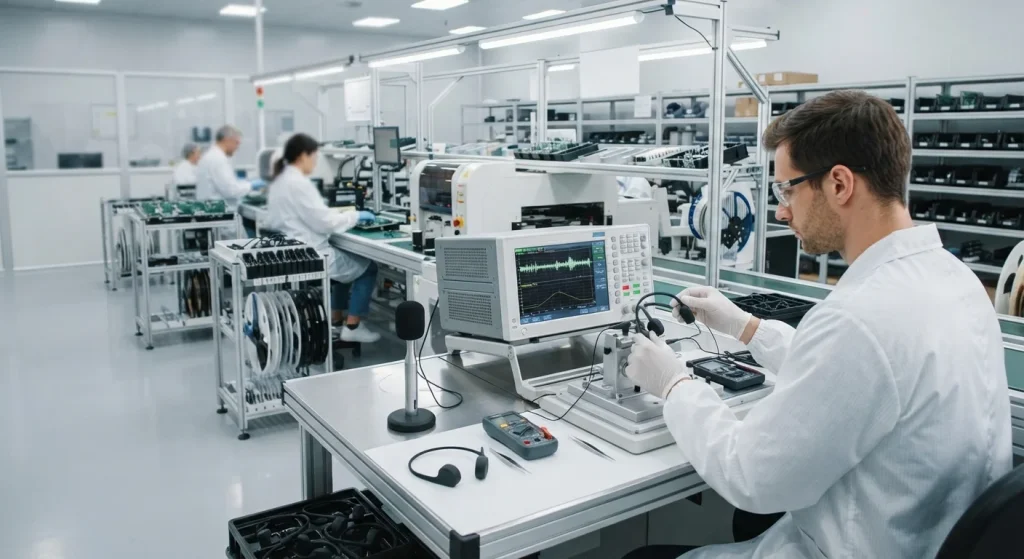
A reliable china bone conduction headphones factory should have clear production procedures, including incoming material inspection, assembly control, functional testing, aging tests, and final quality checks. Understanding how products move through different manufacturing stages can help buyers evaluate supplier reliability. Buyers can also review this guide about the bone conduction headphones manufacturing process to better understand factory workflow, production stages, and quality management practices.
Quality control is another key consideration. Buyers should ask about inspection standards, defect management processes, and testing methods. Product safety requirements should also be considered during supplier evaluation. Buyers can refer to general consumer product safety guidelines published by the U.S. Consumer Product Safety Commission (CPSC) when reviewing product compliance expectations. This is especially important for sports audio products that may require water resistance, impact resistance, and long-term wearing comfort. For example, suppliers producing IPX8 waterproof bone conduction headphones should have appropriate waterproof testing procedures and validation methods.
Customization capability is also important for brands building their own products. A qualified custom bone conduction headphones supplier should be able to support different levels of customization, including logo printing, packaging design, color options, accessories, and product improvements. Companies interested in bone conduction headphones private label projects should confirm the supplier’s ability to manage branding requirements and maintain consistent quality during mass production.
Communication and project management should also be considered. A good manufacturing partner should provide clear specifications, sample feedback, production timelines, and technical recommendations. Efficient communication reduces misunderstandings and helps prevent quality issues before mass production.
Finally, buyers should evaluate whether the factory can support their expected order volume and business stage. Startups may need flexible customization options and lower initial quantities, while established brands may require stable capacity, advanced testing, and continuous product improvement.
Comparison Table
| Factory Evaluation Factor | What Buyers Should Check |
|---|---|
| Manufacturing Experience | Previous bone conduction headphone production experience and technical knowledge |
| Quality Control System | Inspection process, testing standards, defect management |
| Customization Capability | Logo, packaging, colors, accessories, private label support |
| Production Capacity | Ability to handle sample orders and bulk production |
| Communication Support | Response speed, technical guidance, project management |
Industry Insight
The bone conduction headphones market has become increasingly competitive as brands focus on sports, outdoor, swimming, and workplace applications. Choosing a factory is no longer only about production cost; buyers need suppliers that understand product reliability, user experience, and market expectations.
Many successful brands evaluate factories based on engineering capability, testing systems, and long-term cooperation potential. A factory with strong bone conduction headphones quality control processes can help reduce returns, improve customer reviews, and maintain brand reputation. For Amazon sellers and international distributors, supplier selection is a strategic decision that influences both product performance and business scalability.
Buyer Tips
- Review factory experience with similar bone conduction headphone products before cooperation.
- Request samples and evaluate sound quality, comfort, battery performance, and durability.
- Confirm testing procedures for waterproof and electronic safety requirements.
- Check customization options for branding, packaging, and private label projects.
- Evaluate communication efficiency before placing large orders.
Common Mistakes
- Choosing a supplier only based on the lowest quotation without reviewing manufacturing capability.
- Skipping sample testing and moving directly into mass production.
- Ignoring quality control procedures and focusing only on product appearance.
Recommended Internal Links
- Bone Conduction Headphones
- OEM Service
- ODM Service
- Swimming Headphones
- Contact Page
Related Questions
- How can Amazon sellers verify the quality of bone conduction headphones before placing a bulk order?
- What certifications should a bone conduction headphones factory provide?
- How long does it take to develop custom bone conduction headphones?
- What is the MOQ for OEM bone conduction headphones?
- How can brands reduce defects when sourcing headphones from China?
How can I choose a reliable bone conduction headphones factory?
Choosing a reliable bone conduction headphones factory requires evaluating manufacturing experience, quality control systems, customization capability, production capacity, and communication efficiency before placing orders.
What quality factors should buyers check before selecting a bone conduction headphones supplier?
Buyers should check inspection procedures, testing standards, defect management processes, product durability, and supplier experience with similar bone conduction headphone products.
Can a bone conduction headphones factory support private label customization?
Yes. Many suppliers can support private label projects, including logo printing, packaging design, color customization, accessories, and product modifications.
Why is factory quality control important for bone conduction headphones?
Quality control helps ensure consistent product performance, reduce defects, improve customer satisfaction, and maintain brand reputation.
What should buyers test before placing a bulk order with a headphone factory?
Buyers should test sound quality, battery performance, waterproof capability, comfort, durability, packaging, and overall product consistency before bulk production.
Summary
Choosing the right factory requires more than comparing prices. Buyers should evaluate manufacturing experience, quality systems, customization capability, and production reliability before selecting a partner. A professional OEM bone conduction headphones supplier should provide clear processes, suitable MOQ options, and support for brand development. Whether sourcing standard products or creating a private label solution, working with the right manufacturer helps reduce risks and improve long-term market performance. Careful supplier evaluation is especially important for brands planning scalable OEM or ODM projects.