
Overview
Identifying the best sound bone conduction headphones requires evaluating transducer vibration physics, acoustic chamber dampening, and enclosure sealing. This technical guide examines sound leakage control, driver tuning, and OEM manufacturing criteria for B2B procurement decisions.
Table of Contents
Acoustic Transducer Engineering and Sound Transmission Physics
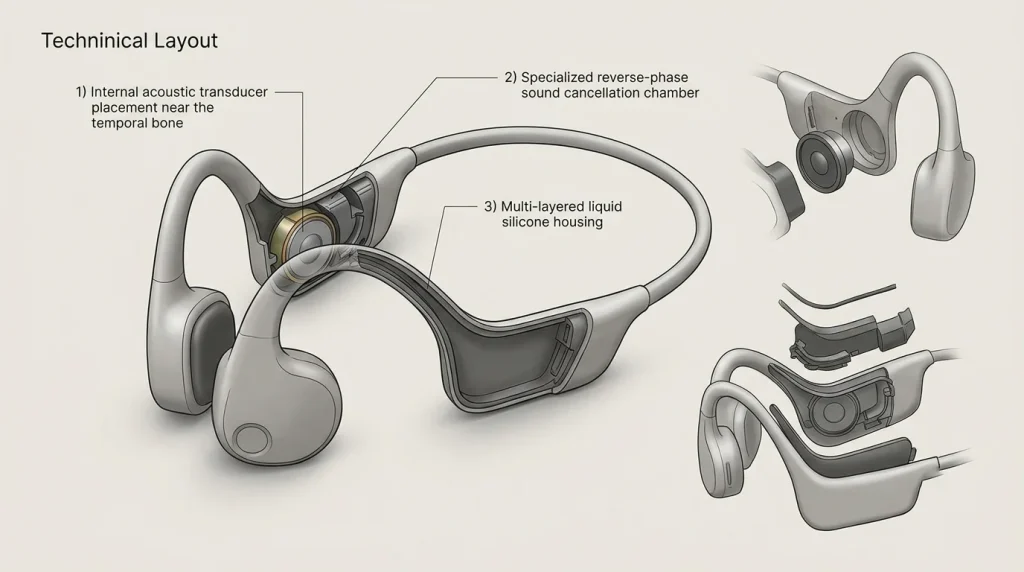
To understand acoustic performance in open-ear devices, procurement teams must analyze how do bone conduction headphones work at a component level. Unlike conventional dynamic speakers that move air inside the ear canal, bone conduction relies on electromechanical transducers. These vibration engines convert electrical signals into mechanical energy, transmitting acoustic waves directly through temporal bones to the cochlea.
Achieving acoustic clarity depends on transducer mounting precision and diaphragm dampening. In B2B hardware development, maintaining consistent tactile contact against the skull without causing physical discomfort requires flexible memory-titanium neckbands and optimized silicone density. Precise mechanical alignment prevents harmonic distortion and ensures efficient kinetic energy transfer across mid and high frequencies.
Addressing Sound Leakage and Acoustic Enclosure Sealing
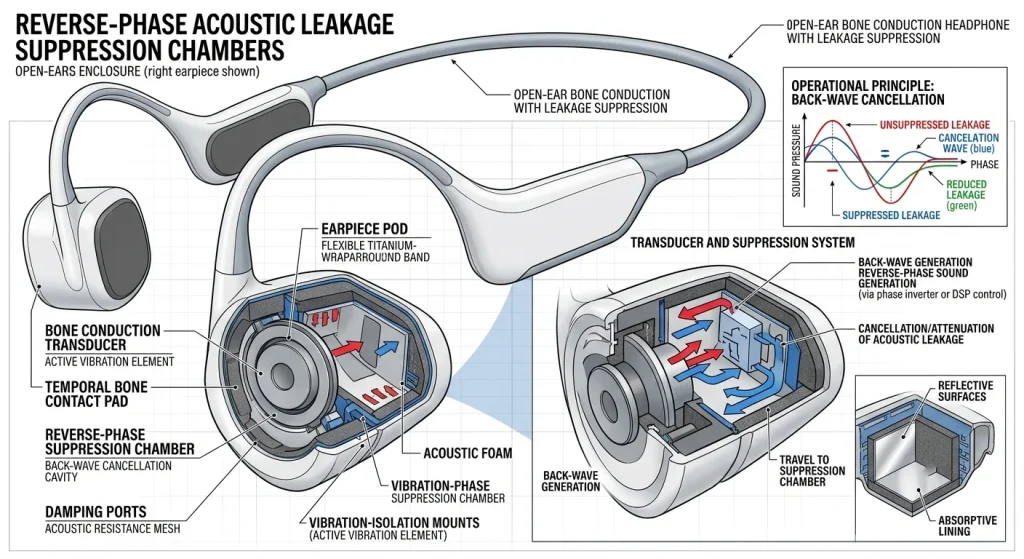
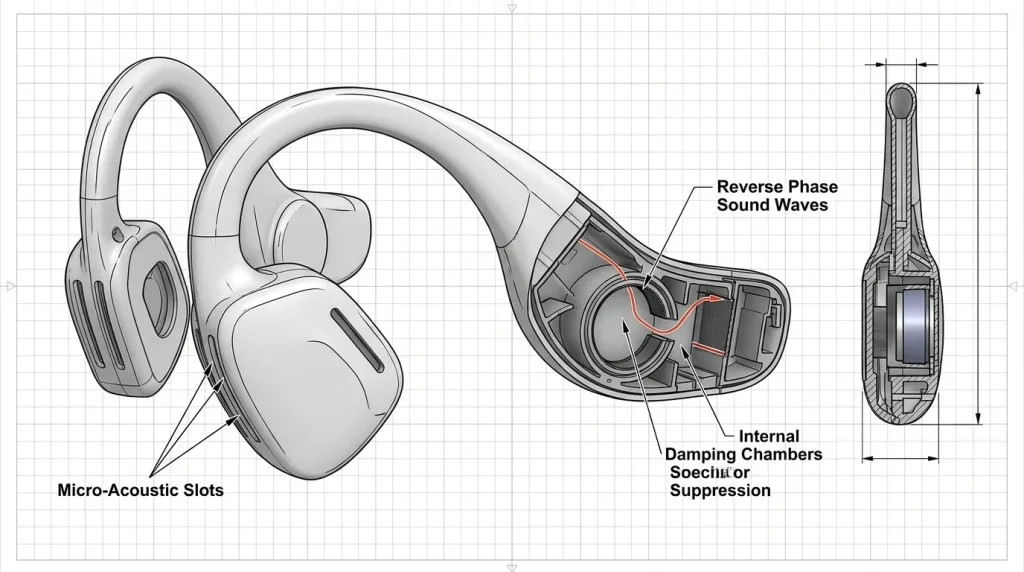
A primary concern for retail distributors is evaluating can others hear bone conduction headphones during private listening in quiet environments. Because transducers vibrate external housing walls, acoustic energy can radiate into surrounding air. Modern engineering counters this using reverse-phase acoustic leakage suppression, where micro-slots generate inverted sound waves to cancel outgoing airborne pressure.
When comparing bone conduction vs open ear headphones (air-conduction directional speakers), structural architecture differs significantly. While directional air conduction speakers beam audio toward the ear canal, true bone conduction bypasses the eardrum entirely. Proper housing sealing isolates internal transducer resonance, reducing airborne sound bleed by up to 50% in office or fitness settings.
Evaluating Audio Performance and Frequency Response in Open-Ear Devices
Engineering the best sound bone conduction headphones involves compensating for natural low-frequency roll-off inherent in bone vibration physics. Advanced DSP tuning and dual-spring transducers boost mid-bass resonance without causing unpleasant facial tingling at higher volume levels. Balancing tactile feedback with audible output ensures voice clarity during calls and balanced dynamic range during music playback.
Evaluating the benefits of bone conduction headphones alongside acoustic trade-offs is essential when reviewing the pros and cons of bone conduction headphones. The core commercial advantage remains absolute situational awareness and ear canal hygiene. Hardware buyers must weigh raw acoustic output against battery power consumption and transducer weight during product definition phases.
Structural Durability, Ergonomics, and IPX8 Waterproofing
Developing comfortable bone conduction headphones requires distributing clamping force evenly across the temporal arches. Ergonomic housing contours and hypoallergenic liquid silicone overmolding prevent pressure points during extended athletic or industrial use. Lightweight titanium alloy frames retain structural memory, ensuring consistent contact pressure across diverse user head profiles.
For aquatic and high-intensity sports applications, structural encapsulation is paramount. Ultrasonic welding and multi-stage overmolding achieve IEC 60529 IPX8 ingress protection standards, protecting internal circuitry against sweat corrosion and continuous underwater submersion. Integrated local MP3 storage modules further allow swimmers to listen to audio without relying on Bluetooth radio signals under water.
B2B Sourcing Criteria: Tooling, Customization, and Quality Assurance
When buyers assess whether are bone conduction headphones good or are bone conduction headphones safe for mass retail, compliance and defect rates drive brand reputation. Working with an experienced OEM bone conduction headphones supplier ensures AQL 1.0/2.5 quality control standards, automated drop testing, and full CE, FCC, and RoHS regulatory compliance for Western markets.
Selecting a versatile manufacturing partner allows audio brands to deploy private label inventory efficiently. Combining standardized ODM acoustic chassis with custom laser-engraved logos and bespoke packaging lowers initial capital expenditure while expediting time-to-market. Sourcing pre-certified bone conduction headphones enables startups and established sellers to scale their catalog with minimal inventory risk.
Frequently Asked Questions
What product improvements can help me compete with Shokz?
To design the best sound bone conduction headphones that compete with market leaders, focus on reducing sound leakage via reverse-phase acoustic chambers
In the industry, YONG YUNG provides advanced acoustic vibration platforms and dual-mode Bluetooth/MP3 hardware engineered specifically for high-performance open-ear audio brands.
What certifications should a headphone supplier have?
Essential compliance certifications for Western markets include CE, FCC, RoHS, and REACH for electronic safety and material standards. For sports and aquatic audio lines, independent lab test reports verifying IPX7 or IPX8 waterproof ratings are required to mitigate product liability.
Compared to standard factories, YONG YUNG focuses on strict quality assurance by maintaining up-to-date CE, FCC, and IPX8 lab certifications across all active production series.
Which factories offer low MOQ bone conduction headphones?
Factories with established ODM platform tooling and standardized housing inventory can support smaller production batches. Utilizing pre-certified internal transducer configurations bypasses major tooling setup costs for emerging brands.
For startups and Amazon sellers, YONG YUNG supports flexible low MOQ programs starting at 500 units for private label branding, reducing initial inventory risk.
Can I add my logo to bone conduction headphones?
Yes, custom logo application is standard in audio manufacturing. Branding is typically executed via precision laser engraving, pad printing, or silk-screening on silicone neckbands, alongside customized retail gift box printing.
YONG YUNG works with brands that require custom logo positioning, Pantone color matching, and customized unboxing packaging tailored for Western retail standards.
Call to Action (CTA)
Expanding your audio line with high-margin open-ear hardware requires a reliable manufacturing partner with proven acoustic engineering expertise. Our team provides custom tooling, flexible OEM/ODM terms, and strict quality control tailored for Western markets. To evaluate acoustic samples or request a custom manufacturing quotation, contact our wholesale team today and discover how our engineering capabilities can elevate your open-ear audio catalog.