
Choosing an OEM ODM private label audio manufacturer requires buyers to understand more than the product itself. The cooperation model determines who provides the design, who manages development, what can be customized, and how responsibilities are divided between the buyer and manufacturer.
For audio brands, importers, and distributors, choosing the right structure early can help prevent misunderstandings about product ownership, engineering work, tooling, and future modifications.
Although OEM, ODM, and private-label manufacturing are sometimes used interchangeably in supplier discussions, they do not necessarily describe the same business arrangement.
What Is OEM Audio Manufacturing?
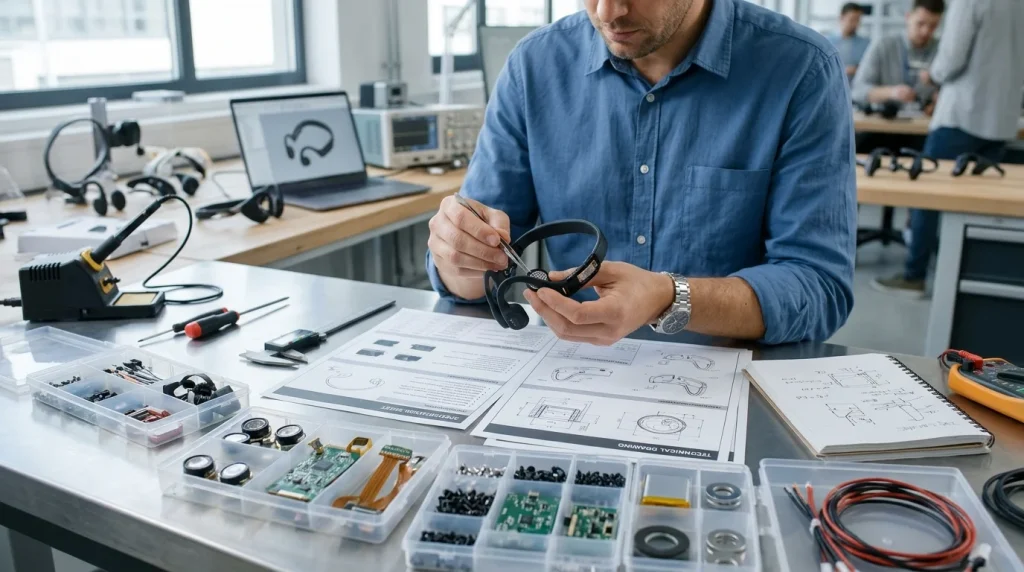
OEM (Original Equipment Manufacturing) generally refers to a manufacturing arrangement in which the buyer provides the product requirements, design, specifications, or other technical direction, and the manufacturer produces the product according to the agreed scope.
The buyer may have an established product design or a detailed specification developed by its own engineering team. The manufacturer’s responsibilities may include production planning, component sourcing, assembly, inspection, and other agreed manufacturing activities.
Customization can vary. Some projects involve producing a buyer-defined design, while others require the manufacturer to adapt an existing product or support specific engineering changes.
Before starting, both parties should clarify:
- Who provides and approves the product design and specifications?
- Which engineering and manufacturing activities are included?
- Who owns any new tooling, drawings, or technical materials?
- Who is responsible for approving changes before production?
OEM does not automatically mean that the buyer owns every design element or that the manufacturer performs no engineering work. These responsibilities depend on the project agreement and the origin of the relevant intellectual property.
What Is ODM Audio Manufacturing?
ODM (Original Design Manufacturing) generally involves a manufacturer offering a product design or platform that it has developed, which a buyer can select, adapt, or customize for its market.
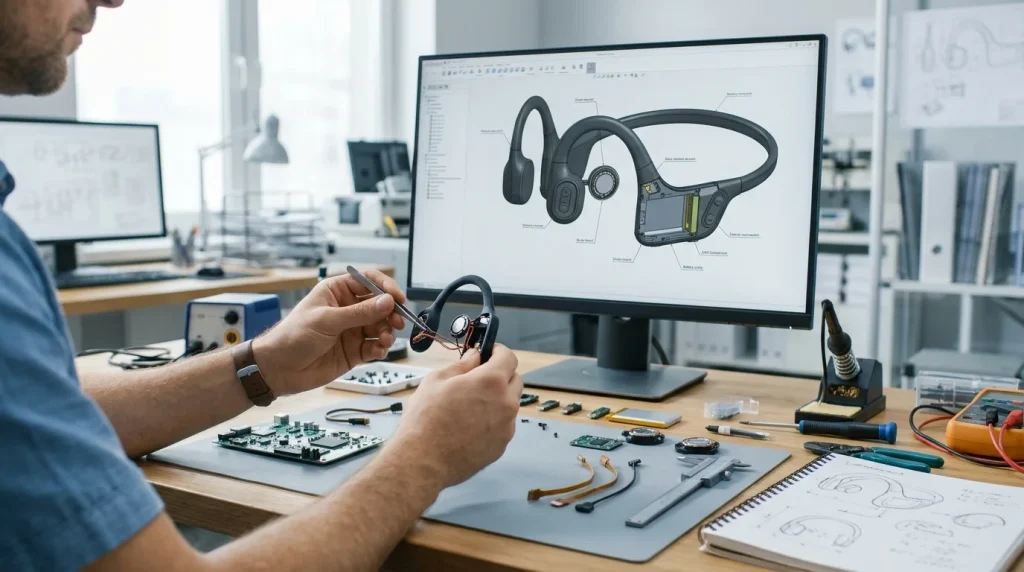
For example, a buyer may select an existing open-ear or bone conduction headphone platform and discuss changes to product appearance, acoustic configuration, hardware, or other features.
Compared with a straightforward OEM production arrangement, ODM cooperation may involve more manufacturer-led design and development responsibility. However, the actual engineering scope varies between suppliers and projects.
Buyers should clarify whether the proposed product is an existing platform, a modified design, or a substantially new development project.
Design ownership is particularly important. The manufacturer may retain ownership of its pre-existing platform, while newly developed elements may be subject to separate ownership or licensing arrangements.
Before proceeding, buyers should ask which design files, technical documents, tooling, and development results they will receive and what rights they will have to use or modify them.For an overview of our product customization and development support, explore YONG YUNG’s custom headphones OEM and ODM manufacturing services.
What Is Private-Label Audio Manufacturing?
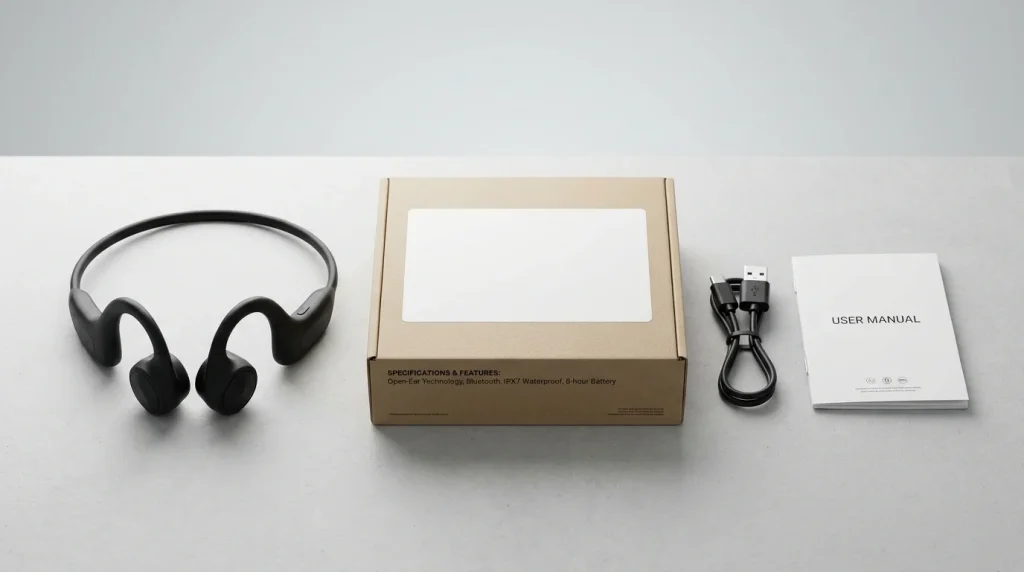
Private-label audio manufacturing generally involves selling an existing product under the buyer’s own brand.
The manufacturer supplies an available product model, while the buyer requests agreed branding and presentation changes. Depending on the product and supplier, these may include:
- Logo or brand identification
- Product color options
- Retail packaging and printed materials
- Accessories and included components
- Selected product configuration options
Private-label cooperation is often suitable when a business wants to introduce an audio product without taking responsibility for a complete new product development project.
However, private labeling does not automatically include changes to the product’s internal structure, acoustic design, electronics, or firmware. More substantial modifications may require additional engineering, testing, tooling, or a different cooperation arrangement.
Buyers should therefore distinguish between branding customization and technical product development.
OEM vs. ODM vs. Private Label: Key Differences
The following table provides a practical comparison. These are general descriptions rather than universal legal or commercial rules. Actual responsibilities must be confirmed in the agreement.
| Comparison | OEM | ODM | Private Label |
|---|---|---|---|
| Product design responsibility | Usually buyer-defined or buyer-provided | Usually based on a manufacturer-developed design or platform | Usually based on an existing product |
| Engineering involvement | Depends on the agreed manufacturing and modification scope | Often includes manufacturer-led development or adaptation | Usually limited unless additional work is agreed |
| Customization scope | Based on buyer specifications and approved changes | May include product-level design or functional modifications | Commonly branding, colors, packaging, and selected options |
| Tooling requirements | Depends on the buyer’s design and production needs | May use existing tooling or require new tooling | Often uses existing tooling |
| Development investment | Depends on design readiness and engineering scope | Depends on the degree of adaptation or new development | Often lower when using an existing model, but not guaranteed |
| Intellectual property | Design rights and ownership should be documented | Existing platform rights and newly developed elements should be distinguished | Brand rights belong to the relevant brand owner; product design rights need separate clarification |
| Suitable buyer profile | Buyers with defined specifications or their own product designs | Buyers seeking a manufacturer-developed platform or development support | Businesses seeking to launch an existing product under their own brand |
The labels alone do not determine who owns a design, mold, software, or technical document. Written agreements should identify the relevant assets and permitted uses.
How Should Buyers Choose the Right Cooperation Model?
The most suitable model depends on the maturity of the product concept, the buyer’s internal resources, the required level of customization, and the long-term product strategy.
Choose OEM when product requirements are already well defined. This may suit brands with their own product specifications, engineering resources, or established designs that need to be manufactured according to agreed requirements.
Consider ODM when development support is needed. This may be appropriate when a buyer wants to use a manufacturer-developed platform or needs assistance adapting a product to a particular market.
Consider private label when an existing product is sufficient. This may suit businesses that prioritize brand presentation and market entry rather than developing a substantially different product.
A project can also combine elements of these models. For example, a buyer may start with an existing product, customize selected features, and later consider more extensive development. The important point is to document the actual scope instead of relying only on the label used during initial discussions.
What Should Buyers Confirm Before Signing an Agreement?
Before development or production begins, buyers should make sure the cooperation structure is reflected in clear written terms.
Key items include:
- Product specifications: Identify the model, configuration, functions, materials, and approved requirements.
- Design ownership: Distinguish buyer-provided designs, manufacturer-owned pre-existing designs, and newly developed elements.
- Tooling ownership: State who pays for tooling, who owns it, where it is stored, and under what conditions it can be used or transferred.
- Technical documentation: Clarify access to drawings, specifications, firmware information, test records, and other project documents.
- Approved sample: Identify the approved sample version and the specifications it represents.
- Production responsibilities: Define who handles sourcing, manufacturing, inspection, packaging, and shipment-related tasks.
- Change control: Require appropriate review and written approval for changes affecting the product or agreed specifications.
- Confidentiality and intellectual property: Document how confidential information, designs, trademarks, software, and development results may be used.
When defining intellectual property rights in a manufacturing collaboration, buyers may also consult WIPO guidance on technology transfer agreements to understand the distinction between licensing, assignment, and confidentiality arrangements.
Buyers should not assume that paying for a sample or tooling automatically transfers all intellectual property rights. For further guidance on protecting confidential technical and commercial information, buyers can review WIPO guidance on trade secrets and confidentiality agreements. Ownership, licensing, confidentiality, and permitted use should be addressed explicitly in the contract.
Frequently Asked Questions
Is OEM the same as private-label manufacturing?
No. OEM generally describes a manufacturing arrangement based on buyer-defined requirements or designs. Private label generally describes branding an existing product for sale under the buyer’s brand. A private-label project may use OEM production, but the terms describe different aspects of the cooperation.
Does ODM mean the manufacturer owns the product design?
Not necessarily. The manufacturer may own its pre-existing design or platform, but ownership of modifications and newly developed elements depends on the contract and applicable intellectual property arrangements. Buyers should clarify these rights before development begins.
Can a private-label audio product be technically customized?
Sometimes. The available changes depend on the product platform and manufacturer’s capabilities. Branding and packaging changes may be relatively straightforward, while changes to acoustic performance, electronics, structure, or firmware may require additional engineering and validation.
Can one project combine OEM, ODM, and private-label elements?
Yes. A project may use an existing manufacturer-developed platform, include buyer-requested modifications, and carry the buyer’s brand. The parties should document the actual design, development, manufacturing, and ownership responsibilities rather than relying on a single label.
Conclusion
OEM, ODM, and private-label audio manufacturing describe different ways of organizing product design, development, customization, and production responsibilities. OEM often starts with buyer-defined requirements, ODM may involve a manufacturer-developed design platform, and private label generally focuses on branding an existing product.
No single model is automatically suitable for every buyer. The right choice depends on product readiness, internal engineering resources, customization requirements, and long-term business plans.
Before starting a project, buyers should document the cooperation model, technical scope, design and tooling ownership, approved sample, production responsibilities, and intellectual property terms.
For a broader explanation of project planning, technical coordination, sample approval, and production preparation, read How to Work with an OEM Audio Manufacturer in China: From Project Planning to Production.
YONG YUNG welcomes inquiries from brands, importers, and distributors evaluating audio product manufacturing projects. Sharing the intended product category, customization scope, and development requirements can help establish a clearer starting point for discussing potential cooperation.