
Quick Answer
Custom Bluetooth headphones tooling requirements depend on the existing product design and the nature of the requested change. Logo placement, color selection, packaging, or accessories may be handled without modifying the main product tooling, depending on the supplier’s process. Changes to housing geometry, joints, waterproof seals, button structures, or internal component locations may require additional engineering or tooling work. Buyers should request a written scope, feasibility assessment, cost breakdown, and approval criteria before authorizing related expenses.
Detailed Explanation
1. Start by Identifying What the Requested Change Actually Affects
When evaluating a custom headphone project, buyers should distinguish between a change to the product’s appearance and a change to its physical structure.
A request may affect only the visible finish, or it may alter the dimensions, assembly interfaces, sealing surfaces, or internal layout. These changes can have very different development implications.
The key question is not simply whether a supplier can customize a product. It is which existing parts, interfaces, manufacturing processes, and validation requirements would be affected by the specific request.
Ask the supplier to identify the affected component or design feature before discussing tooling costs. This helps establish whether the request is primarily cosmetic, mechanical, or a combination of both.
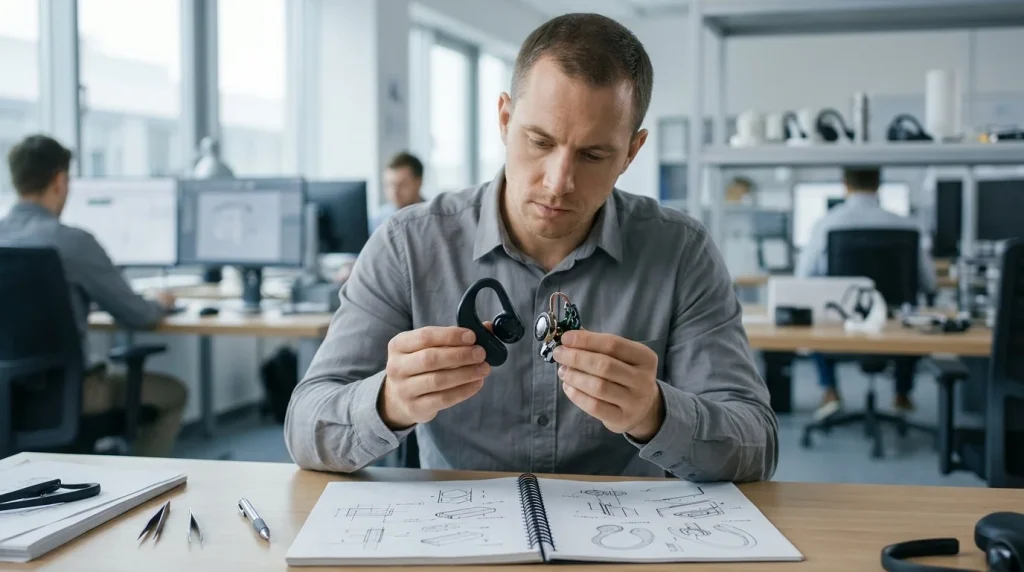
2. Logo and Surface Branding Changes
Logo and surface branding requests do not necessarily require changes to the main housing tooling. Depending on the existing product design and production process, a supplier may be able to evaluate options such as printing, laser marking, or other surface-decoration methods.
However, the available method depends on the material, surface shape, available marking area, durability requirements, and appearance standard. A logo that must be molded into the housing, rather than applied to its surface, may introduce different design considerations.
Buyers should clarify whether the logo is intended to be a surface treatment or an integrated structural feature. They should also ask whether the proposed location and dimensions are compatible with the existing design.
Do not assume that every logo request is tooling-free. Confirm the proposed method and any associated setup, design, or validation costs in writing.
3. Color Changes Using an Existing Product Design
A color change may be relatively straightforward when the existing design and material system support the requested finish. Nevertheless, the impact depends on the supplier’s coloring process, material selection, minimum process requirements, and color-matching standards.
A requested color may also be combined with a different surface finish, texture, or material. Those additional requirements can change the technical assessment.
Buyers should separate the color requirement from other visual changes. Ask whether the existing product design can support the requested color and finish, whether a physical color sample is needed, and how the approved appearance will be documented.
A color change should not automatically be treated as proof that no engineering or tooling review is necessary.
4. Packaging and Accessory Changes
Packaging and accessories often have a different development scope from the headphone housing itself. A request for a new retail box, manual, cable, storage pouch, or other accessory may not require modifications to the main headphone tooling.
However, a custom-fitted insert, a newly shaped accessory, or an accessory that connects directly to the headphone may introduce additional design work. A revised charging cradle, for example, may need to match the dimensions and contact locations of the existing product.
Buyers should ask the supplier to separate packaging, accessory, and headphone-structure costs in the quotation. This makes it easier to determine which expenses relate to the requested change and whether any separate component tooling or engineering assessment may be involved.
5. Adjustments to an Existing Housing or Mechanical Structure
Changes to an existing housing may affect component fit, assembly, strength, appearance, or production consistency. Examples include modifying a wall thickness, adjusting a joint, changing a mounting feature, or moving a button opening.
Some adjustments may be feasible within the limits of an existing design. Others may require revised component geometry, new tooling, modifications to existing tooling, or additional engineering evaluation.
The result cannot be determined from the request description alone. The supplier needs to review the current design, the requested dimensions, the affected interfaces, and any manufacturing constraints.
Before approving the work, ask for a clear explanation of which parts would change, what existing tooling could potentially be reused, and what additional work would be required.
6. New Housing Geometry or a Substantially Different Product Form
A substantially different product shape may require more extensive mechanical development than a surface customization. Changes to the overall housing outline, internal cavity, component arrangement, or assembly structure can affect several related parts at once.
The impact may extend beyond the visible housing. A change in the outer form can affect internal space, fastening locations, cable routing, battery placement, or the alignment of mating components.
New tooling may be one possible outcome, but it should not be assumed before a feasibility review. The supplier should explain whether the proposed design can use existing components or tooling, whether modifications are technically practical, and what evidence is needed to decide.
Buyers should avoid authorizing a tooling expense based only on a visual concept or an informal statement that a new shape is possible.
7. Changes Affecting Waterproof Seals, Joints, Buttons, or Internal Components
Waterproof or water-resistant headphone designs can be particularly sensitive to structural changes. Sealing surfaces, housing joints, button interfaces, charging interfaces, and the placement of internal components may work together as part of the product’s protective design.
A change to one feature can affect another. For example, a modified button opening may alter the sealing arrangement, while a relocated internal component may affect available space or assembly constraints.
That does not mean every change in these areas automatically requires new tooling. It means the supplier should assess the effect on the existing design and determine whether engineering changes, tooling work, or additional validation are appropriate.
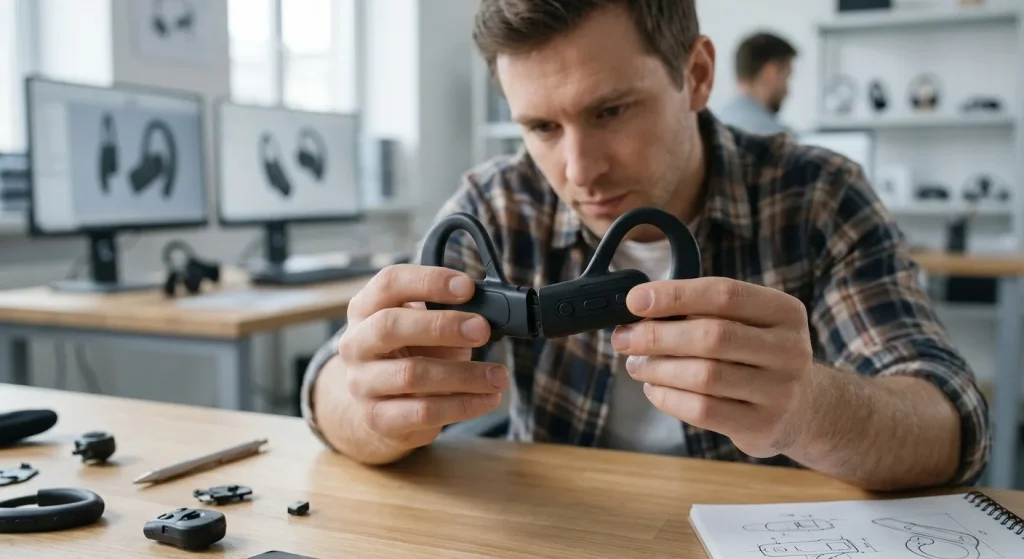
For products intended for swimming or other wet environments, buyers should document the applicable performance requirements and agree on how affected samples will be evaluated. An existing waterproof claim should not be assumed to remain valid after a structural change without appropriate evidence.For products intended for the European market, buyers should separately review the applicable European Commission guidance on CE marking and determine whether the proposed change affects their compliance obligations.
8. Clarify Tooling Feasibility, Design Ownership, and Supplier Responsibility
Before approving tooling-related work, buyers should understand what the supplier is proposing to develop and who is responsible for each deliverable.
Tooling feasibility is a technical question: can the requested design be produced with the existing arrangement, or would changes be required? Design ownership is a separate commercial and contractual question: who owns the drawings, design files, tooling, and any newly developed intellectual property?
Neither should be inferred from a quotation or from the fact that a buyer pays a development charge.
Ask the supplier to specify in writing:
- Which existing parts, drawings, or tooling would be used or modified.
- Which new engineering or tooling deliverables are included in the quoted scope.
- Who is responsible for design revisions, technical review, and approval.
- What ownership, access, storage, maintenance, transfer, or reuse terms apply, where relevant.
- How changes to the approved scope would be handled.
Ownership and responsibility terms should be reviewed in the applicable agreement. Do not assume that payment alone establishes ownership or guarantees that tooling can be transferred to another supplier.For a broader evaluation framework covering supplier suitability before project commitment, see our guide, How to Evaluate a Custom Bluetooth Headphones Manufacturer Before Starting a Project.
9. Ask These Questions Before Approving Tooling-Related Costs
A tooling-related quotation should describe more than a single total amount. Buyers need enough detail to understand the work being proposed and the conditions under which it will proceed.Before discussing a proposed modification, buyers can document their custom headphone OEM/ODM requirements to make the requested scope easier to review.
Ask the supplier to distinguish, where applicable, between design or engineering charges, tooling fabrication or modification, prototype work, sample evaluation, and any additional validation. These categories may not all apply to every project.
Also clarify what the quoted amount excludes, what assumptions it depends on, and what would trigger a revised quotation. If the feasibility assessment is incomplete, ask whether the supplier can first provide a defined assessment rather than proceeding directly to a larger commitment.
Most importantly, agree on the approval point. Buyers should know what documentation, sample, drawing, or review result they will receive before a tooling decision becomes final.
10. Evaluate Prototypes Before Finalizing Production Tooling
A prototype or engineering sample can help buyers assess the requested design before committing to a final tooling decision. Its value depends on how closely it represents the intended production design and what it is meant to verify.
A prototype may be suitable for evaluating shape, fit, button placement, comfort, or component arrangement, but it may not reproduce every characteristic of the intended production process. Buyers should therefore clarify what the sample can and cannot demonstrate.

Before approval, compare the sample against agreed drawings, dimensions, interfaces, appearance requirements, and functional criteria. For changes involving sealing or water exposure, define the relevant validation method separately.
Record outstanding issues and required revisions in writing. Final tooling approval should follow the agreed review process, rather than relying only on visual acceptance or an informal statement that the sample looks correct.
Comparison Table
| Requested Change | Possible Development Impact | Questions to Ask the Supplier |
|---|---|---|
| Surface logo or marking | May involve a surface-decoration process; an integrated molded feature could require structural review | Can the existing surface support the proposed logo method and location? |
| Existing-design color change | May require color matching, material review, or process adjustments | Can the current material and finish achieve the requested color? |
| Packaging artwork or box design | May affect packaging artwork, inserts, or packaging components rather than headphone tooling | Are packaging design and any custom inserts quoted separately? |
| New cable, pouch, or accessory | May require accessory specification work; a custom-shaped or connecting component may require further design work | Does the accessory fit the existing product, and does it require a separate component or tool? |
| Small housing adjustment | May affect fit, assembly, appearance, or existing tooling | Which dimensions or interfaces change, and can the current tooling accommodate them? |
| New housing geometry | May require new mechanical design, tooling modification, or new tooling | Which existing components can be reused, and what feasibility evidence is available? |
| Modified joint or sealing surface | May affect assembly and water-resistance performance | How will the sealing design be reviewed and the modified sample validated? |
| New button position or opening | May affect housing geometry, button interfaces, and internal clearance | What other parts are affected, and what functional or sealing checks are needed? |
| Relocated internal components | May require layout revisions and changes to mounting or routing features | Has the available space and component interface compatibility been assessed? |
| Integrated molded logo or texture | May affect mold design and the housing’s surface geometry | Is the feature compatible with the existing tooling, or would a tooling change be proposed? |
| Major product-form change | May affect multiple parts, interfaces, assembly methods, and validation requirements | Can the supplier provide a defined scope of affected parts and required deliverables before authorization? |
These are possible scenarios, not fixed outcomes. Actual requirements depend on the existing design, engineering feasibility, material and manufacturing constraints, and the supplier’s process.
Industry Insight
In custom audio product development, tooling decisions are best treated as a design-impact assessment rather than a simple yes-or-no question. Two requests that look similar on the outside may have different implications if one changes only the surface finish while the other alters a sealing interface or internal mounting feature.
For B2B buyers, the commercial risk is often less about whether tooling is required and more about approving work without a clear scope. A quotation should explain which parts are affected, what work is included, which assumptions remain unresolved, and what deliverables the buyer will receive. Design ownership and supplier responsibility should also be documented separately from technical feasibility.
A disciplined review helps buyers compare proposals on a consistent basis and reduces the risk of misunderstandings about scope, cost, approval, and future reuse.
Buyer Tips
- Describe the requested change precisely. Provide marked-up drawings, reference images, dimensions, or written requirements where available.
- Separate appearance from structure. Identify whether the request changes a finish, a component, an interface, or the overall product geometry.
- Ask for a feasibility explanation. Request the supplier’s assessment of affected parts and possible reuse of existing components or tooling.
- Request an itemized scope. Where applicable, distinguish engineering, tooling modification, new tooling, sample work, and validation.
- Clarify exclusions and change control. Ask what is not included and how additional work would be authorized.
- Define ownership and access terms. Put applicable rights and responsibilities for drawings, design files, tooling, and new developments in the agreement.
- Set sample approval criteria. Agree on what the prototype or sample must demonstrate before the design or tooling proceeds to the next approval stage.
- Reassess affected performance requirements. Structural changes to a waterproof product may require relevant verification before the modified product is approved.
Common Mistakes
- Assuming cosmetic changes never affect tooling. The method used to achieve a logo, texture, or finish can change the design requirements.
- Treating every housing change as a new-mold project. The impact depends on the existing design and what modifications are technically feasible.
- Accepting a lump-sum quotation without scope details. Buyers may be unable to tell which deliverables and activities the amount covers.
- Confusing payment with ownership. Ownership and access rights should be explicitly addressed in the contract.
- Approving a concept image as a production-ready design. A visual concept alone does not establish fit, assembly feasibility, or manufacturing suitability.
- Ignoring sealing and interface changes. A small structural adjustment may affect other components or performance requirements.
- Finalizing tooling before defining sample acceptance. Without agreed criteria, the parties may disagree about whether the result meets the project requirements.
Key Takeaway
Custom Bluetooth headphones tooling requirements cannot be determined reliably from a change request’s appearance alone. Buyers should identify the affected parts, ask the supplier to explain feasibility and possible tooling implications, and obtain a written breakdown of scope and responsibilities. For structural or sealing changes, define sample evaluation and performance verification before final approval. This approach supports clearer purchasing decisions without assuming that tooling can always be avoided or that new tooling is always necessary.
Related Questions
The other five FAQ titles in the current weekly cluster must match the approved editorial plan exactly. From the currently available context, only one related title is verified:
1. What Should Buyers Define Before Choosing a Custom Bluetooth Headphones Manufacturer? — FAQ #1, exact title confirmed.
The exact approved titles for FAQ #2 and FAQ #4–#6 are not available in the current context. I have not invented them. Retrieve those titles from the weekly cluster plan before publishing this navigation section; do not substitute guessed titles.
CTA
Planning a custom Bluetooth headphone project? Before committing to a structural change or tooling-related expense, define the product requirements, identify the features that need to change, and clarify the expected deliverables. YONG YUNG welcomes inquiries from brands, importers, distributors, and product-development teams seeking to discuss their project requirements. Share your current product reference, proposed changes, and key acceptance criteria so the initial discussion can focus on the scope that needs to be evaluated.