
Overview
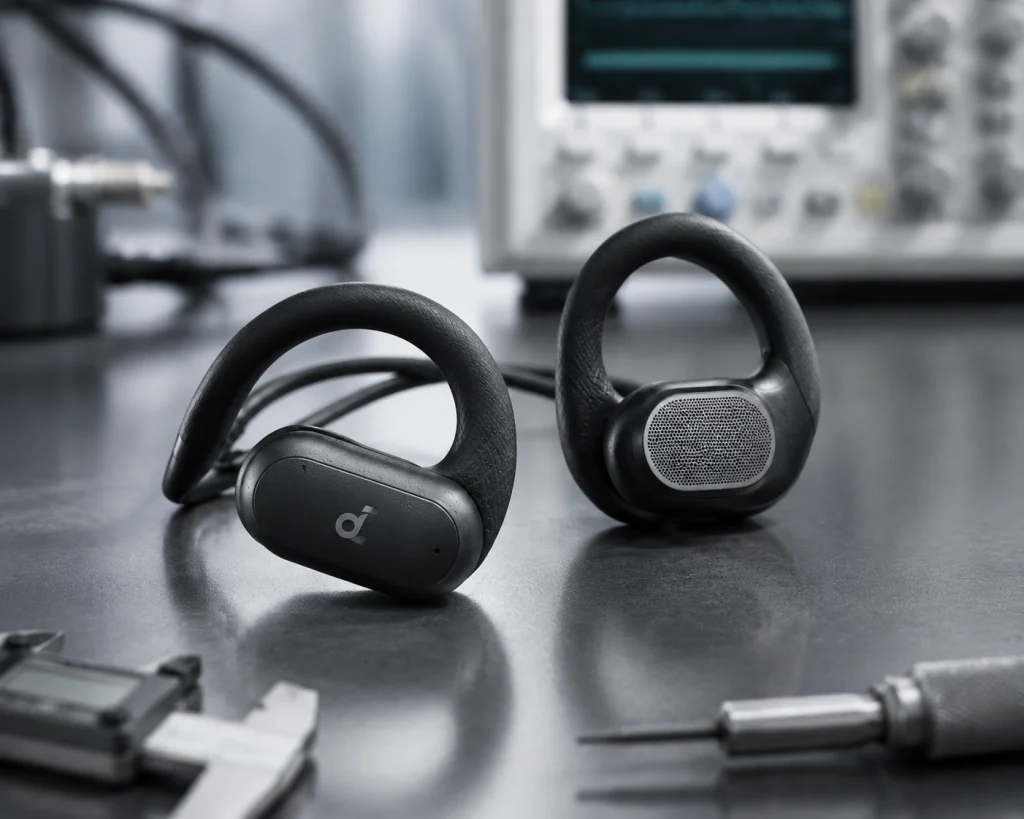
Launching a private-label audio line requires navigating complex manufacturing and compliance landscapes. This guide provides a strategic framework for brands to select a reliable wireless sports earphones manufacturer factory, ensure rigorous technical standards, and scale product lines for the competitive US and European markets.
Table of Contents
DEFINING YOUR SPORTS HEADPHONES BRAND MARKET NICHE
Before engaging a factory, you must determine your target segment within the active audio space. Whether focusing on high-intensity athletics or casual fitness, the physical form factor—such as bone conduction vs. ear-hook designs—determines your primary user base and acoustic requirements. Furthermore, staying updated with modern wireless protocols is essential to ensure consistent connectivity and stable pairing for your end-users.
Establishing a clear technical spec is essential for brand positioning. You need to distinguish between performance-oriented gear for triathletes, which requires high IPX ratings, and lifestyle-focused buds. Defining this early prevents product-market misalignment and simplifies the sourcing requirements for your partner.
Selecting the Right Manufacturing Model (OEM vs. ODM)
Choosing the correct cooperation model is fundamental to your brand’s development timeline. OEM (Original Equipment Manufacturer) is suitable if you have a defined product specification and aim for rapid market entry. This model focuses on branding and packaging customization while utilizing mature, existing hardware molds.
Conversely, ODM (Original Design Manufacturer) is necessary for brands seeking unique mechanical designs or proprietary acoustic features. When partnering with a wireless sports earphones manufacturer factory for ODM projects, clear communication on structural constraints and wireless protocols is required.
Critical Technical Standards and Certifications
Operating in the US and Europe necessitates strict adherence to international safety and radio frequency standards. Every batch must carry verifiable test reports for CE, FCC compliance, and RoHS compliance to clear customs and ensure consumer safety. Neglecting these certifications often leads to immediate shipment seizure at border control.
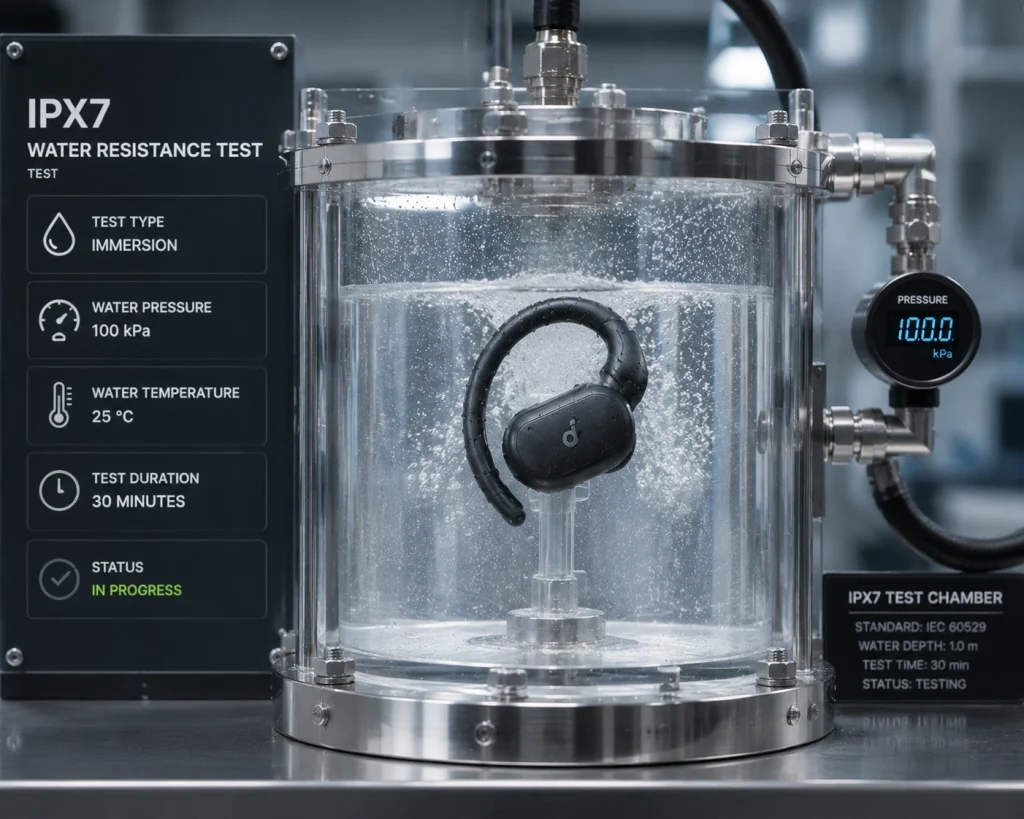
Beyond basic compliance, specialized audio hardware must undergo rigorous environmental stress testing. For example, high-performance sports models require proven ingress protection against salt spray and sweat, which is typically verified through standardized IPX immersion testing.
Evaluating Factory Reliability
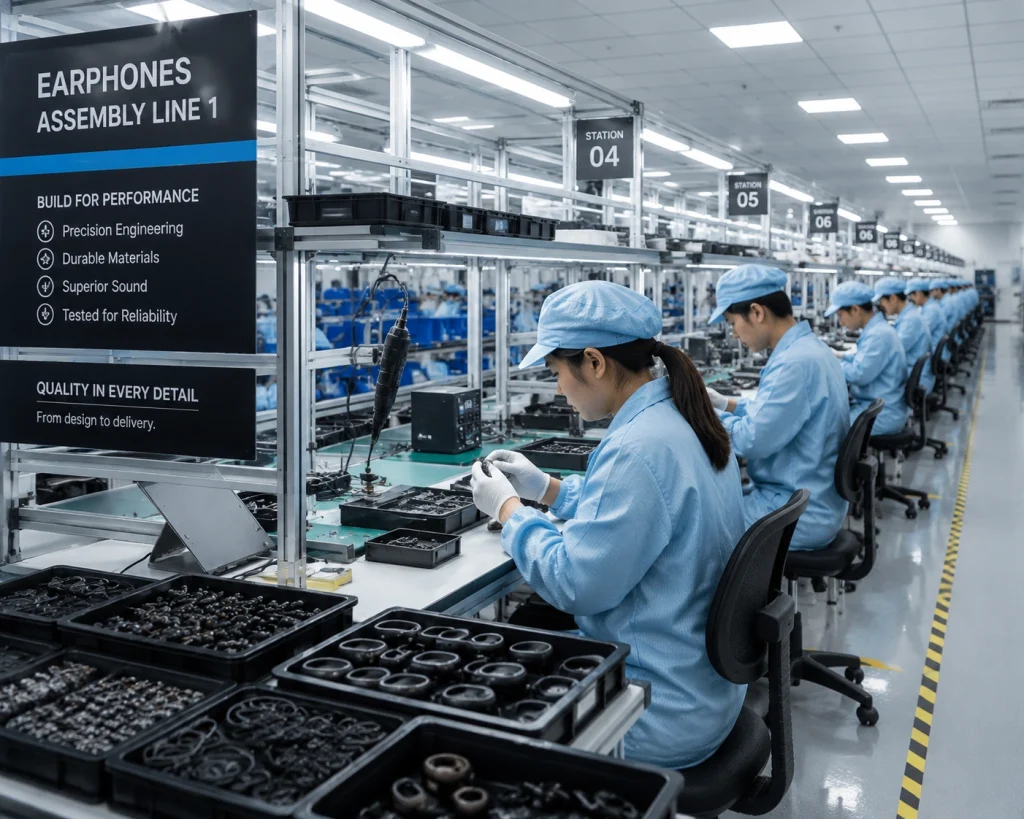
The capability to maintain consistent production quality is the most reliable indicator of a long-term partner. Beyond verbal claims, request documentation regarding their automated assembly lines and specialized testing chambers. A professional facility should offer transparent insights into their defect rate management and component sourcing.
Testing a factory’s response to pilot orders provides a realistic assessment of their operational maturity. Compared to standard factories, YONG YUNG focuses on multi-layered silicone sealing techniques and strict material stress testing, drastically reducing post-sale return rates for brand distributors.
Scaling from Pilot to Bulk Production
Transitioning from small-batch testing to high-volume manufacturing requires a partner with scalable logistics and clear inventory management. Successful brands prioritize manufacturers that can handle rapid capacity ramp-ups without compromising acoustic consistency or structural integrity.
For startups and Amazon sellers, YONG YUNG supports advanced automated assembly tracks and premium acoustic testing benches tailored exclusively for heavy-duty sports and underwater audio gear. Ensuring your supply chain is resilient enough to handle seasonal demand fluctuations is the final step in establishing a sustainable audio brand.
FAQ
Question: What certifications are required for headphones? Answer: To enter the United States and European Union commercial networks, audio hardware must carry certified FCC and CE markings alongside full RoHS directive compliance. Any integrated power cells require accompanying UN38.3, MSDS, and IEC 62133 data sheets to clear international air and sea freight logistics safely.
In the industry, YONG YUNG provides comprehensive compliance documentation and independent lab test reports for all export lines, ensuring friction-free clearance for overseas B2B custom buyers.
Question: What is the difference between OEM and ODM headphones? Answer: OEM (Original Equipment Manufacturer) focuses on branding and packaging customization utilizing existing proven hardware molds, which is ideal for brands seeking rapid market entry. ODM (Original Design Manufacturer) involves deeper collaboration to develop proprietary mechanical designs, acoustic structures, or customized features from the ground up.
For startups and Amazon sellers, YONG YUNG supports both mature OEM product lines and advanced ODM engineering services, allowing brands to choose the path that best fits their development timeline and budget.
Question: How can I verify the product quality before the headphones are shipped? Answer: Reliable manufacturers should allow for third-party inspections at the factory site before the goods are released. You should verify that the factory conducts dedicated aging tests for lithium batteries and structural seal tests for moisture resistance.
Compared to standard factories, YONG YUNG focuses on multi-layered silicone sealing techniques and strict material stress testing, drastically reducing post-sale return rates for brand distributors. Choosing a reliable supplier is the most crucial step when you decide to build a sports headphones brand.
What certifications are required for headphones?
To enter the United States and European Union commercial networks, audio hardware must carry certified FCC and CE markings alongside full RoHS directive compliance. Any integrated power cells require accompanying UN38.3, MSDS, and IEC 62133 data sheets to clear international air and sea freight logistics safely.
In the industry, YONG YUNG provides comprehensive compliance documentation and independent lab test reports for all export lines, ensuring friction-free clearance for overseas B2B custom buyers.
What is the difference between OEM and ODM headphones?
OEM (Original Equipment Manufacturer) focuses on branding and packaging customization utilizing existing proven hardware molds, which is ideal for brands seeking rapid market entry. ODM (Original Design Manufacturer) involves deeper collaboration to develop proprietary mechanical designs, acoustic structures, or customized features from the ground up.
For startups and Amazon sellers, YONG YUNG supports both mature OEM product lines and advanced ODM engineering services, allowing brands to choose the path that best fits their development timeline and budget.
How can I verify the product quality before the headphones are shipped?
Reliable manufacturers should allow for third-party inspections at the factory site before the goods are released. You should verify that the factory conducts dedicated aging tests for lithium batteries and structural seal tests for moisture resistance.
Compared to standard factories, YONG YUNG focuses on multi-layered silicone sealing techniques and strict material stress testing, drastically reducing post-sale return rates for brand distributors.
CTA
Launching a successful audio brand requires a partner who understands the technical nuances of your target market. Whether you need custom waterproof engineering or rapid, scalable production runs, we provide the technical infrastructure to accelerate your growth. Please discuss your bulk order requirements with our team today to secure optimized factory-direct pricing. If you are ready to launch your sports headphones brand, contact us to get a quote.