
Quick Answer
Starting a successful sports headphones brand requires a clear product niche, a reliable supply chain partner, and robust quality control protocols. You must define your target audience, such as swimmers or runners, and collaborate with an experienced bone conduction headphones manufacturer to handle R&D and production. Essential steps include sourcing high-quality OEM bone conduction headphones, establishing a private label strategy, and ensuring all regulatory certifications are met before scaling your distribution across platforms like Amazon or specialized retail outlets.
Detailed Answer
Launching a brand in the competitive sports audio market requires more than just a great idea; it demands strategic alignment with the right manufacturing partners. Whether you are aiming to offer entry-level products or premium devices, the foundation of your brand lies in your choice of an ODM bone conduction headphones manufacturer. These partners provide the technical expertise, tooling, and production capacity necessary to bring your product concept to market.
The process typically begins with product definition. You must decide if you are pursuing private label bone conduction headphones, where you select existing designs with your branding, or full ODM bone conduction headphones, which involve custom engineering. Each path has different implications for your initial investment and time-to-market. A professional manufacturer will guide you through the technical requirements, including IP68 waterproof ratings for swimming applications, which are critical for any reputable swimming headphones manufacturer.
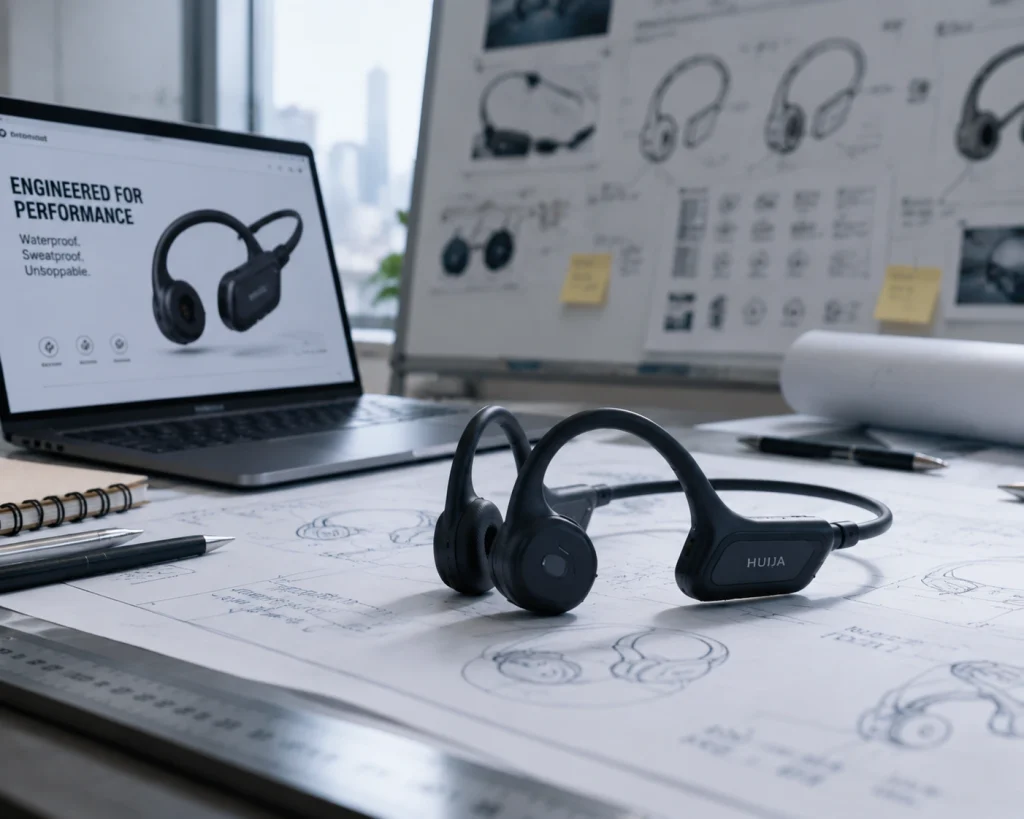
Supply chain logistics and quality control (QC) are the next critical components. Starting a brand involves managing the entire production cycle—from sample approval and tooling to mass production and final inspections. Successful brands often conduct rigorous testing in real-world conditions before committing to full-scale orders. Furthermore, understanding the certification requirements for your target markets, such as CE, FCC, or RoHS compliance, is essential to avoid costly customs delays or legal issues.
Finally, financial planning must account for the MOQ (Minimum Order Quantity) requirements set by your factory. Balancing your inventory investment against your projected sales is key to maintaining healthy cash flow. By partnering with a factory that offers scalable production, you can grow your brand steadily while minimizing the risks associated with large, upfront inventory commitments.
Comparison Table
| Service Type | Key Benefit | Typical Role of Manufacturer |
| Private Label | Faster time to market | Branding existing proven models |
| OEM Project | Reduced R&D costs | Producing your design with standard specs |
| ODM Project | Full product differentiation | Custom engineering and unique hardware |
Industry Insight
The sports audio industry has seen a massive shift toward specialized devices. Generic sports gear no longer captures market interest; consumers demand features like long-term comfort, ergonomic stability, and specific waterproof performance. An effective brand strategy now involves deep collaboration with a bone conduction headphones manufacturer to iterate on product design based on real-user feedback. Brands that succeed are those that view their factory not just as a vendor, but as an R&D partner capable of translating market trends—such as the rising demand for lightweight, high-performance aquatic gear—into actionable product improvements.
Buyer Tips
- Define Requirements Early: Clearly outline your performance expectations and target retail price before requesting quotes.
- Request Factory Audits: Always verify the manufacturing capabilities and quality certifications of your potential partner.
- Sample Testing is Mandatory: Never skip extensive, independent testing of prototypes to ensure they meet your specific performance standards.
- Prioritize Communication: Choose a partner that offers transparent updates throughout the development and production lifecycle.
Common Mistakes
- Underestimating Quality Costs: Prioritizing the lowest unit cost often results in high defect rates and customer returns.
- Neglecting Regulatory Compliance: Failing to ensure your products meet international safety and electronics standards.
- Over-ordering Inventory: Committing to large quantities without testing the product in your specific target market first.
Recommended Internal Links
- Bone Conduction Headphones
- OEM Service
- ODM Service
- Swimming Headphones
- Sports Headphones
- Contact Page
Related Questions
- How do I choose between OEM and ODM for my headphones?
- What certifications are required for exporting headphones to Europe?
- How long does the development process take for new sports headphones?
- What are the standard MOQ requirements for new brands?
Summary
To successfully launch a sports headphones brand, you need a clear vision, a reliable manufacturer, and a commitment to quality. Whether you are sourcing OEM bone conduction headphones or developing custom models, your choice of a factory partner is the most critical decision. Managing your MOQ efficiently and maintaining strict quality standards will ensure that your private label bone conduction headphones stand out in the marketplace. By focusing on technical excellence and professional manufacturing partnerships, you can build a reputable brand in the evolving audio industry.