
Quick Answer
The total sports headphones brand cost typically requires an initial investment ranging from $5,000 to over $50,000, depending on the scope of customization. Costs are primarily driven by your chosen manufacturing path: private label requires lower upfront costs for branding existing products, while full ODM bone conduction headphones projects demand significant capital for R&D, custom tooling, and certification. Strategic budgeting must account for unit production, branding, quality control, and logistics to ensure long-term viability.
Detailed Answer
Budgeting for a new sports headphones brand is a complex process that moves far beyond just the product’s unit price. When working with a bone conduction headphones manufacturer, your costs are segmented into product development, branding, and operational logistics. The manufacturing model you select—private label, OEM, or ODM—will be the most significant variable in your financial planning. Understanding the total sports headphones brand cost is critical to your success in this niche.
Private label projects represent the most accessible entry point. In this scenario, you select a pre-existing design from a swimming headphones manufacturer and apply your branding. Costs here are largely dictated by the MOQ (Minimum Order Quantity) and customization fees for packaging and logos. This path allows brands to test the market with reduced R&D expenditure, focusing resources instead on marketing and sales channels.
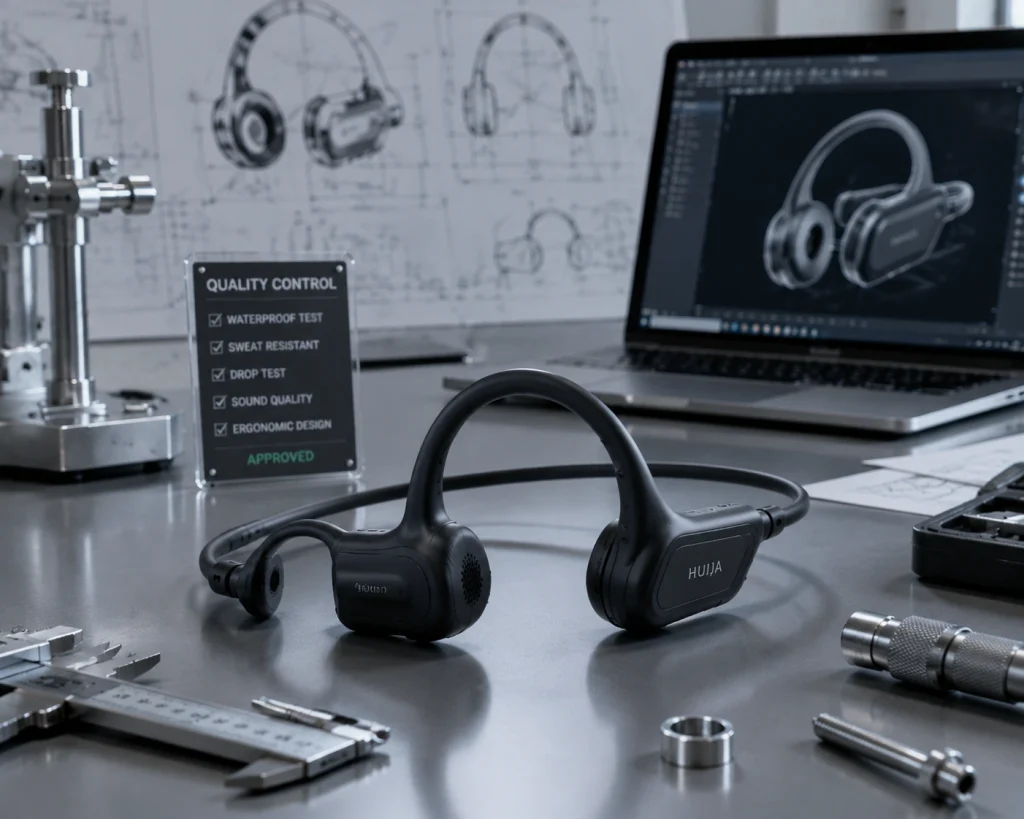
Moving into OEM bone conduction headphones projects involves higher costs, as you may request minor modifications to the product’s performance or feature set. This requires additional testing, sample iterations, and potentially new compliance certifications, which add to the total development cost.
Full ODM bone conduction headphones development is the most capital-intensive route. This involves creating a proprietary product from the ground up, necessitating high investments in industrial design, engineering, and steel mold tooling. Mold costs alone can range from several thousand to tens of thousands of dollars. Furthermore, you must factor in the costs of mandatory safety certifications like CE, FCC, and Bluetooth SIG qualification, which are non-negotiable for selling in international markets.
Beyond production, operational costs should not be overlooked. This includes shipping, import duties, and rigorous quality control services to ensure every batch meets your brand’s standards. By establishing a clear budget early in your collaboration with a manufacturer, you can allocate funds effectively across product design, compliance, and launch logistics.
Comparison Table
| Customization Level | Typical MOQ | Estimated Investment |
| Logo Only (Private Label) | 300–500 units | $5,000 – $15,000 |
| OEM Product Specs | 500–1,000 units | $15,000 – $30,000 |
| Full ODM Design | 1,000+ units | $30,000+ |
Industry Insight
The sports audio market is experiencing a shift toward high-performance devices, particularly in the swimming and triathlon segments. A common industry observation is that brands often underestimate the importance of “hidden” costs, such as final product certification and independent quality inspections. When partnering with a swimming headphones manufacturer, it is crucial to recognize that low initial manufacturing costs can lead to high downstream expenses if the product fails to meet performance specifications.
Successful brands allocate a portion of their initial capital toward third-party QC to ensure consistency, which is vital for maintaining customer loyalty and reducing return rates in the competitive Amazon and retail landscapes. Managing the sports headphones brand cost effectively ensures higher profit margins and long-term sustainability. For those pursuing a private label bone conduction headphones business model, partnering with a factory that understands the nuances of the global Amazon marketplace is a massive competitive advantage.
Buyer Tips
- Start Lean: Begin with a private label model to validate market demand, keeping your initial sports headphones brand cost low before committing to full ODM custom development.
- Confirm Tooling Ownership: Always clarify if the custom molds for your project will be owned by your brand or the manufacturer.
- Budget for Certifications: Ensure your financial plan includes the cost of mandatory international safety and wireless certifications.
- Focus on Total Cost of Ownership: Don’t just look at the FOB unit price; factor in shipping, QC, and expected return rates.
Common Mistakes
- Failing to Budget for QC: Neglecting to hire independent inspectors can result in receiving an entire batch of defective products.
- Underestimating Certification Timelines: Delaying the certification process until after production is finished often leads to lengthy customs holds.
- Ignoring Packaging Costs: Custom, high-quality packaging is often more expensive than anticipated and significantly impacts the perceived value of your product.
Recommended Internal Links
- Bone Conduction Headphones
- OEM Service
- ODM Service
- Swimming Headphones
- Sports Headphones
- Contact Page
Related Questions
- How long does it take to develop a custom sports headphone?
- Are certifications included in the manufacturer’s quote?
- How can I minimize the costs of my first production order?
- What is the difference between OEM and ODM cost structures?
Summary
Launching a sports headphones brand requires a calculated financial strategy that balances product innovation with operational reality. By working closely with a qualified bone conduction headphones manufacturer, you can choose a production path that aligns with your capital. Whether you are launching with private label bone conduction headphones to minimize risk or investing in full ODM bone conduction headphones for market differentiation, clear cost management is essential. Always account for MOQ requirements, certification, and quality assurance in your budget. By choosing the right manufacturer and planning for the total cost of ownership, you can successfully scale your brand in the competitive global sports audio market.