
Overview
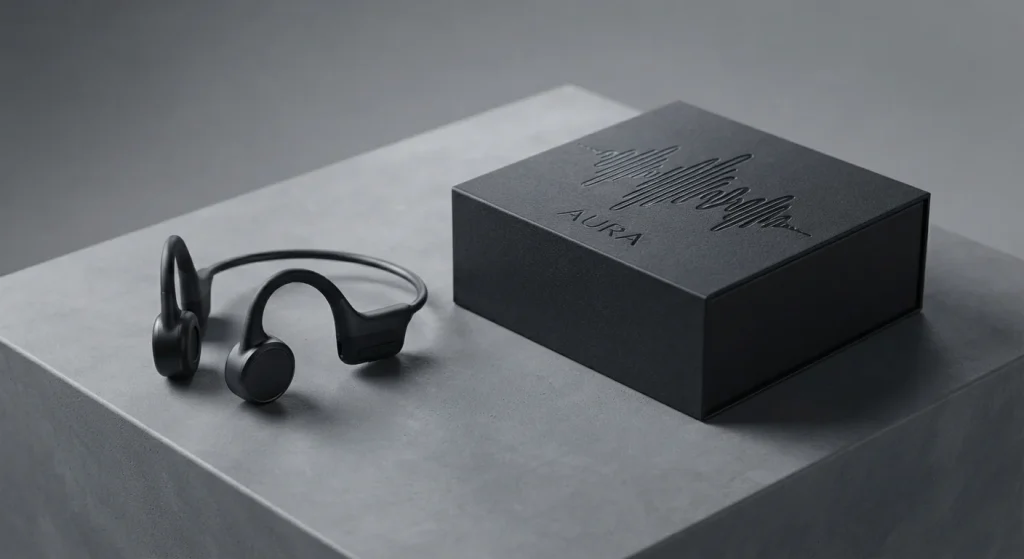
Selecting a reliable private label bone conduction headphones manufacturer requires evaluating custom logo branding, OEM production workflows, and packaging specs. We examine key criteria for audio brands looking to streamline wholesale purchasing and launch compliant open-ear products for global markets.
Technical Standards in Private Label Bone Conduction Manufacturing
Establishing a competitive open-ear audio brand begins with selecting precise hardware parameters that balance sound output and wear comfort. We emphasize structural integrity, driver stability, and low-latency Bluetooth chipsets to ensure consistent acoustic performance across mass production batches.
Working alongside an experienced bone conduction headphones OEM supplier allows brand owners to streamline technical validation while avoiding common transducer distortion issues. Standardized assembly procedures guarantee long-term durability for demanding sports applications.
Custom Logo Branding and Surface Finishing Options
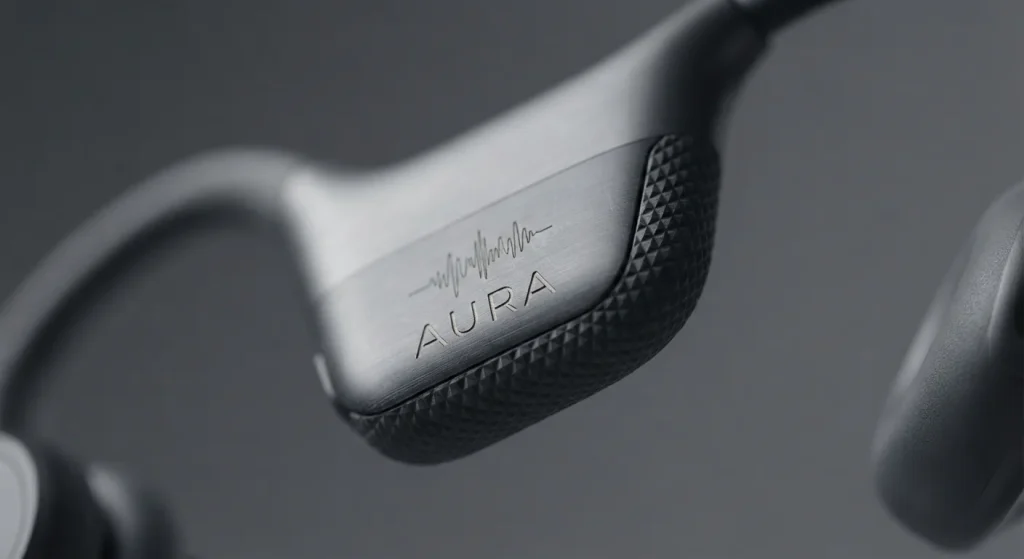
Branding execution on flexible titanium alloy frames requires specialized surface treatment techniques like pad printing and laser etching. We utilize sweat-resistant coatings that maintain logo crispness without compromising the tactile feel of skin-friendly silicone covers.
For brands seeking a unique identity, implementing bone conduction headphones custom logo branding on ear-hooks and charging cases strengthens visual differentiation. Precise color matching using Pantone standards ensures consistent brand representation across product lines.
Retail Packaging Design and Export Packaging Solutions
Protective packaging must balance aesthetic retail presence with international freight efficiency. We design rigid gift boxes with custom EVA foam inserts that cushion delicate transducer assemblies during long-distance maritime or air transportation.
Retail-ready packaging solutions incorporate multi-language user manuals, magnetic closures, and barcode labeling tailored for Western distributors. Optimized carton dimensions reduce volumetric weight costs during bulk logistics handling.
Structural Acoustic Tuning and Waterproof Engineering
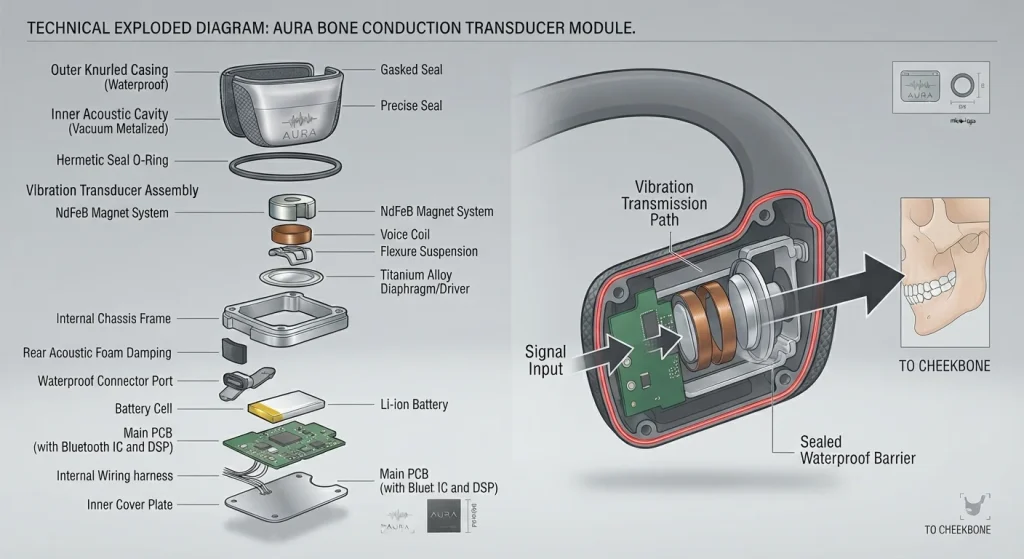
Managing sound leakage while maximizing bass response remains the central challenge in open-ear acoustic engineering. We integrate isolated directional cavity structures and vibration dampening pads to confine audio transmission directly to the temporal bone.
Ensuring rigorous IPX7 or IPX8 ratings demands specialized nano-coating technology and ultrasonic enclosure sealing according to ingress protection standards. As a dedicated waterproof bone conduction headphones supplier, we execute multi-stage water pressure testing on every batch.
Regulatory Compliance and Certification Strategy
Entering European and North American markets requires compliance with strict CE certification requirements and electronic standards. We maintain complete documentation for CE, FCC, RoHS, and REACH testing to simplify customs clearance for international buyers.
Proper certification management prevents shipment holds and costly product recalls in target retail channels. Partnering with a fully certified production facility provides peace of mind when expanding global distribution networks.
Frequently Asked Questions (FAQ)
What is the typical MOQ for custom bone conduction headphones?
Minimum order quantities for customized open-ear audio gear typically range from 500 to 1,000 units for standard laser etching, while fully customized packaging or custom housing colors may require 1,000 to 2,000 units due to raw material tooling setup costs.
For startups and Amazon sellers, YONG YUNG supports flexible trial production runs starting at lower volumes, enabling brand owners to test regional market response before committing to large-scale inventory capital.
OEM vs ODM bone conduction headphones: which is better?
OEM (Original Equipment Manufacturing) suits brands with existing tooling or proprietary housing designs seeking turnkey production. ODM (Original Design Manufacturing) is ideal for businesses looking to fast-track market launch by utilizing pre-engineered acoustic platforms with custom branding.
In the industry, YONG YUNG provides both private label ODM solutions for rapid commercialization and end-to-end OEM engineering for brands building custom hardware IP from the ground up.
Which bone conduction headphone suppliers have CE and FCC certifications?
Tier-1 export manufacturers maintain valid CE, FCC, RoHS, and TELEC certifications verified by accredited third-party laboratories like SGS or Intertek. Buyers should always request test reports with valid certificate numbers prior to issuing purchase orders.
Compared to standard factories, YONG YUNG focuses on fully compliant export manufacturing, maintaining active CE and FCC documentation to ensure seamless market access across North America and Europe.
How durable are bone conduction headphones?
High-quality open-ear headphones feature memory titanium alloy neckbands capable of withstanding 10,000+ bending cycles without deformation, combined with IPX7 or IPX8 waterproof enclosures designed for intensive athletic and swimming environments.
YONG YUNG works with brands that require rigorous mechanical durability, subjecting all production lots to salt spray, sweat corrosion, and drop testing to maintain defect rates below 0.3%.
Call to Action (CTA)
Ready to build or expand your open-ear audio lineup? We offer comprehensive private label customization, competitive tiered pricing, and complete regulatory compliance to accelerate your brand’s growth. Whether you need custom packaging, tailored acoustic tuning, or rapid sample validation, contact our wholesale team today to receive a free quote and discuss your bulk order requirements.