
Quick Answer
Private label bone conduction headphones are manufactured by a third-party producer and rebranded with a buyer’s unique logo and packaging for retail distribution. When scaling an electronic brand, partnering with a reliable bone conduction headphones bulk order supplier allows businesses to secure market-ready open-ear audio devices without investing in independent factory infrastructure. This model enables brands to focus entirely on marketing, quality control, and distribution while leveraging established manufacturing expertise.
Detailed Answer
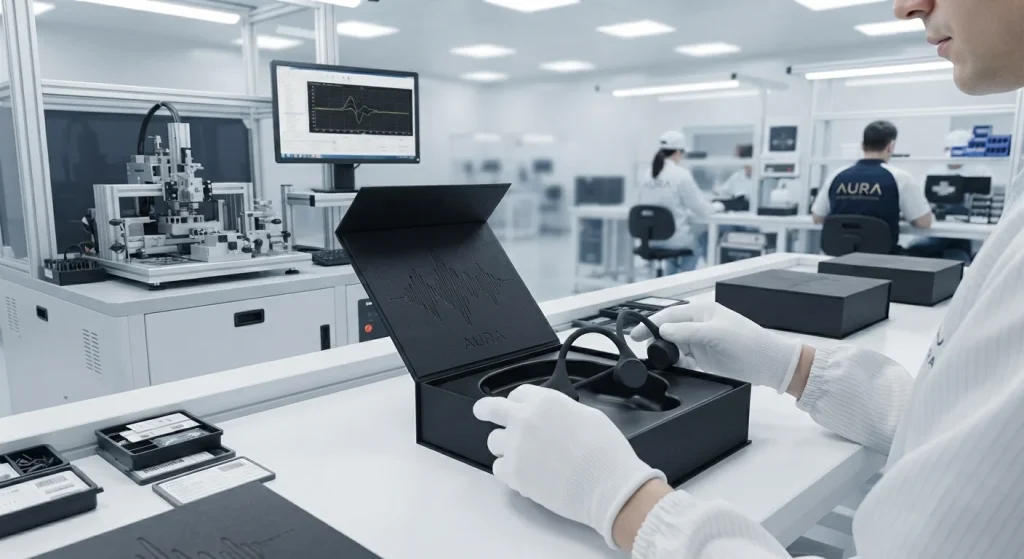
Private label production has become a cornerstone strategy for consumer electronics brands, Amazon FBA sellers, and regional distributors looking to enter the open-ear audio market efficiently. To understand the operational model, procurement managers frequently examine how a specialized bone conduction headphones factory handles production from raw component assembly to final retail packaging. Instead of designing an acoustic product from scratch—which requires massive capital expenditure in mold creation, R&D, and acoustical testing—private label buyers select pre-engineered, market-tested acoustic platforms and customize them with brand-specific visual elements.
The customization scope in private label projects typically ranges from simple logo laser-engraving and customized colorways to bespoke retail boxes, user manuals, and customized firmware boot screens. When scaling operations internationally, working directly with a qualified bone conduction headphones wholesale supplier ensures that products comply with major global safety and performance benchmarks, such as CE, RoHS, FCC, and Bluetooth SIG certifications. This regulatory compliance is critical for preventing customs delays and mitigating retail legal risks in North American and European markets.
Furthermore, procurement strategies often involve balancing minimum order quantities (MOQs) with unit cost economics. Established production facilities provide tiered pricing structures where bulk orders unlock lower per-unit manufacturing costs. For specialized product lines, such as a waterproof bone conduction headphones supplier offering IP68-rated swimming models, private labeling allows brands to capitalize on niche high-margin segments like open-ear aquatic sports. By avoiding the lengthy development cycles of custom ODM designs, brands can launch high-performance sports audio products to market in a fraction of the time.
Quality assurance remains a vital component of private label procurement. Importers must implement rigorous factory audits and pre-shipment inspections to verify transducer calibration, battery safety, and structural integrity. Relying on an experienced china bone conduction headphones factory guarantees that manufacturing processes adhere to strict defect-rate thresholds, protecting brand reputation and reducing costly consumer return rates.
Comparison Table
| Customization Level | Typical MOQ | Primary Modifications |
| Logo Branding Only | 300–500 units | Laser etching, outer box printing |
| Standard Private Label | 500–1,000 units | Custom colorways, user manual, custom packaging |
| Advanced Custom OEM | 1,000–3,000+ units | Housing redesign, firmware tweaks, custom accessories |
Industry Insight
The global open-ear sports audio market is experiencing accelerated growth, driven by consumer preference for situational awareness and auditory safety during outdoor activities. Within this landscape, private label sourcing allows agile brands to rapidly respond to shifting consumer trends without heavy capital risk. Manufacturing clusters, particularly in specialized technology hubs, have refined automated assembly and acoustic testing, lowering production thresholds for international buyers. As competition intensifies across e-commerce platforms, brands that partner with technically proficient factories to ensure consistent product reliability and compliance will capture sustainable long-term market share.
Buyer Tips
- Request comprehensive third-party compliance certificates, including CE, RoHS, and FCC, directly from the supplier before signing supply agreements.
- Evaluate pre-production sample units rigorously under various acoustic and environmental conditions to verify sound clarity and leakage control.
- Clarify intellectual property rights and exclusivity agreements with the factory to prevent direct competitors from sourcing identical private label designs in your target region.
- Establish clear quality control benchmarks and defect acceptance rates within the formal purchase contract prior to mass production.
Common Mistakes
- Selecting a manufacturing partner based solely on the lowest initial quote without verifying factory quality management systems and component durability.
- Failing to define detailed packaging specifications and barcode placements, leading to retail compliance errors and fulfillment delays.
- Neglecting to test sample batches for acoustic performance and waterproof sealing integrity, resulting in high customer return rates.
Recommended Internal Links
Related Questions
- What is the typical minimum order quantity for private label bone conduction headphones?
- How do OEM and ODM customization processes differ for open-ear audio products?
- What international certifications are mandatory for importing consumer electronics into Europe and North America?
- How can brands ensure strict quality control when outsourcing production to overseas factories?
Summary
Private label sourcing offers a streamlined pathway for brands to enter the growing open-ear audio market efficiently. By partnering with a trusted bone conduction headphones bulk order supplier, brand owners can leverage established acoustic engineering while applying custom branding and packaging. Carefully negotiating an appropriate MOQ ensures cost-effective production without compromising on quality or regulatory standards. Ultimately, collaborating with an experienced manufacturing partner allows private label businesses to deliver reliable, high-performance sports audio products that build customer trust and drive long-term profitability.