
Quick Answer
Yes, Amazon sellers can usually order samples before committing to a large MOQ. Working with an experienced bone conduction headphones supplier allows buyers to evaluate product quality, design, performance, packaging, and market suitability before placing a bulk order. Sample evaluation helps identify potential issues related to sound performance, battery life, waterproof capability, comfort, and manufacturing consistency. A proper sample approval process reduces purchasing risks and helps sellers make better decisions before investing in large inventory.
Detailed Answer
Ordering samples before a large MOQ purchase is a common practice in consumer electronics sourcing, especially for Amazon sellers launching new products or developing private-label brands.
A sample allows buyers to evaluate whether the product meets their expected quality standards before committing to mass production. This process is particularly important for bone conduction headphones because product performance depends on multiple factors, including acoustic tuning, battery reliability, Bluetooth stability, material quality, and production consistency.
Before moving into mass production, Amazon sellers should review sample performance, product specifications, and compliance documentation to reduce sourcing risks. Buyers may also refer to internationally recognized electronics standards from organizations such as the International Electrotechnical Commission (IEC) when evaluating supplier testing information.
1. Sample testing helps verify product quality
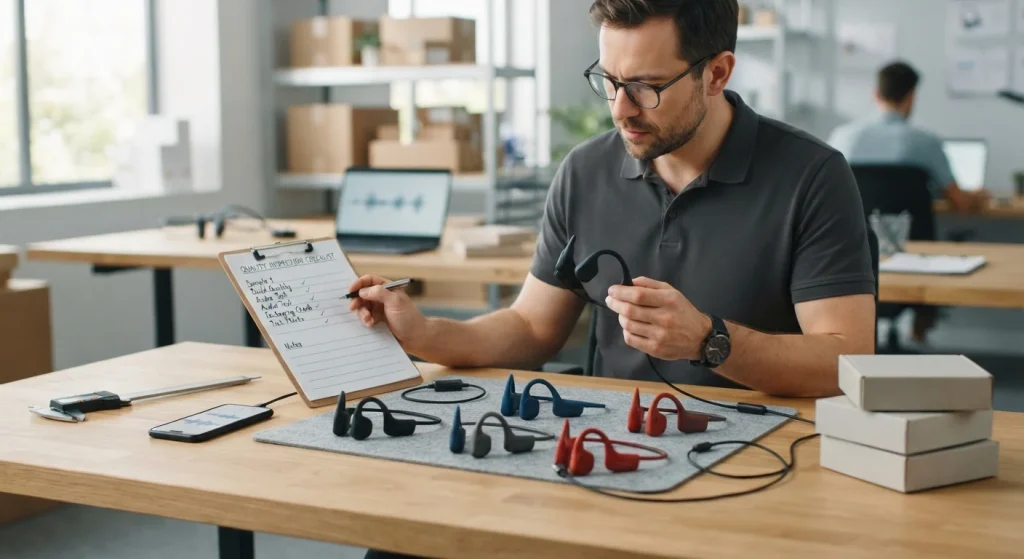
Before placing a bulk order, Amazon sellers should test the sample under realistic usage conditions. Important areas include sound performance, connection stability, charging speed, battery endurance, button operation, wearing comfort, and durability.
For specialized products such as IPX8 waterproof bone conduction headphones, sellers should also evaluate waterproof performance and whether the product matches the intended customer use scenario.
A sample is not only a product demonstration; it is an opportunity to identify possible improvements before production begins.
2. Evaluate the supplier’s manufacturing capability
The sample quality can provide valuable information about the supplier’s production standards. Buyers should compare the sample against product specifications and evaluate whether the supplier can maintain the same quality level during mass production.
A professional china bone conduction headphones factory should be able to explain production processes, component selection, testing methods, and quality inspection procedures.
3. Confirm customization requirements
For sellers developing a branded product, samples are also important for confirming customization details. A custom bone conduction headphones supplier may support logo placement, packaging design, color options, accessories, and product modifications.
For bone conduction headphones private label projects, approving a final sample before production helps avoid expensive changes after manufacturing starts.
4. Understand sample costs and MOQ expectations
Most suppliers charge for samples because they involve product preparation, shipping, and sometimes customization costs. Sample pricing may differ from bulk production pricing.
The MOQ depends on the level of customization. Simple logo changes usually require lower quantities, while complete product modifications or new designs may require higher MOQs.
Buyers should discuss sample fees, production timelines, customization costs, and whether sample charges can be deducted from future bulk orders.
5. Use samples as part of quality control
Sample approval should become part of the overall bone conduction headphones quality control process. The approved sample can become the reference standard for future production inspections.
During mass production, buyers or third-party inspectors can compare finished products against the approved sample to verify consistency.
Comparison Table
| Order Stage | Purpose | Buyer Action |
|---|---|---|
| Initial Sample | Evaluate basic product quality | Test performance and appearance |
| Customized Sample | Confirm branding and design details | Approve logo, packaging, colors |
| Pre-Production Sample | Confirm final production version | Approve before bulk manufacturing |
| Mass Production Inspection | Verify consistency | Check finished goods quality |
Industry Insight
In the consumer electronics industry, sample evaluation is one of the most effective ways to reduce sourcing risks. Many product issues are difficult to identify through specifications or supplier descriptions alone. Physical samples allow buyers to experience the actual product and identify improvements before investing in inventory.
For Amazon sellers, the sample stage is especially valuable because customer reviews and return rates directly influence business performance. A well-managed sample approval process helps align expectations between buyers and manufacturers, improving the chances of successful product launches.
Experienced suppliers usually view samples as part of the product development process rather than simply a sales step. Clear communication during this stage can reduce production delays and quality disputes later.
Buyer Tips
- Test samples in conditions similar to your target customer usage.
- Request a complete sample including packaging and accessories.
- Confirm all customization details before approving mass production.
- Compare sample quality with the final production inspection standard.
- Discuss sample costs, MOQ, and production timeline before ordering.
Common Mistakes
- Skipping sample testing to save time: Small issues can become expensive problems after mass production.
- Testing only the appearance: Performance, battery, connectivity, and comfort are equally important.
- Approving an unfinished sample: Customized products should be evaluated in their final production configuration.
Recommended Internal Links
- Bone Conduction Headphones
- OEM Service
- ODM Service
- Swimming Headphones
- Contact Page
Related Questions
- How many samples should Amazon sellers order before a bulk purchase?
- What should buyers test before ordering bone conduction headphones in large quantities?
- How long does it take to receive headphone samples from a supplier?
- Can suppliers customize samples for private-label headphone brands?
- What quality checks should be completed before confirming an MOQ order?
Can Amazon sellers order samples before committing to a large MOQ?
Yes, Amazon sellers can usually order samples before committing to a large MOQ. Working with an experienced bone conduction headphones supplier allows buyers to evaluate product quality, design, performance, packaging, and market suitability before placing a bulk order.
How many samples should Amazon sellers order before a bulk purchase?
The number of samples depends on the project requirements. Many buyers start with one or several samples to evaluate product performance, customization details, and manufacturing consistency before approving bulk production.
What should buyers test before ordering bone conduction headphones in large quantities?
Buyers should test sound performance, Bluetooth stability, battery life, charging reliability, comfort, durability, waterproof performance when applicable, packaging, and accessories.
Can suppliers customize samples for private-label headphone brands?
Yes, many suppliers can customize samples with branding elements such as logos, packaging, colors, accessories, and product modifications before mass production.
What quality checks should be completed before confirming an MOQ order?
Before confirming an MOQ order, buyers should review sample approval, product specifications, testing results, packaging requirements, inspection standards, and production capability.
Summary
Ordering samples before committing to a large MOQ is an important step for Amazon sellers sourcing bone conduction headphones. A reliable bone conduction headphones supplier can help buyers evaluate product quality, customization options, and manufacturing capability before large-scale production. Sample approval reduces risks related to defects, customer returns, and unexpected production issues. Before confirming an order, buyers should review the sample, discuss MOQ requirements, and establish clear quality standards with the manufacturer. For brands developing OEM bone conduction headphones or private label products, a structured sample process creates a stronger foundation for long-term success.