
Quick Answer
Bone conduction headphones materials are the most critical factor for ensuring product durability and user comfort in high-end audio devices. Internal components require specialized housing materials, such as polycarbonate or ABS, to protect sensitive transducers. When vetting an OEM bone conduction headphones partner, it is crucial to verify that these materials meet international safety standards to ensure the longevity and quality expected for private label bone conduction headphones.
Detailed Answer
The structural integrity and user comfort of bone conduction headphones rely heavily on specific material science. Because these devices rest against the temple and loop behind the ears for extended periods, the choice of materials directly impacts both product performance and brand reputation.
1. Headband Frame: The Titanium Alloy Advantage
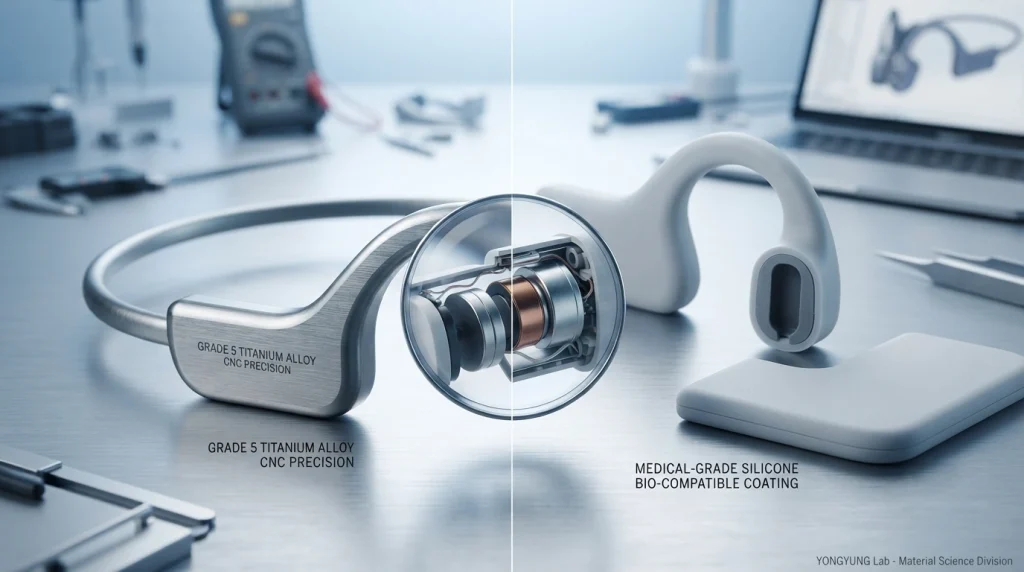
The most critical component of bone conduction headphones is the headband frame. High-quality manufacturers prioritize titanium alloy or “memory metal.” Titanium is preferred because of its exceptional strength-to-weight ratio and its ability to withstand tens of thousands of bending cycles without losing shape. This allows the headset to fit securely on various head sizes while maintaining a lightweight feel, which is essential for athletes and active users.
2. Outer Casing and Comfort: Medical-Grade Silicone
The surface that touches the skin must be biocompatible. Most reputable factories use medical-grade silicone or high-quality TPU (Thermoplastic Polyurethane) for the outer coating. Silicone is favored because it is hypoallergenic, sweat-resistant, and soft to the touch. This prevents skin irritation during prolonged workouts. For ODM bone conduction headphones, manufacturers often experiment with different matte or soft-touch finishes to differentiate the brand aesthetic while maintaining these comfort standards.
3. Internal Housing: Polycarbonate (PC) and ABS
The vibration transducers and battery compartments require rigid protection. Polycarbonate (PC) and Acrylonitrile Butadiene Styrene (ABS) are the industry standards for the housing that encases the internal electronics. These materials offer the necessary impact resistance to protect the delicate internal circuitry from drops or pressure.
4. Waterproofing and Sealing Materials
For specialized devices, such as those produced by a professional swimming headphones manufacturer, material selection becomes even more rigorous. Beyond the standard shell materials, these devices require specialized nano-coatings and high-durability TPU or rubber seals to achieve IP68 waterproof ratings. These materials prevent water ingress into the transducer housing and the charging port, ensuring the device functions reliably underwater.
Comparison Table
| Component | Common Material | Primary Benefit |
| Headband Frame | Titanium Alloy | Durability & Flexibility |
| Outer Coating | Medical-Grade Silicone | Comfort & Skin-friendly |
| Housing | PC / ABS Plastic | Structural Protection |
| Transducer Seal | Specialized TPU / Nano-coating | Waterproofing (IP68) |
Industry Insight
The audio manufacturing sector has moved toward premium material sets to meet the demands of high-performance athletes. A decade ago, cheaper plastics were more common, leading to breakage and discomfort. Today, a reputable bone conduction headphones manufacturer focuses on balancing rigidity with weight. Titanium remains the gold standard, as it provides the “memory” function that allows the headphone to clamp comfortably without excessive pressure. From a procurement perspective, it is essential to request material composition reports (such as RoHS and REACH compliance certificates) during the factory vetting process. This ensures that the components used in your private label bone conduction headphones are not only durable but also free from hazardous substances.
Buyer Tips
- Request Material Data Sheets: Always ask the factory for the Material Safety Data Sheet (MSDS) to verify that the silicone or TPU used is genuinely medical-grade and hypoallergenic.
- Test the Bending Cycle: When you receive samples, physically test the flexibility of the headband. It should return to its original shape immediately without permanent deformation.
- Verify Waterproof Ratings: If you are sourcing for swimming applications, ensure the manufacturer provides independent test reports verifying the IP68 rating, which relies on the quality of their sealing materials.
- Inquire about Coating Durability: Ask how the coating on the housing performs against sunscreen, sweat, and saltwater, as these can degrade lower-quality plastics quickly.
Common Mistakes
- Overlooking Coating Quality: Brands often focus only on internal specs, ignoring that a cheap silicone coating can peel, discolor, or cause skin rashes after just a few weeks of use.
- Ignoring Material Weight: Some factories use thicker, heavier plastic shells to hide poor internal construction. A heavier headset is often a sign of poor material optimization.
- Assuming Uniform Standards: Just because a factory can make standard headphones doesn’t mean they use the right sealing materials for a specialized swimming headphones manufacturer project.
Recommended Internal Links
Related Questions
- How does titanium alloy differ from standard steel in headphones?
- What certifications should I require for skin-contact materials?
- Can I request specific colors for the silicone coating in an ODM project?
- How do waterproof materials affect the sound quality of bone conduction headphones?
Summary
Selecting the right bone conduction headphones manufacturer involves understanding material science. Whether you are ordering OEM bone conduction headphones or designing ODM bone conduction headphones, the choice of titanium and silicone is paramount. For those focusing on aquatic sports, ensure the swimming headphones manufacturer uses advanced sealing materials. Ultimately, the quality of your private label bone conduction headphones depends on these components meeting strict durability and safety benchmarks. Always discuss material specifications clearly with your supplier to align expectations with the MOQ requirements for your production run.