
Quick Answer
When partnering with a reputable audio product manufacturer China, brands can access a wide range of customization options for private label bone conduction headphones. These options span visual branding, specialized acoustic housings, custom retail packaging, and tailored firmware settings. By leveraging these flexible tailoring paths, importers and Amazon sellers can establish a distinct market identity without investing in entirely new product development.
Detailed Answer
Private label production allows brands to differentiate their open-ear audio lineup by tailoring various physical and software components to match corporate identity. Working directly with a specialized bone conduction headphones factory or a trusted bone conduction headphones OEM supplier opens up multi-layered custom manufacturing pathways. Understanding these tiers helps procurement managers choose the right level of modification based on budget, target audience, and speed-to-market goals.
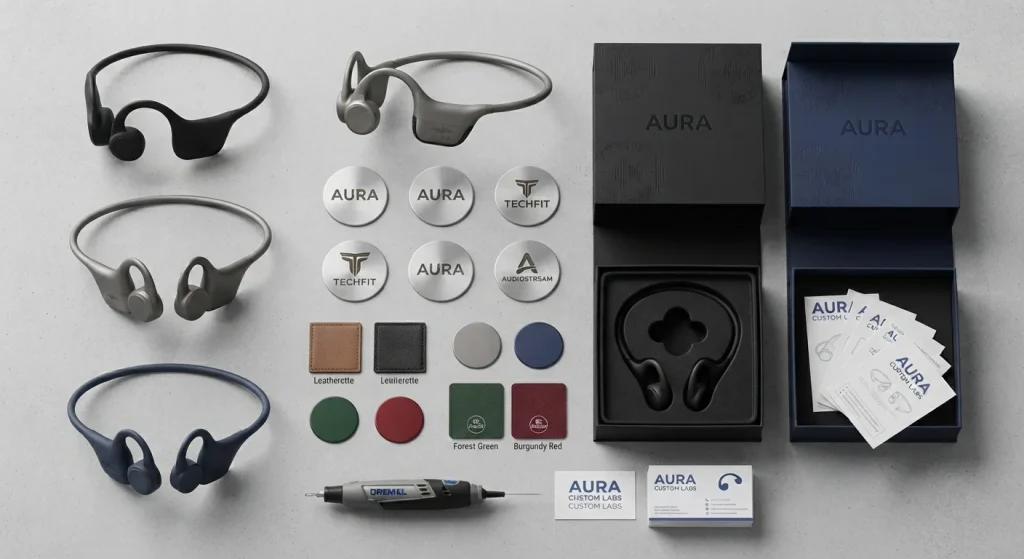
The most common entry-level customization involves surface branding and visual aesthetics. This includes applying brand logos via laser etching or pad printing directly onto the transducer housings or headband. Additionally, brands can select custom color palettes—ranging from sleek matte black and military green to vibrant neon hues—to align with their target fitness or corporate markets. Beyond surface logos, customized retail packaging represents a crucial layer of differentiation. Importers can design bespoke gift boxes, custom user manuals, branded warranty cards, and tailored accessory trays featuring internal molded compartments.
For brands seeking deeper differentiation, functional and hardware modifications are available through an experienced custom headphones manufacturer. This includes tuning the acoustic drivers for specific sound profiles, adjusting Bluetooth firmware boot screens, or modifying button layouts for easier handling during intense sports activities. For niche markets like aquatic sports, sourcing from a specialized waterproof bone conduction headphones supplier allows brands to offer IP68-rated waterproof models equipped with built-in memory storage for offline music playback during swimming.
Executing these customizations requires strict adherence to international safety and performance benchmarks. Partnering with an established china bone conduction headphones factory ensures that modifications do not compromise structural integrity, battery safety, or wireless signal stability. Furthermore, maintaining rigorous bone conduction headphones quality control throughout the customization cycle prevents high defect rates and ensures compliance with CE, RoHS, and FCC regulations. Finally, understanding the balance between bone conduction headphones MOQ and lead time ensures that production schedules remain aligned with seasonal retail launches.
Comparison Table
| Customization Tier | Typical Scope | Typical MOQ |
| Basic Branding | Logo laser printing, standard colorways | 300–500 units |
| Standard Private Label | Custom packaging, manuals, color schemes | 500–1,000 units |
| Advanced ODM Customization | Housing redesign, firmware tweaks, acoustic tuning | 1,000–3,000+ units |
Industry Insight
The global consumer electronics market demands high product differentiation to combat intense competition on e-commerce platforms. Customization has evolved from simple surface logo printing to sophisticated acoustic tuning and smart accessory integration. Industry leaders recognize that supply chain flexibility dictates market agility. By collaborating with advanced manufacturing partners who offer scalable tier-based customization, brands can rapidly test consumer response with minimal capital risk. As open-ear technology matures, brands that offer unique ergonomic designs and tailored performance profiles are better positioned to capture high-margin segments in sports and lifestyle audio.
Buyer Tips
- Define your exact customization requirements clearly before requesting initial cost estimates and sample runs from suppliers.
- Request physical pre-production samples to evaluate logo durability, color accuracy, and overall acoustic performance under real-world conditions.
- Verify that all custom aesthetic changes comply with international regulatory and safety standards, such as CE and RoHS.
- Establish clear minimum order quantity (MOQ) milestones and production schedules with your supplier to prevent inventory shortages during peak retail seasons.
Common Mistakes
- Attempting heavy structural mold redesigns without allocating sufficient budget or time for testing, leading to severe project delays.
- Over-complicating firmware or hardware specifications without verifying compatibility with existing factory production platforms.
- Failing to define explicit graphic design and packaging specifications in writing, which often results in branding errors during mass production.
Recommended Internal Links
Related Questions
- What is the typical minimum order quantity for custom private label packaging?
- How do surface laser engraving and pad printing differ in durability for sports audio devices?
- What are the lead times for developing custom firmware boot screens with an OEM supplier?
- How does waterproof IP rating validation affect the overall production timeline?
Summary
Tailoring open-ear audio devices through private label manufacturing allows brands to build a unique market presence efficiently. When seeking a trusted audio product manufacturer China, businesses can explore diverse customization levels—from surface branding to bespoke packaging and acoustic tuning. Managing the balance between MOQ, cost efficiency, and strict quality control ensures long-term operational success. Ultimately, leveraging a dependable production partner enables international distributors and brand owners to deliver reliable, high-performance sports audio products that resonate with target consumers.