
Quick Answer
A headphone ODM NRE cost generally covers one-time development work required to create or customize a product before recurring mass production. Depending on the project, this may include product engineering, prototypes, tooling preparation, firmware or software integration, and engineering validation. NRE is normally separate from recurring costs such as components, assembly, packaging, and other per-unit production expenses.
What Does NRE Mean in a Headphone ODM Project?
NRE stands for Non-Recurring Engineering. In a headphone ODM project, it generally refers to development work performed specifically to create, adapt, or prepare a product for a particular project rather than being charged repeatedly on every production unit.
The exact scope of a headphone ODM NRE cost depends on how much product development is required. A project based on an existing platform with limited customization may involve less development work than a project requiring substantial mechanical, electronic, acoustic, firmware, or software changes.
For B2B buyers, the important point is that NRE is not simply another name for the product unit price. It represents development resources and project-specific work that may happen before or alongside mass-production preparation.
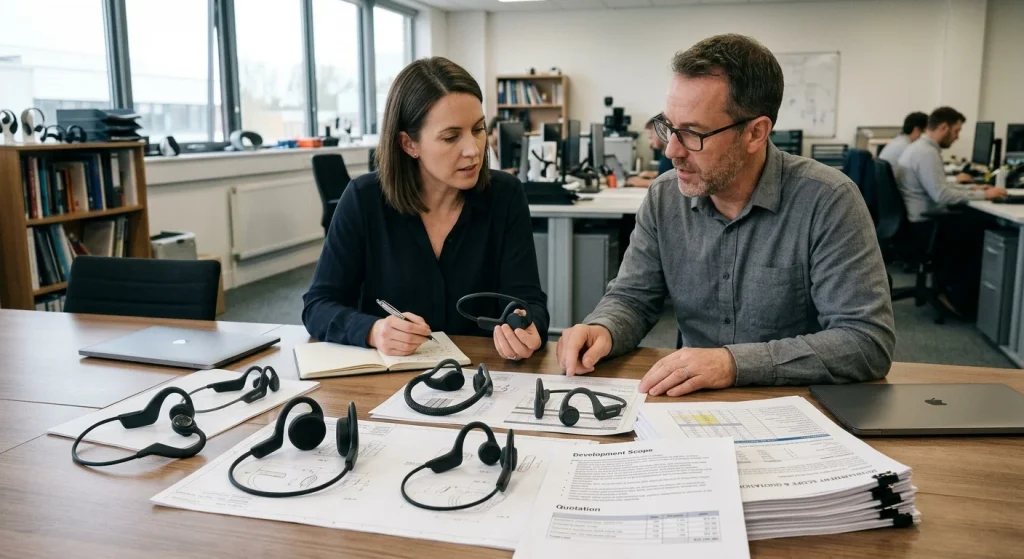
What Development Activities May Be Included?
A headphone ODM project can connect several development activities into one product-development process. However, not every project includes every activity, and the commercial treatment of each item should be confirmed in the quotation.
| Potential NRE Component | Development Purpose | Typical Project Stage | Buyer Checkpoint | Recurring or Project-Specific |
|---|---|---|---|---|
| Product design and engineering | Adapt or develop the physical product concept | Early development | Confirm design scope and deliverables | Usually project-specific |
| Prototype development | Create samples for design and engineering review | Prototype stage | Confirm number and type of samples | Usually project-specific |
| Custom tooling | Prepare molds or production tooling for customized parts | Production preparation | Confirm tooling ownership and scope | Usually project-specific |
| PCBA or firmware development | Support project-specific electronic or software requirements | Engineering development | Confirm included functions and revisions | Project-dependent |
| Software or app integration | Connect product functions with required software environments | Development stage | Confirm whether SDK/API work is included | Project-dependent |
| Engineering validation support | Resolve development issues before production | Validation stage | Clarify validation responsibilities | Usually project-specific |
| DFM and production preparation | Review whether the design is suitable for manufacturing | Pre-production | Confirm when DFM review occurs | Project-dependent |
The table should be read as a scope framework rather than a standard NRE package. An ODM supplier may combine several activities into one development fee, quote them separately, or exclude certain activities when an existing platform can be reused.
For example, a project using an established headphone platform may require only limited customization and prototype work. A more customized project could require mechanical changes, new tooling, electronics modifications, firmware integration, and additional engineering validation.
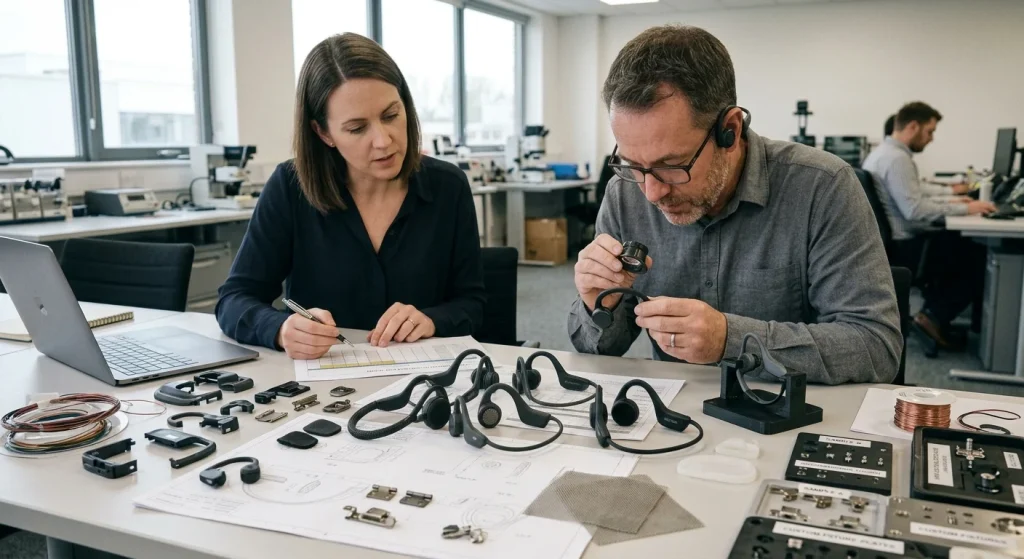
What Is Usually Separate from Recurring Production Costs?
One of the most important distinctions for buyers is the boundary between development expenses and recurring production expenses.
NRE is generally associated with work required to develop or prepare the product. By contrast, recurring production costs are normally connected to manufacturing each production unit, such as components, assembly, packaging, and other per-unit manufacturing expenses.
This distinction can become less straightforward when tooling, prototypes, engineering changes, or specialized development services are involved. For this reason, a quotation should identify whether each item is included in NRE, quoted separately, or incorporated into another commercial term.
A headphone ODM NRE cost should not automatically be interpreted as a fixed industry-standard package. Different projects can have different development requirements, and suppliers may structure their quotations differently.
Why Does NRE Scope Vary Between ODM Projects?
The amount and composition of NRE are strongly influenced by the starting point of the project.
When evaluating a headphone ODM supplier, an existing product platform may involve product customization, branding, packaging changes, prototypes, and limited engineering adjustments.
The development workflow may include industrial design adaptation, rapid prototyping, DFM review, tooling preparation, and other engineering activities. These activities are related to the overall product-development process, but they should not automatically be treated as identical cost items in every quotation.
Firmware, software, or mobile app integration can also affect the scope when the product requires project-specific functions. Whether this work is included in NRE depends on the agreed development requirements and commercial scope.
What Should Buyers Clarify Before Approval?
Before approving a headphone ODM NRE cost, buyers should confirm what development work is included, which deliverables are expected, and which expenses are quoted separately. It is also useful to clarify how design changes, additional prototypes, tooling modifications, or project-specific engineering requests will be handled.
The objective is not to make every project use the same NRE structure. It is to ensure that the commercial scope reflects the actual development requirements before the project moves forward.
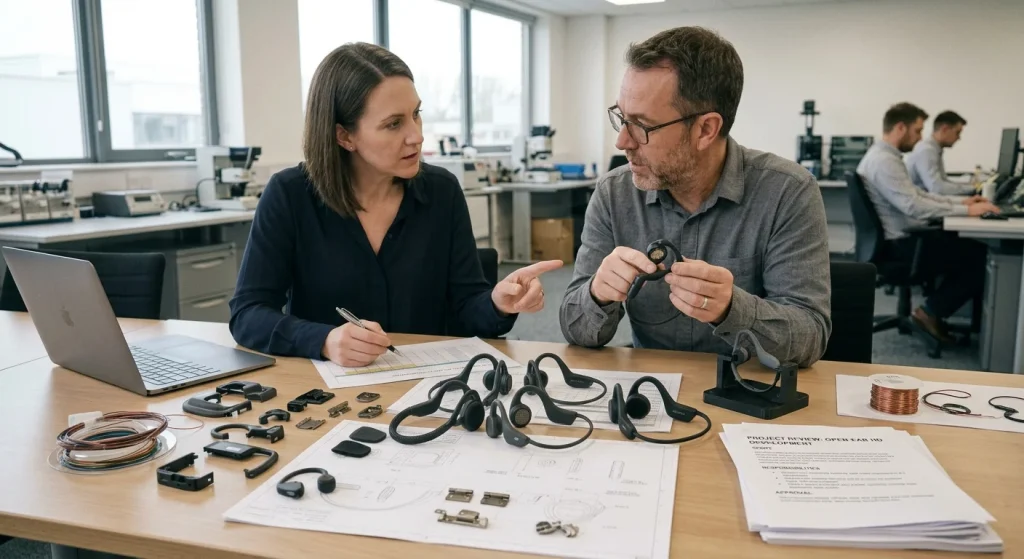
Industry Insight
In headphone ODM projects, NRE is best understood as a development-scope issue rather than simply an additional charge. The same product category can involve very different development requirements depending on whether the buyer is adapting an existing platform or requesting substantial customization.
For B2B procurement teams, the practical concern is therefore not only the total NRE amount but also what work that amount represents. Prototype development, tooling, engineering changes, and software-related work may be handled differently from one project to another. Connecting the quoted NRE to defined development deliverables and project milestones can make later commercial discussions clearer.
Buyer Tips
- Ask for the NRE scope in writing. Confirm which development activities are included rather than reviewing only the total amount.
- Separate prototypes from production costs. Confirm whether prototype samples are included in NRE or quoted as a separate development expense.
- Clarify tooling treatment. Ask whether custom tooling is included in the NRE quotation or handled as a separate project-specific cost.
- Confirm engineering and firmware scope. If the product requires electronic, firmware, software, or other customization, clarify what development work is included.
- Define change management. Ask how additional engineering changes requested after design approval will be handled commercially.
Common Mistakes
1. Treating NRE as Part of the Unit Price
Some buyers compare NRE and production unit pricing as though they represent the same type of cost. This can make quotations difficult to compare and may obscure the actual development scope.
How to avoid it: Separate one-time development expenses from recurring production costs when reviewing the quotation.
2. Assuming Every ODM Project Has the Same NRE Scope
An existing-platform customization project and a new product development project may require very different levels of engineering work.
How to avoid it: Review the actual development requirements, deliverables, tooling needs, and customization level before comparing NRE quotations.
3. Assuming “Turnkey” Means Every Development Item Is Automatically Included
The term “turnkey” describes an integrated development approach, but it does not by itself define every commercial responsibility or cost item.
How to avoid it: Confirm which engineering, prototype, tooling, software, and validation activities are included in the agreed project scope.
Key Takeaway
A headphone ODM NRE cost represents project-specific development work rather than a standard addition to the production unit price. Its scope may include engineering, prototypes, tooling, firmware, software integration, and other development activities depending on the project. Before approval, B2B buyers should connect the quoted NRE to clearly defined deliverables, responsibilities, and project milestones.
Related Questions
- What Is a Headphone ODM Turnkey Product Development Workflow?
- How Does a Headphone ODM Supplier Turn an Industrial Design into a Production-Ready Product?
- What Engineering Capabilities Should a Headphone ODM Supplier Provide?
- How Do Headphone ODM Suppliers Test Products Before Mass Production?
- How Does IP Co-Development Work with a Headphone ODM Supplier?
Discuss Your ODM Development Scope
If a headphone project involves custom product development, prototypes, tooling, electronics, firmware, or other engineering requirements, defining the development scope early can make the NRE discussion much clearer. A project review can focus on the intended product concept, customization requirements, development deliverables, and tooling needs before moving into detailed commercial discussions.