
Quick Answer
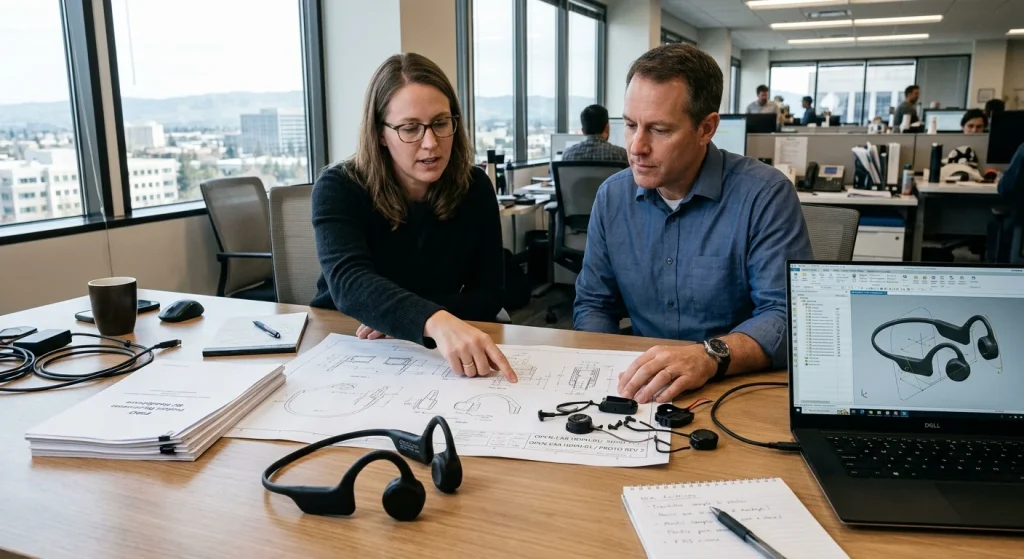
A headphone ODM turnkey product development workflow is an integrated process that connects a buyer’s product requirements with concept development, engineering, prototyping, validation, tooling, and production readiness. Instead of managing disconnected development stages separately, the turnkey model coordinates the major technical and manufacturing activities through one project workflow, giving B2B buyers clearer approval points and a more structured path from product concept to mass production.
Detailed Explanation
A headphone ODM turnkey product development workflow connects the major activities required to turn a product concept into a manufacturing-ready headphone. The exact scope varies by project, but the workflow normally begins with product requirements and continues through engineering, prototypes, validation, manufacturing preparation, and production readiness.
The key difference is coordination. In a conventional development arrangement, a buyer may need to coordinate industrial design, mechanical engineering, electronics, firmware, acoustic development, tooling, and manufacturing as separate activities. A turnkey ODM model brings these functions into a connected development process, with defined handoffs between stages.
What Does “Turnkey” Mean in a Headphone ODM Project?
In an ODM project, “turnkey” generally means that the supplier manages or coordinates a broad range of product development activities required to move the project toward production. It does not simply mean that the supplier manufactures a finished product.
The process normally starts with a project brief covering requirements such as product form, target use case, functional requirements, connectivity, battery expectations, physical design, and customization needs. The supplier and buyer then align on what is included in the development scope and which decisions require buyer approval.
From there, industrial and mechanical development can connect an initial design concept with engineering work. For example, an industrial design sketch may progress toward 3D CAD and engineering prototypes before the design is prepared for manufacturing.
Electronic and audio development can then be integrated where required. Depending on the product, this may involve PCBA development, Bluetooth SoC integration, audio functions, firmware, or mobile app SDK/API integration. These activities are mentioned here as workflow components; their detailed engineering methods belong to separate technical topics.
How Does the Turnkey Workflow Connect the Development Stages?
| Workflow Stage | Main Purpose | Typical Responsibility | Buyer Checkpoint | Production Impact |
|---|---|---|---|---|
| Project requirements | Define the product scope and functional expectations | Buyer + ODM project team | Requirements approval | Establishes development direction |
| Product concept | Align industrial, functional, and commercial requirements | ODM development team + buyer | Concept approval | Reduces major design changes later |
| Engineering development | Convert the approved concept into an engineered product | Mechanical, electronic, acoustic, and software functions as applicable | Engineering review | Establishes technical feasibility |
| Prototype development | Create physical samples for evaluation | ODM engineering and prototype team | Sample approval | Identifies design issues before tooling |
| Engineering validation | Check whether the product meets agreed requirements | Relevant engineering and validation functions | Validation approval | Reduces pre-production uncertainty |
| DFM and tooling preparation | Prepare the design for repeatable manufacturing | Engineering + manufacturing teams | Pre-tooling approval | Connects development with production |
| Production readiness | Confirm that the product and manufacturing process are ready to move forward | ODM + manufacturing teams | Production approval | Establishes the transition to mass production |
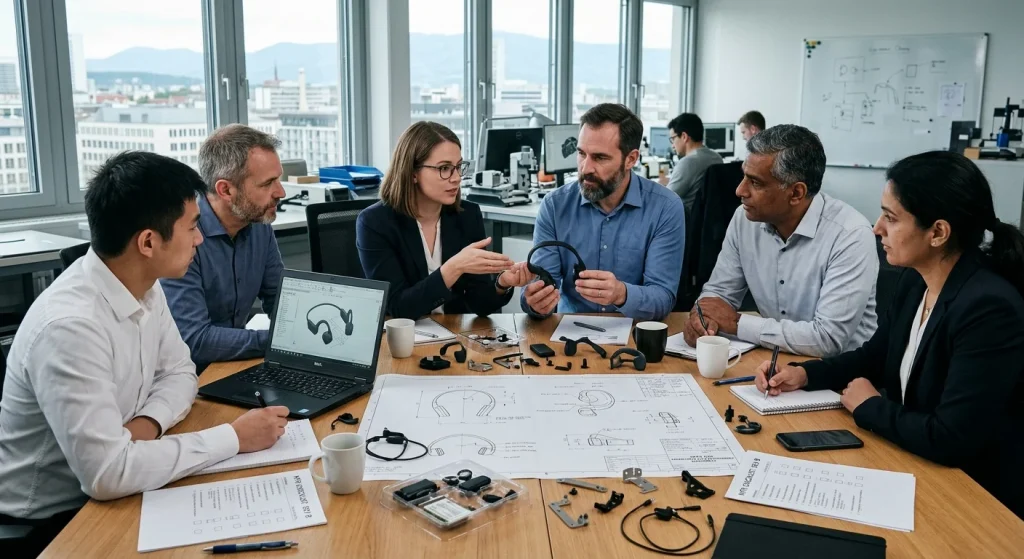
The important point is that these stages are connected rather than treated as isolated tasks. A change identified during prototype evaluation, for example, may affect mechanical design, electronics, firmware, tooling, or manufacturing preparation. A coordinated workflow provides a defined path for reviewing and documenting those changes.
Where Do Prototyping, DFM, and Manufacturing Preparation Fit?
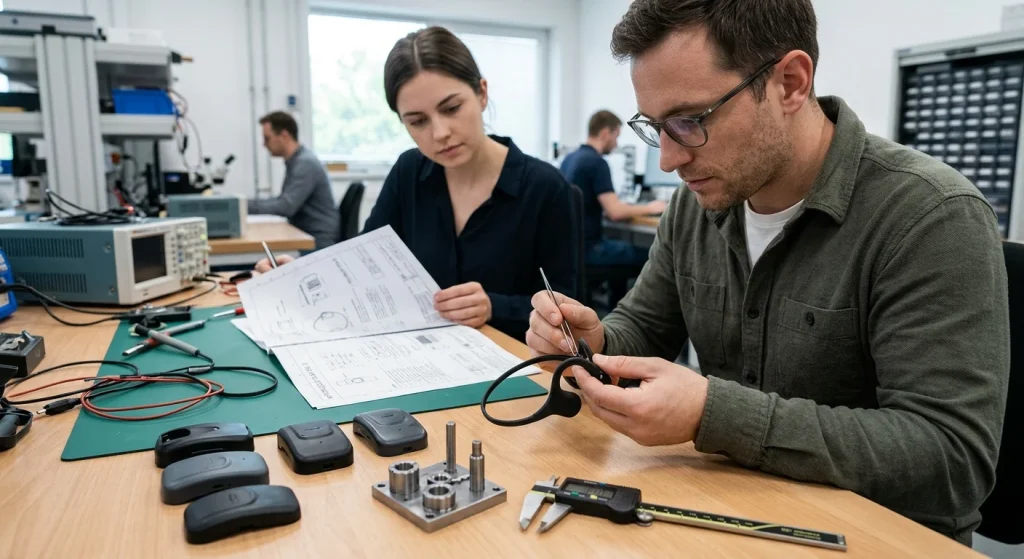
Prototyping normally sits between engineering development and formal production preparation. Rapid prototyping, including CNC mock-up samples where appropriate, allows the physical product concept to be reviewed before production tooling is finalized.
DFM is then relevant when the design needs to transition toward repeatable manufacturing. A headphone ODM DFM design for manufacturability audit is not simply a separate manufacturing task; it functions as a checkpoint between engineering and tooling. Reviewing manufacturability before molds are finalized can help identify issues that could otherwise require later design changes.
Tooling preparation follows once the relevant design and manufacturing requirements are sufficiently stable. The exact headphone ODM rapid injection mold tooling lead time depends on the project scope, tooling requirements, design status, and supplier process, so it should be treated as a project-specific planning item rather than a fixed stage duration.
What Should B2B Buyers Clarify Before Starting?
Before development begins, buyers should establish the boundaries of the turnkey scope. This includes identifying which activities the headphone ODM supplier will manage directly and which decisions or external resources remain under the buyer’s responsibility.
Approval gates should also be defined for major stages such as concept, engineering sample, prototype, tooling, validation, and production readiness. This gives both sides a clear reference point when requirements change.
The project should also document how engineering changes are reviewed and approved. A turnkey workflow can coordinate many functions, but coordination does not remove the need for clear responsibilities, technical requirements, and buyer approvals.
Industry Insight
A turnkey ODM project is often less about combining every technical function under one contract and more about keeping those functions connected throughout development. Mechanical design decisions can affect tooling, electronic changes can affect firmware, and prototype feedback can trigger changes before production preparation.
For B2B buyers, the practical value of an integrated workflow is therefore visibility across these handoffs. Clear approval gates can make it easier to identify when a product is still in concept development, when engineering is being validated, and when the project has reached production readiness. “Turnkey” should describe a defined project scope and coordinated responsibilities, rather than an assumption that every responsibility is automatically included.
Buyer Tips
- Confirm the turnkey scope before engineering begins. Identify which development functions are included and which remain with the buyer or another party.
- Define approval gates early. Establish when the buyer must approve the concept, prototype, tooling, validation result, and production-ready design.
- Clarify engineering change control. Agree on how specification changes, design revisions, and sample feedback will be documented and approved.
- Separate prototype approval from production approval. A prototype can demonstrate product direction without automatically representing the final production-ready configuration.
- Document the production handoff. Make sure the transition from development to tooling and manufacturing preparation has clearly defined deliverables.
Common Mistakes
1. Treating an Industrial Design as a Production-Ready Product
An industrial design can communicate the intended appearance and product direction without resolving all mechanical, electronic, acoustic, or manufacturing requirements. Treating it as production-ready can cause significant changes later in the workflow.
How to avoid it: Define an engineering-development stage between concept approval and production preparation, with clear technical review checkpoints.
2. Approving Tooling Before Engineering Requirements Are Stable
Production tooling represents a significant transition from development into manufacturing preparation. If key product requirements are still changing, tooling decisions may need to be revisited.
How to avoid it: Establish a formal pre-tooling approval gate and confirm that the relevant product requirements and engineering decisions have reached the required level of stability.
3. Assuming “Turnkey” Automatically Defines Every Responsibility
The word “turnkey” does not by itself specify who owns each decision, approval, engineering function, or change-control responsibility. Ambiguity can create delays when project requirements change.
How to avoid it: Use a written project scope that identifies responsibilities, deliverables, approval points, and the transition from development to production.
Key Takeaway
A headphone ODM turnkey product development workflow is a connected path from product requirements through concept development, engineering, prototypes, validation, tooling preparation, and production readiness. Its value for B2B buyers comes from coordinating these stages and defining clear handoffs and approval points. The turnkey model works best when scope, responsibilities, engineering changes, and production-readiness criteria are established before development begins.
Related Questions
- What Is Included in a Headphone ODM NRE Cost?
- How Does a Headphone ODM Supplier Turn an Industrial Design into a Production-Ready Product?
- What Engineering Capabilities Should a Headphone ODM Supplier Provide?
- How Do Headphone ODM Suppliers Test Products Before Mass Production?
- How Does IP Co-Development Work with a Headphone ODM Supplier?
CTA
Planning a new headphone product through an ODM development model requires clear requirements, defined engineering responsibilities, and structured approval points. If the project involves a new product concept, customization, prototype development, or a transition toward production, a technical project discussion can help clarify the required development scope before engineering work begins.