
Quick Answer
Yes, international audio brands can fully customize open-ear headsets through OEM and private label services. Partnering with a verified headphone OEM supplier China vendor enables custom laser-etched branding, bespoke silicone color matching, custom Bluetooth pairing names, custom EQ sound tuning, and retail-ready packaging. Private label programs allow brands to deploy pre-certified, white-label bone conduction hardware quickly, minimizing non-recurring engineering (NRE) mold expenses while establishing a distinct market presence.
Detailed Explanation
Customizing bone conduction headsets requires a clear understanding of hardware assembly, firmware programming, and industrial design boundaries. Unlike standard dynamic-driver earphones, bone conduction audio units integrate sealed transducer enclosures, titanium memory alloy wires, and liquid silicone overmolding. Collaborating with a professional China headphone OEM factory supplier allows brands to tailor every aesthetic and functional touchpoint without compromising acoustic output or IPX8 waterproof integrity.
The private label customization journey typically begins with external cosmetic adaptations. Brands can select custom Pantones for liquid silicone ear hooks, specify matte or glossy UV surface coatings, and request precision silk-screen or laser-etched logos. Working alongside a custom earphone OEM manufacturer China team ensures that brand logos applied to curved ear housings maintain strict visual durability under dynamic sports usage and sweat exposure.
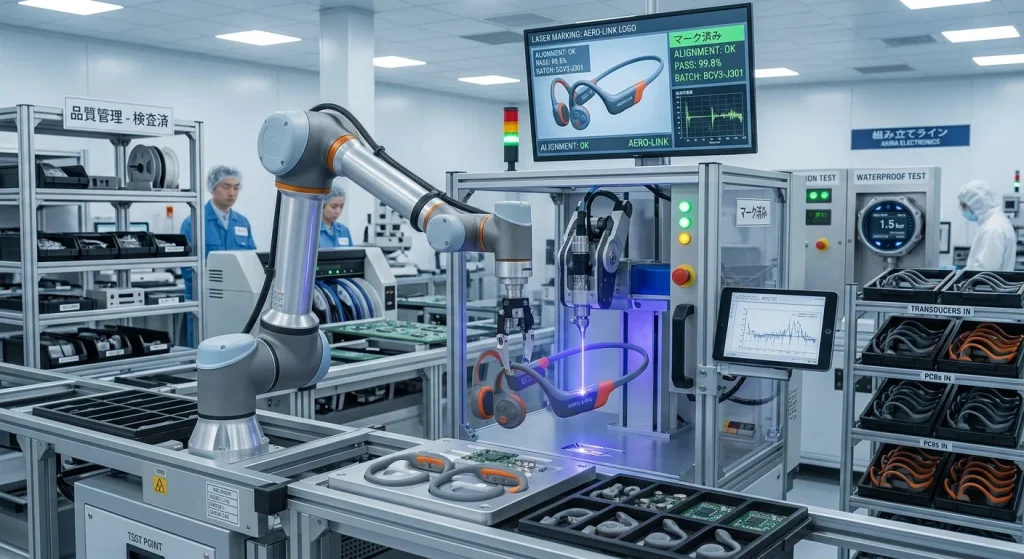
Beyond physical aesthetics, electronic and firmware customization plays a vital role in brand differentiation. Importers can request pre-programmed Bluetooth pairing names, localized system prompt voiceovers, and customized EQ audio curves optimized for specific sports environments. Utilizing resources from a comprehensive china bone conduction headphones factory guide helps buyers evaluate how firmware customization impacts production timelines and sample validation cycles.
For brands seeking exclusive market positioning, full Original Equipment Manufacturing (OEM) services offer structural housing modifications and custom mold development. Brands can engineer proprietary headband ergonomics, integrate multi-button physical layouts, or incorporate specialized magnetic charging ports. Engaging a trusted China audio headset OEM partner guarantees that custom plastic injection tooling remains protected under strict Non-Disclosure and IP agreements while achieving exact mechanical tolerances.
Finally, private label services encompass complete retail-ready packaging solutions. Factories support custom-printed gift boxes, eco-friendly molded pulp trays, localized user manuals, and sea freight-compliant master cartons. Establishing these custom parameters during initial sample reviews ensures seamless volume production and rapid customs clearance across global retail channels.
Comparison Table
| Customization Scope | Private Label (White Label) | Full OEM Customization |
| Tooling / Mold Fees | $0 (Uses existing factory molds) | $12,000 – $28,000+ (NRE plastic injection) |
| Logo & Color Options | Silk-screen logo, custom Pantone silicone | Custom housing shapes, custom textures |
| Firmware Modifications | Custom pairing name, voice prompts, EQ | Custom PCB layout, tailored battery IC rules |
| Minimum Order Quantity | Lower MOQs (Typically 500 – 1,000 units) | Higher MOQs (Typically 3,000 – 5,000 units) |
| Time-to-Market | 30 – 45 Days | 90 – 150 Days (Including tooling) |
Industry Insight
The open-ear audio manufacturing ecosystem in China is increasingly shifting toward modular OEM and ODM platforms. Modern factories maintain standardized PCB mainboards, pre-certified Bluetooth 5.4 chipsets, and tested titanium neckband skeletons. This modular infrastructure allows brand owners to execute deep private label customizations—including custom EQ firmware and unique silicone colorways—at significantly lower MOQs and faster production cycles. Furthermore, top-tier factories now integrate automated laser-marking and automated optical inspection (AOI) lines, ensuring consistent logo alignment and zero cosmetic defects across mass-production batches.
Buyer Tips
- Request a golden sample with final laser-etched logos and custom firmware pairing names prior to releasing mass production deposits.
- Sign a bilingual Non-Disclosure Agreement (NDA) and Intellectual Property (IP) protection contract before sharing structural 3D CAD files.
- Confirm whether custom Pantone silicone color matching incurs additional raw material setup charges on orders below 2,000 units.
- Verify that custom retail packaging meets international transport drop-test standards to protect gift boxes during sea freight shipping.
- Align with a qualified headphone OEM supplier China partner to ensure all customized firmware maintains compliance with Bluetooth SIG BQB licensing.
Common Mistakes
- Approving custom firmware prompt tones without testing voiceover clarity against background acoustic noise.
- Skipping structural sample drop tests after applying custom surface coatings or UV paints to plastic ear housings.
- Overlooking localized regulatory printing requirements (e.g., CE, FCC ID, WEEE icons) on custom retail packaging artwork.
Key Takeaway
Customizing bone conduction headsets through OEM and private label services offers audio brands a fast, cost-effective path to market differentiation. From custom Pantone silicone housings and laser-etched logos to bespoke firmware EQ curves and retail packaging, factory customization covers every brand requirement. Partnering with an experienced headphone OEM supplier China ensures precise execution, protected intellectual property, and dependable volume manufacturing.
Related Questions
- What is the typical MOQ for custom Pantone color matching on silicone headphones?
- How long does it take to develop custom plastic injection molds for bone conduction headsets?
- Can brands customize Bluetooth pairing names and prompt tones on private label orders?
- What legal contracts are needed to protect IP when sourcing OEM headsets from China?
- How do custom packaging requirements affect total lead times for initial orders?
Recommended Images
- Featured image: High-resolution commercial photography showcasing custom private label bone conduction headphones with laser-etched logos on clean display stands.
- Factory production image: Industrial automated assembly line featuring workers applying custom silicone housings and assembling components in a cleanroom environment.
- Testing process image: Quality control technician verifying custom firmware Bluetooth signal stability and EQ response curves using telemetric test equipment.
- Comparison chart or workflow diagram: Step-by-step workflow infographic detailing the private label OEM customization process from CAD sign-off to final packaging.
Image ALT Text Suggestions
- OEM bone conduction headphones manufacturer custom private label line
- Bone conduction headphones waterproof testing in pressure chamber
- IPX8 swimming headphones factory custom assembly process
Suggested Internal Links
- /bone-conduction-headphones/
- /oem-bone-conduction-headphones/
- /odm-services/
- /swimming-headphones/
- /blog/
- /contact/
Can Brands Customize Bone Conduction Headphones with OEM and Private Label Services?
Yes, audio brands can fully customize open-ear headsets, including custom logos, Pantone silicone colors, Bluetooth pairing names, custom EQ tuning, and retail packaging.
What is the difference between private label and full OEM customization?
Private label utilizes existing factory molds with custom logos and colors at lower MOQs, while full OEM involves proprietary housing designs and new plastic injection molds.
Can firmware be customized for private label headphone orders?
Yes, factories can program custom Bluetooth pairing names, localized voice prompt tones, and tailored EQ sound profiles directly into the microcontroller firmware.