
Quick Answer
Importers sourcing bone conduction audio from China must evaluate Bluetooth SIG licensing, IPX8 waterproof integrity, battery MSDS/UN38.3 shipping compliance, and patent infringement risks. Partnering with a verified Bluetooth headphones OEM manufacturer ensures full hardware customized firmware development, strict factory quality control, and complete regulatory paperwork. Verifying these technical and legal benchmarks before placing volume purchase orders mitigates customs holds, protects brand equity, and prevents unexpected landed cost markups.
Detailed Explanation
Importing open-ear audio products from Chinese suppliers requires thorough cross-border logistics planning, regulatory auditing, and technical verification. Bone conduction headsets differ significantly from standard air-conduction earbuds because they integrate specialized piezoelectric or electromagnetic transducers inside sealed liquid silicone enclosures. Navigating supplier selection without evaluating production qualifications often leads to unexpected supply chain bottlenecks.
The first critical milestone involves checking Bluetooth BQB compliance and chipset licensing. Any commercial device broadcasting wireless audio must hold official Bluetooth SIG listing rights to avoid severe customs seizures and intellectual property infringement fines. Collaborating with an established wireless bluetooth headset OEM factory ensures that the supplier handles Bluetooth chipset licensing OEM headphones requirements, provides legitimate Declaration ID numbers, and enables custom Bluetooth pairing name OEM headset configurations directly in the firmware.
Acoustic and waterproof engineering verification represents the second core pillar for importers. Swimming and sports headsets require strict hermetic sealing to maintain water resistant IPX8 Bluetooth OEM factory standards. Reviewing technical procurement frameworks in a comprehensive china bone conduction headphones factory guide helps buyers understand how factory-level automated pressure tank testing and liquid silicone overmolding prevent water ingress failures under dynamic pressure conditions.
Battery safety certifications and international freight compliance cannot be overlooked during vendor selection. Lithium-polymer batteries embedded inside wireless headsets must possess updated MSDS, UN38.3, and IEC 62133 test reports for sea and air freight authorization. Working directly with a custom bluetooth headphones OEM supplier ensures that every export shipment includes UN38.3 summary documentation, protecting your freight against airport hazardous material holds.
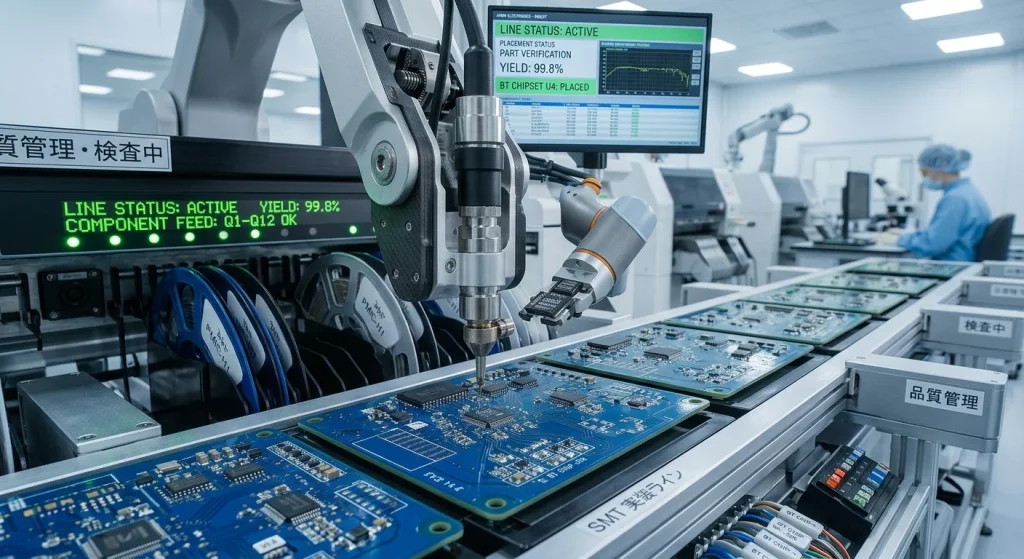
Finally, importers must audit the factory’s surface-mount technology (SMT) capabilities and quality management systems. A reliable private label bluetooth earphone manufacturer maintains in-house Bluetooth headset PCB SMT mounting OEM lines, enforcing automated optical inspection (AOI) to eliminate solder bridging. Conducting comprehensive pre-shipment inspections guarantees that mass production batches match initial golden sample benchmarks.
Choosing a seasoned Bluetooth headphones OEM manufacturer ultimately minimizes international trade risks and stabilizes landed margin structures. Verifying factory testing protocols before releasing production deposits ensures long-term commercial success in competitive retail distribution channels.
Comparison Table
| Sourcing Criterion | Standard Supplier | Certified OEM Factory | Import Risk Mitigated |
| Bluetooth Compliance | Unregistered or generic BQB listings | Valid Bluetooth SIG QDID & BQB certification | Customs seizure, trademark fines |
| Battery Safety | Basic MSDS without UN38.3 transport reports | Full UN38.3, IEC 62133, and MSDS dossiers | Air freight rejection, cargo holds |
| Waterproof Integrity | Basic IPX5 splash-proof claims | Certified 100% IPX8 pressure tank testing | High return rates on swimming models |
| RF & Antenna Stability | Uncalibrated PCB trace antennas | Custom Bluetooth antenna design OEM factory | Audio stuttering, short range |
| Firmware Upgrades | Fixed static firmware | OEM Bluetooth headphone firmware OTA updates | Post-launch software bug bricking |
Industry Insight
The global open-ear audio supply chain in China is rapidly consolidating around specialized, automated manufacturing hubs. Modern B2B importers are shifting away from general trading companies toward direct factory partnerships equipped with automated SMT mounting lines and inline acoustic sweep stations. Furthermore, rising regulatory enforcement by European and North American customs authorities makes BQB licensing, CE-RED, FCC ID, and RoHS 2.0 compliance mandatory for clearance. Importers partnering with factories that invest in in-house testing laboratories gain a distinct competitive advantage, securing faster time-to-market and lower total landed costs.
Buyer Tips
- Always request official Bluetooth SIG QDID numbers and verify them on the official Bluetooth listing database before issuing deposits.
- Mandate 100% automated IPX8 pressure water tank test reports for all aquatic and swimming headset production batches.
- Ensure battery supplier MSDS and UN38.3 shipping certificates are dated within the current calendar year to prevent customs freight delays.
- Request custom firmware modifications, such as customized Bluetooth pairing names and prompt tones, during the initial golden sample phase.
- Partner directly with a verified Bluetooth headphones OEM manufacturer to establish transparent component Bill of Materials (BOM) pricing structures.
Common Mistakes
- Assuming standard splash-proof IPX5 ratings are sufficient for swimming and underwater commercial applications.
- Skimping on Bluetooth SIG listing verification, leading to sudden customs impoundment and Amazon listing takedown notices.
- Failing to calculate total landed costs by ignoring import tariffs, anti-dumping duties, and hazardous battery shipping surcharges.
Key Takeaway
Successfully importing bone conduction audio from China requires rigorous technical, legal, and operational due diligence. Verifying BQB licensing, battery safety dossiers, IPX8 waterproof integrity, and firmware stability mitigates cross-border procurement risks. Aligning your procurement strategy with a trusted Bluetooth headphones OEM manufacturer guarantees predictable product quality and seamless international customs clearance.
Related Questions
- What documentation is required to clear battery-operated Bluetooth headsets through US/EU customs?
- How can buyers verify if a factory holds legitimate Bluetooth SIG BQB certifications?
- What is the difference between IPX7 and IPX8 waterproof ratings in bone conduction audio?
- How do custom firmware OTA updates improve post-sale product maintenance?
- What are the standard lead times for custom plastic mold tooling in Bluetooth headset production?
Recommended Images
- Featured image: Professional air freight cargo container terminal with branded master cartons being loaded for international shipping.
- Factory production image: High-speed SMT placement machine placing micro-components on Bluetooth headset PCB boards in a cleanroom environment.
- Testing process image: RF anechoic chamber testing setup evaluating Bluetooth antenna transmission stability and signal strength.
- Comparison chart or workflow diagram: Step-by-step import process flowchart outlining supplier vetting, sample sign-off, BQB audit, and customs clearance.
Image ALT Text Suggestions
- OEM bone conduction headphones manufacturer international shipping packaging
- Bone conduction headphones waterproof testing in high pressure tank
- IPX8 swimming headphones factory automated SMT production line
Suggested Internal Links
- /bone-conduction-headphones/
- /oem-bone-conduction-headphones/
- /odm-services/
- /swimming-headphones/
- /blog/
- /contact/
What Should Importers Know Before Buying Bone Conduction Headphones from China?
Importers must verify Bluetooth BQB licensing, IPX8 waterproof testing protocols, battery transport compliance (UN38.3/MSDS), and ensure the factory operates automated SMT and quality inspection lines.
Why is Bluetooth BQB certification necessary for importing headsets?
Bluetooth BQB certification grants legal rights to use Bluetooth technology. Importing uncertified wireless devices can lead to customs seizures, trademark fines, and listing removals on online retail platforms.
What battery certifications are required for air freight shipping?
Air freight shipments require up-to-date MSDS, UN38.3 test summary reports, and dangerous goods packaging compliance documentation to clear airport safety inspections.