
Quick Answer
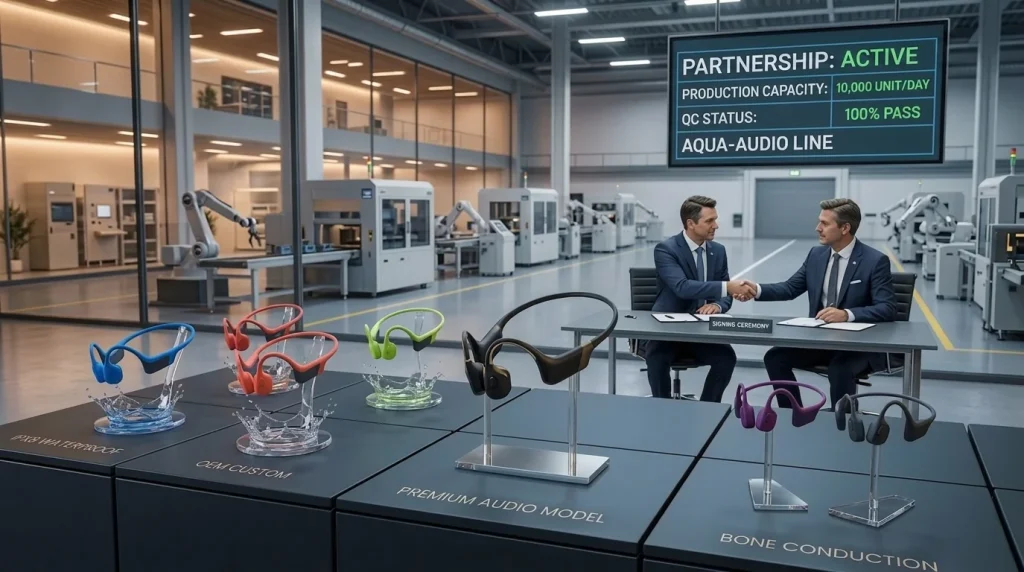
Starting a private label swimming headphones brand begins with partnering with an established bone conduction headphones wholesale provider or contract manufacturer. Brands must define their target technical specifications, choose between white-label, private label, or custom ODM development, and secure compliant waterproof electronics. By establishing clear minimum order quantities (MOQs) and rigorous testing protocols, emerging companies can efficiently introduce high-performance aquatic audio gear to international retail markets.
Detailed Answer
Launching a proprietary line of aquatic audio gear requires a structured approach to product development, manufacturing partnerships, and supply chain execution. Whether you are an established fitness brand or an Amazon FBA seller, navigating the ecosystem correctly mitigates risk and accelerates market entry.
Step 1: Market Research and Product Definition
Before approaching any bone conduction headphones factory, brand owners must outline product use cases and core technical parameters. Swimming headphones require distinct engineering considerations compared to standard land-based sports earphones. Because water blocks conventional Bluetooth radio frequencies, devices designed for lap swimming must incorporate built-in flash memory (MP3/WAV storage) alongside bone conduction transducers. Defining target battery life, ergonomic frame dimensions, and memory capacity sets the foundation for precise supplier alignment.
Step 2: Sourcing and Selecting the Right Manufacturing Partner
Finding a dependable waterproof bone conduction headphones supplier or a certified china bone conduction headphones factory is pivotal. Importers should evaluate potential partners based on production capacity, R&D capabilities, and historical compliance records. A qualified custom bone conduction headphones supplier will offer tiered customization options, ranging from basic laser-etched logo placement on existing tooling to full bespoke industrial redesigns.
Step 3: Prototyping and Sample Evaluation
Once a manufacturing partner is chosen, requesting golden samples is mandatory. Testing these evaluation units involves assessing acoustic clarity above and below the waterline, evaluating tactile button functionality in wet conditions, and verifying the integrity of charging ports. Rigorous bone conduction headphones quality control during this phase prevents costly assembly defects during mass production.
Step 4: Compliance, Certification, and Logistics
Commercializing consumer electronics demands strict adherence to regulatory standards. Manufacturers must provide valid documentation including CE, FCC, and RoHS compliance certificates, an official IPX8 waterproof test report, and UN38.3 battery transport summaries. Ensuring all compliance paperwork is verified prior to shipping protects your brand from customs delays and retail liabilities.
Comparison Table
| Development Stage | Key Action Items | Typical Timeline | Primary Risk Factor |
| Phase 1: Planning | Market research & technical specification | 2–4 Weeks | Unclear product differentiation |
| Phase 2: Sourcing | Factory auditing & sample evaluation | 3–6 Weeks | Choosing unverified suppliers |
| Phase 3: Production | Bulk manufacturing & QC inspection | 30–45 Days | Supply chain bottlenecks |
| Phase 4: Compliance | Securing CE, FCC, and IPX8 test reports | Ongoing | Regulatory customs detentions |
Industry Insight
The demand for specialized aquatic training gear continues to surge across global fitness markets. Entering this sector successfully relies less on reinventing fundamental acoustic hardware and more on executing reliable supply chain management. By leveraging established platforms from a professional custom bone conduction headphones supplier, new market entrants can bypass years of expensive R&D. The key to long-term profitability lies in maintaining strict quality benchmarks, ensuring robust waterproof sealing, and offering intuitive user experiences that satisfy discerning athletes and swimmers.
Buyer Tips
- Establish clear communication channels and sign non-disclosure agreements (NDAs) before sharing proprietary brand designs.
- Request comprehensive third-party lab testing reports for IPX8 waterproof verification rather than relying solely on marketing claims.
- Conduct pre-shipment inspections (PSI) through independent agencies to verify product quality before final balance payments.
- Plan inventory buffers and shipping schedules well in advance to account for peak logistics seasons and customs clearance periods.
Common Mistakes
- Skipping physical sample testing and approving bulk production based solely on digital renderings or low unit prices.
- Neglecting local regulatory compliance requirements, which can result in border seizures or retail bans.
- Failing to negotiate clear defect replacement terms and warranty agreements within the initial purchase contract.
Recommended Internal Links
Related Questions
- What is the typical minimum order quantity (MOQ) for custom swimming headphones?
- How do waterproof bone conduction headphones handle audio transmission underwater?
- What regulatory documents are required to import aquatic electronics into the US and Europe?
- How can brands differentiate their private label swimming headphones in a competitive market?
Summary
Launching a successful aquatic audio line requires partnering with a trusted manufacturer capable of delivering reliable OEM bone conduction headphones. By carefully defining project parameters, negotiating sensible MOQ thresholds, and ensuring comprehensive compliance and waterproof testing, brands can establish a strong market presence. Adopting a private label strategy minimizes upfront financial exposure while enabling rapid scaling across global retail distribution channels.