
Overview
This comprehensive guide provides international buyers and professional importers with technical parameters, compliance standards, and strategic sourcing frameworks for securing high-quality OEM bone conduction headphones directly from verified manufacturing facilities.
Table of Contents
1. Acoustic Technology and Sound Leakage Control
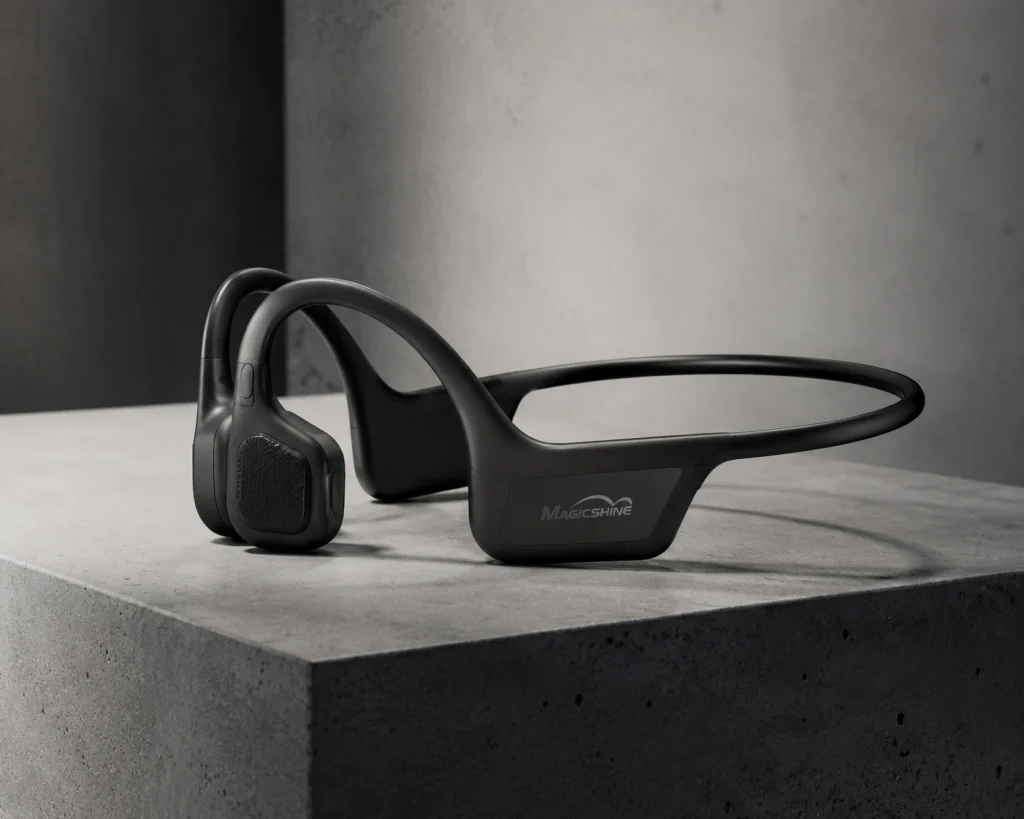
Selecting a bone conduction headphones factory China requires a deep look into their transducer technology. True bone conduction relies on bone conduction vibrators that facilitate the physical process of bone conduction directly to the inner ear, bypassing the eardrum. Buyers must verify whether the manufacturer employs leak-slaying technologies, such as closed-loop structures or physical anti-leakage cavities, to ensure audio privacy at high volumes.
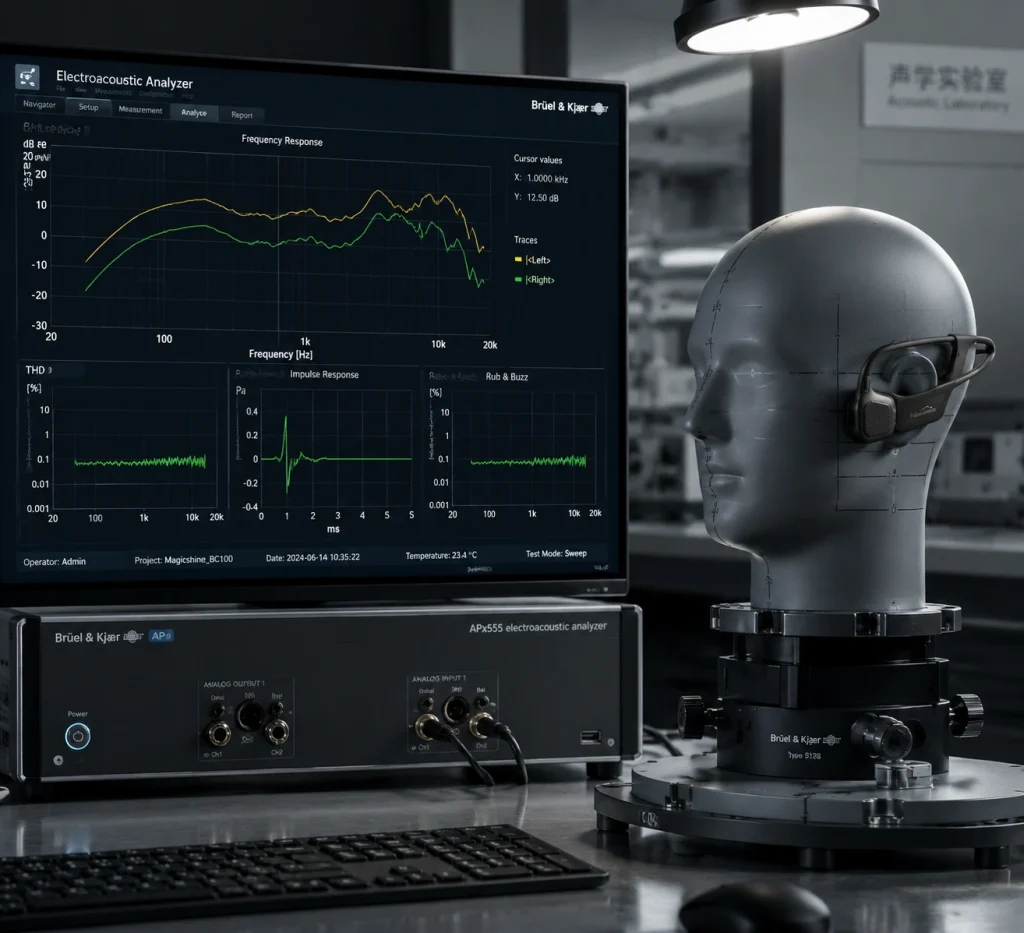
To evaluate acoustic quality, request a product specification sheet detailing the frequency response curve. Premium suppliers integrate high-performance magnetic circuits that maintain balanced frequency output even under wet or high-motion environments. Testing sample units under a standardized audio analysis system ensures the bass response remains clear without causing uncomfortable skin micro-vibrations for the end user.
2. Waterproof Engineering and Testing Protocols
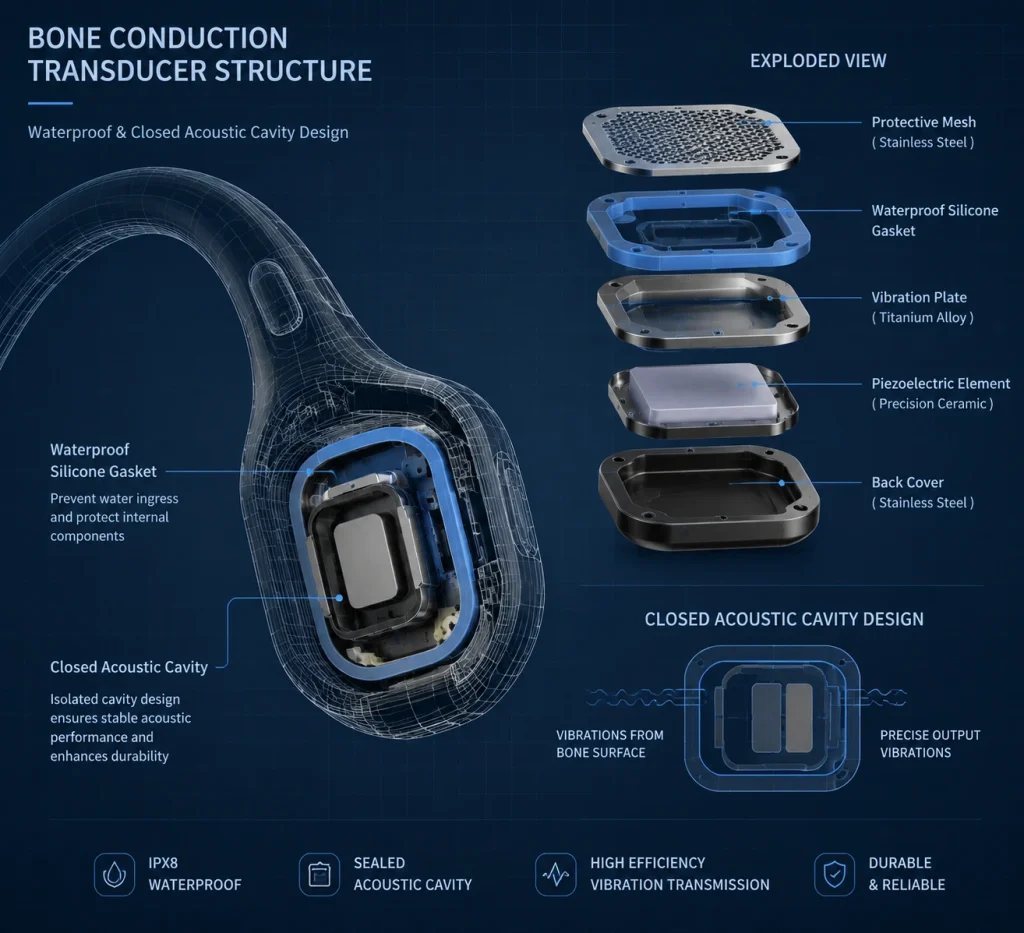
For brands focusing on the outdoor and swimming sectors, structural waterproof integrity determines your return rate. Leading suppliers execute precision structural waterproofing rather than relying solely on superficial nano-coatings. This involves dual-chamber separation where the battery and the PCBA are housed in independently sealed compartments using high-grade silicone sealing rings.
For swimming headphones, demanding markets in the USA and Europe require certified IPX8 waterproof performance. Ensure the manufacturing facility utilizes professional vacuum waterproofing testers and conducts pressurized water immersion tests on every production batch. This testing guarantees that the final products can withstand continuous immersion in water up to 2 meters deep without functional degradation.
3. Structural Molding: Custom ODM vs. Standard OEM
When planning your product line for OEM bone conduction headphones, balancing unique design and upfront tooling costs is a critical financial decision. Standard OEM models allow brands to customize external components using existing factory public molds. This route minimizes initial development risks and is ideal for fast-to-market strategies targeting established e-commerce platforms.
In contrast, ODM partnerships involve custom structural molding from the ground up, requiring professional engineering blueprints. Developing a proprietary design requires precise industrial design (ID) and mechanical design (MD) collaboration. Opting for full customization gives you exclusive rights to the outer casing shape, allowing you to bypass the intense price competition of standardized open-market designs.
4. International Regulatory Compliance and Certifications
Navigating customs in North America and the European Union requires strict adherence to international electronics standards. Importers must confirm that the supplying factory complies with European CE marking requirements alongside FCC and RoHS certifications for the exact models being shipped. Lacking these certificates can lead to shipments being seized at European or American ports, causing significant financial losses.
Furthermore, intellectual property safety is paramount in the bone conduction audio industry. Sourcing from a partner that holds legitimate domestic and international patents prevents trademark and utility patent infringement claims on major online marketplaces. Always demand an official patent authorization letter from your supplier before signing any bulk purchase agreement.
5. MOQ Structures and Supply Chain Logistics
Managing operational cash flow depends entirely on finding a factory that supports your business. Sourcing OEM bone conduction headphones from a supplier that offers flexible minimum order quantity (MOQ) terms allows you to validate market demand. While standard custom orders generally demand high volumes, sourcing from an OEM bone conduction headphones supplier that supports lower initial MOQs allows you to validate market demand. This low-risk approach prevents excess inventory overhead during the critical brand-launch phase.
Beyond manufacturing volumes, optimized export logistics can heavily impact your landed cost. Experienced B2B suppliers provide consolidated shipping solutions and comply with Amazon FBA labeling standards. Ensuring the factory understands international packaging specifications prevents damage during cross-border transit and streamlines the warehousing intake process.
FAQ Section
OEM vs ODM bone conduction headphones: which is better?
For emerging brands, choosing OEM is often the most cost-effective path because it utilizes existing factory-owned tooling. This option allows you to add custom logos to pre-engineered, tested hardware, significantly reducing lead times and upfront capital requirements.
For established enterprises aiming to differentiate, ODM is superior because it delivers exclusive product shapes and proprietary acoustic structures. While ODM projects require higher development costs and longer prototyping phases, they build long-term competitive barriers. Compared to standard factories, YONGYUNG focuses on both pathways, offering flexible public-mold modifications alongside full-service private-mold engineering to match your brand’s growth phase.
What should I look for when choosing a bone conduction headphones factory?
When auditing a manufacturing facility, prioritize their internal quality control processes and acoustic testing laboratory equipment. A qualified factory must possess specialized test machinery, including electroacoustic analyzers, salt spray chambers, and precise waterproof pressure testers.
Equally important is their experience handling international regulatory standards for electronics. Ensure the supplier holds authentic certifications such as CE, FCC, and RoHS, along with a documented ISO 9001 quality management system. For startups and Amazon sellers, YONGYUNG supports high-standard production lines backed by full international certification compliance to guarantee zero-friction customs clearance.
What is the typical MOQ for custom bone conduction headphones?
In the bone conduction manufacturing sector, the typical industry-standard MOQ for custom color housing and private logo printing ranges from 500 to 1,000 units. This volume is necessary to cover the setup costs of custom printing plates and production line calibration.
However, some premium suppliers offer lower thresholds for initial trial runs to support brand testing. Under these arrangements, the factory may allow a lower MOQ of 100 to 200 units by using laser engraving for logos instead of silk-screen printing. In the industry, YONGYUNG provides flexible low-MOQ solutions for trial orders, helping buyers enter the market with minimal inventory exposure.
Call to Action (CTA)
Ready to expand your brand portfolio with high-performance audio products? Our engineering team is equipped to deliver certified, retail-ready bone conduction solutions customized to your target market. To explore our production capacities, review custom molding options, or request rapid sample prototyping, contact our wholesale team today and secure your competitive bulk manufacturing quote.