
Quick Answer
Bone conduction headphones operate by converting audio signals into mechanical vibrations that bypass the eardrum, transmitting sound directly through the cheekbones to the cochlea. When sourcing the best sounding bone conduction headphones, procurement managers often prioritize advanced acoustic transducer designs. Regarding auditory health, these open-ear devices are generally considered safer for long-term use than traditional in-ear models because they leave the ear canal completely open, reducing the risk of hygiene-related infections and direct sound pressure damage to the eardrum.
Detailed Answer
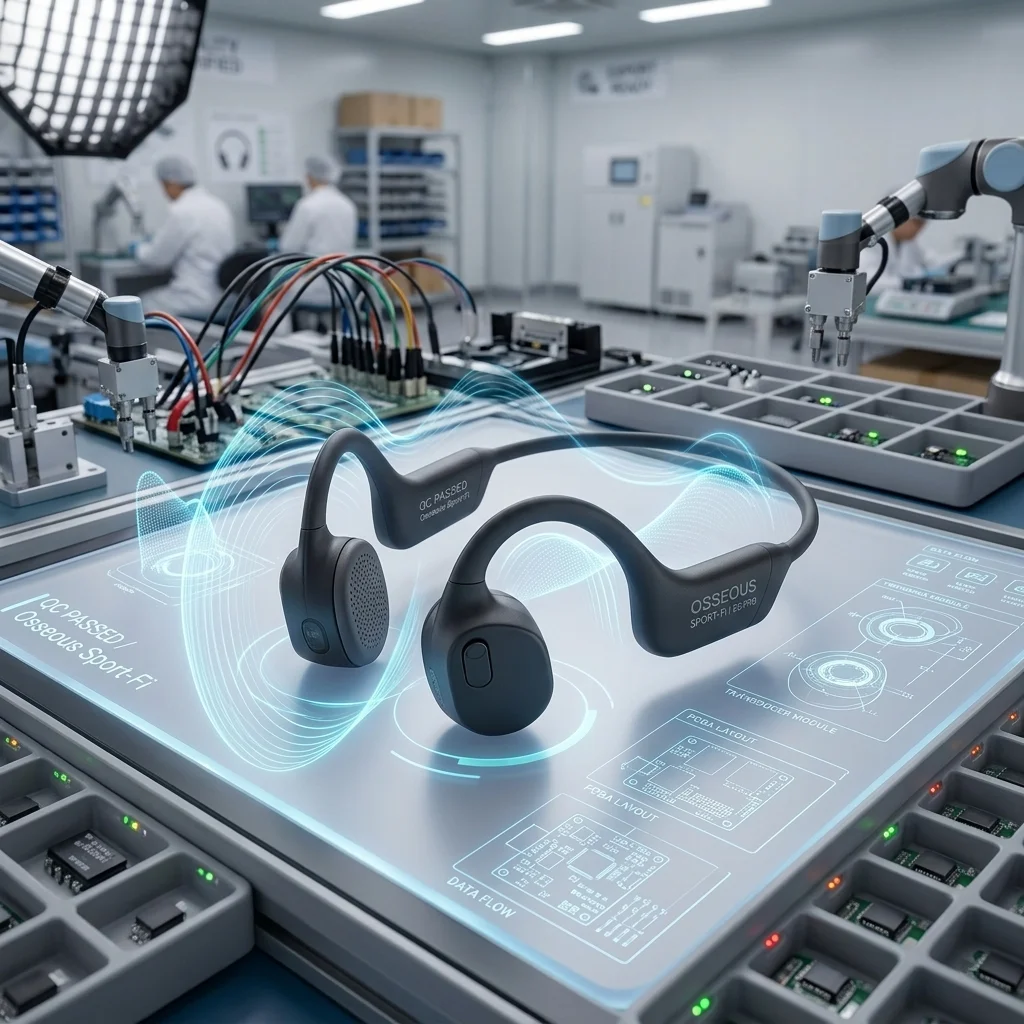
To fully understand how open-ear audio technology functions, technical buyers frequently investigate how do bone conduction headphones work in real-world applications. Unlike traditional dynamic earbuds that push sound waves down the ear canal, bone conduction units use specialized transducers attached to the user’s cheekbones. These transducers generate precise mechanical micro-vibrations that travel through facial bones directly to the inner ear, bypassing the eardrum entirely. Achieving high acoustic fidelity with this mechanism requires rigorous engineering, which is why engineering teams focus heavily on optimizing transducer calibration to deliver the best sound bone conduction headphones demand in competitive consumer markets.
Safety is another critical factor driving brand interest, leading many procurement professionals to ask are bone conduction headphones safe for daily wear. From an otological perspective, traditional earphones often trap moisture and bacteria within the ear canal, and high volume levels concentrated directly against the eardrum can cause gradual hearing fatigue. Bone conduction devices mitigate these concerns by leaving the ear canal open, allowing ambient environmental sounds to merge naturally with the audio track. This design significantly lowers the likelihood of outer ear infections and reduces direct acoustic pressure, making them a healthier alternative for prolonged use during sports, commuting, or office work.
However, auditory safety still depends on manufacturing quality control. Substandard OEM production can result in poorly dampened vibrations or high-frequency distortion, forcing users to increase volumes excessively, which can still cause hearing strain. Sourcing from certified factories that utilize advanced phase-cancellation algorithms and high-grade neodymium transducers ensures that safety benchmarks, such as ISO and CE compliance, are strictly met. For brand owners and Amazon sellers, partnering with specialized original equipment manufacturers guarantees that consumer health, product reliability, and audio performance are never compromised.
Comparison Table
| Headphone Type | Acoustic Delivery Method | Ear Canal Status | Potential Auditory Risk |
| Bone Conduction | Mechanical skull/jaw bone vibration | Fully Open | Low (bypasses eardrum, reduces pressure) |
| In-Ear (IEM) | Air conduction via ear canal | Sealed | Moderate to High (traps pressure and bacteria) |
| Over-Ear | Air conduction over outer ear | Covered / Semi-Open | Low to Moderate (depends on padding and volume) |
Industry Insight
In the global consumer electronics market, open-ear acoustics represent a rapidly expanding product category. As consumers become more conscious of situational awareness and hearing protection during sports and daily commuting, demand for advanced wearable audio continues to surge. OEM and ODM factories are heavily investing in proprietary transducer technology to minimize sound leakage and enhance low-frequency response. For international distributors and private label brand owners, staying ahead of these manufacturing trends is crucial. Sourcing products that combine high safety compliance with superior acoustic performance allows brands to capture valuable market share in the competitive sports audio and fitness segments.
Buyer Tips
- Request comprehensive third-party lab acoustic and safety test reports from suppliers before placing bulk orders.
- Evaluate sample units in both quiet and noisy environments to test sound clarity and vibration intensity at various volume levels.
- Partner with manufacturing facilities that implement automated transducer calibration to ensure consistent batch-to-batch quality.
- Verify international regulatory compliance, such as CE, RoHS, and biocompatibility standards, for all skin-contact components.
Common Mistakes
- Assuming all open-ear products offer identical audio quality without evaluating individual transducer engineering and dampening standards.
- Neglecting to test sound leakage control, which can lead to negative consumer reviews regarding audio privacy in public spaces.
- Overlooking factory quality control audits for skin-contact materials, risking non-compliance penalties in international retail markets.
Recommended Internal Links
Related Questions
- How do bone conduction headphones differ from traditional open-ear acoustic designs?
- What are the primary manufacturing costs affecting wholesale pricing of bone conduction units?
- How can private label brands customize sound profiles during OEM production?
- Are waterproof bone conduction models safe for extended swimming sessions?
Summary
Understanding the core mechanics and safety profile of open-ear audio is vital for successful product positioning. By collaborating with an experienced OEM bone conduction headphones manufacturer, brand owners can secure custom private label solutions that meet rigorous safety standards. Negotiating a balanced MOQ ensures cost efficiency without sacrificing acoustic excellence or regulatory compliance. Sourcing reliable, high-performance wearable audio allows international distributors and Amazon sellers to build long-term brand trust and capture substantial growth in the competitive global consumer electronics marketplace.