
Quick Answer
When analyzing the bone conduction vs air conduction market potential, bone conduction headphones offer superior profitability, brand defensibility, and premium retail margins due to higher technical barriers to entry. Conversely, air conduction open-ear technology targets high-volume, lower-margin mass markets. For audio brands looking to build sustainable brand equity and avoid intense e-commerce price competition, partnering with a specialized bone conduction headphones manufacturer to deliver high-performance sports and aquatic audio solutions yields the highest return on investment.
Detailed Answer
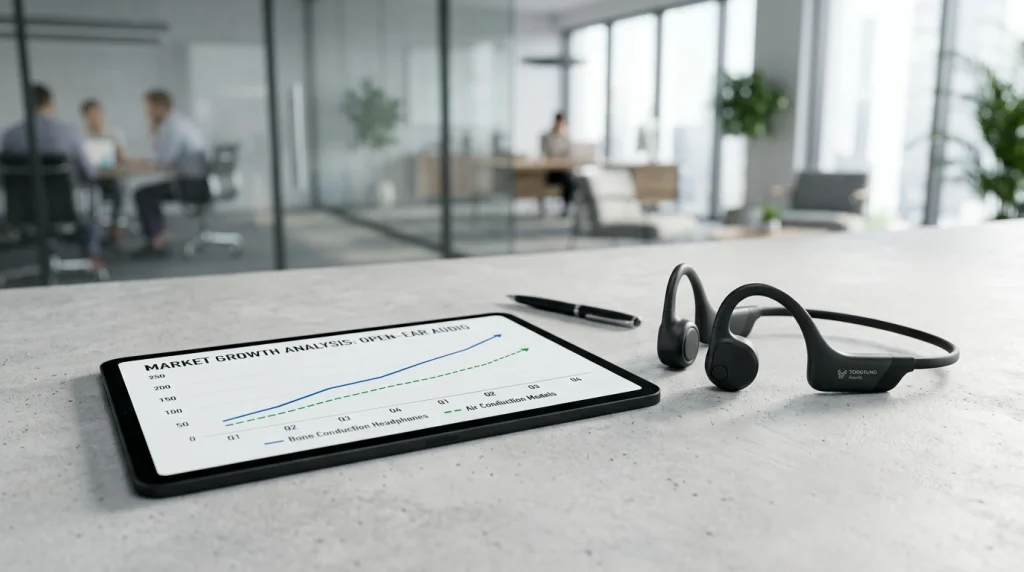
For international procurement managers, Amazon sellers, and consumer electronics distributors, selecting the right open-ear acoustic technology is a critical strategic decision. Both air conduction and bone conduction headphones are experiencing rapid adoption worldwide, yet their commercial potential, average order value (AOV), and competitive landscapes follow completely different trajectories.
Air conduction open-ear headphones utilize directional micro-speakers to beam sound waves through the air into the ear canal. Because this method relies on standard dynamic driver components, the manufacturing process is highly commoditized. Consequently, the market has quickly become saturated with cheap public-mold items, triggering aggressive price wars on global retail platforms. While the volume potential for air conduction is substantial due to lower consumer retail prices, the net profit margins for importing brands are consistently compressed.
For audio brands looking to establish a premium market presence, OEM bone conduction headphones offer significantly greater long-term potential. True bone conduction relies on complex electromechanical transducers that convert audio signals into physical vibrations, bypassing the eardrum entirely. Because creating an optimal vibrational frequency response requires precise structural tension, high-quality materials like nickel-titanium memory alloys, and sophisticated acoustic calibration, the barrier to entry remains high.
When launching private label bone conduction headphones, this technical hurdle serves as a natural defense mechanism against immediate copycats. Brands can comfortably command premium retail prices, easily absorbing customer acquisition and marketing costs while maintaining healthy gross margins.
Furthermore, application-specific demand is driving exponential growth in premium sub-niches. The fitness, endurance sports, and aquatic electronics segments exhibit intense brand loyalty. By collaborating with an established swimming headphones manufacturer, an audio brand can deploy fully encapsulated, seamless IPX8 waterproof designs that air conduction units cannot safely match due to their necessary acoustic venting ports. Capturing these dedicated outdoor and swimming segments allows distributors to achieve excellent customer retention and steady B2B wholesale distribution orders. Ultimately, investing in custom ODM bone conduction headphones builds defensible design assets and proprietary product lines, creating lasting enterprise value that standard public-mold products cannot provide.
Comparison Table
| Market Evaluation Metric | Bone Conduction Headphones | Air Conduction (Open-Ear) Headphones |
| Market Competition Level | Moderate; protected by manufacturing and patent barriers | High; crowded with generic consumer electronic brands |
| Average Retail Margin | Premium (typically 60%–75% gross margins) | Moderate to Low (driven down by generic price wars) |
| Sourcing Target Demographic | Premium athletes, swimmers, safety-focused audiophiles | Casual gym-goers, commuters, price-sensitive buyers |
| Product Lifecycle Durability | Long-term; driven by specialized acoustic engineering | Short-term; highly susceptible to fast commoditization |
| Niche Expansion Capability | Excellent (True IPX8 swimming and defense applications) | Limited (Acoustic ports limit extreme waterproofing) |
| Upstream Supply Dependency | Requires specialized transducer engineering expertise | Uses standard, readily available dynamic moving coils |
Industry Insight
When looking at bone conduction vs air conduction market potential, downstream value changes significantly based on factory-level innovation.From a global supply chain perspective, sustainable market potential is deeply intertwined with factory-level innovation and patent defensibility. The factory ecosystem for traditional dynamic speakers is oversaturated, leaving little room for proprietary product differentiation. Conversely, the market for true bone conduction technology is tightly aligned with advanced materials research, such as specialized magnetic circuits and anti-phase sound-leakage cancellation technologies.
Sourcing from an authorized, technically proficient bone conduction headphones manufacturer allows private label brands to continuous capitalize on these R&D breakthroughs. Because these specialized factories continuously iterate on energy efficiency, transducer weight reduction, and premium skin-friendly silicone materials, private label bone conduction headphones retain their competitive edge and market positioning far longer than typical consumer electronics, safeguarding your initial mold and marketing expenditures over a multi-year horizon.
Buyer Tips
- Map the Competitive Horizon: Audit your target retail marketplaces to measure the ratio of air conduction listings against true bone conduction listings to find underserved premium pricing tiers.
- Confirm Specialized Lab Infrastructure: Ensure your manufacturing partner owns advanced testing apparatuses, such as artificial mastoids, to verify consistent vibration transmission curves before moving to mass production.
- Exploit Aquatic Niche Opportunities: Maximize your brand’s market reach by designing products with built-in flash storage for underwater use, in direct coordination with a qualified swimming headphones manufacturer.
- Request IP Clearance Documentation: Always audit the factory’s transducer patent portfolio to ensure your custom ODM bone conduction headphones are fully cleared for legal distribution in the United States and European Union.
Common Mistakes
- Prioritizing Initial Unit Cost Over Defensibility: Sourcing cheaper air conduction models solely due to lower upfront pricing frequently traps brands in a low-margin cycle against factory-direct sellers.
- Sourcing Public Molds Without Territory Exclusivity: Purchasing generic OEM bone conduction headphones without securing geometric modifications or exclusive regional distribution rights exposes your brand to duplicate listings.
- Ignoring the Sub-Niche Feature Requirements: Failing to include high-demand features like magnetic charging or standalone MP3 storage when targeting sports sectors, which severely limits the product’s premium sales potential.
Recommended Internal Links
Related Questions
- What are the key manufacturing cost drivers for high-performance bone conduction transducers?
- How do I evaluate the patent clearance of custom ODM bone conduction headphones?
- Why is built-in storage essential for maximizing the market potential of swimming headphones?
- What certifications are required by customs when importing premium sports audio into the EU?
Summary
In summary, maximizing commercial returns requires balancing raw production volume against long-term pricing defense. While air conduction serves mass consumer segments, developing custom OEM bone conduction headphones offers international audio brands superior margin stability, protected niches, and high consumer satisfaction. Aligning your procurement strategy with an experienced manufacturer to create a distinct private label portfolio ensures your products stand out clearly on crowded e-commerce platforms. Despite the higher initial capital expenditure and strict factory MOQ commitments associated with specialized acoustic manufacturing, the reduced competitive saturation and premium retail price points position bone conduction as the superior strategic choice for growing audio brands.