
Quick Answer
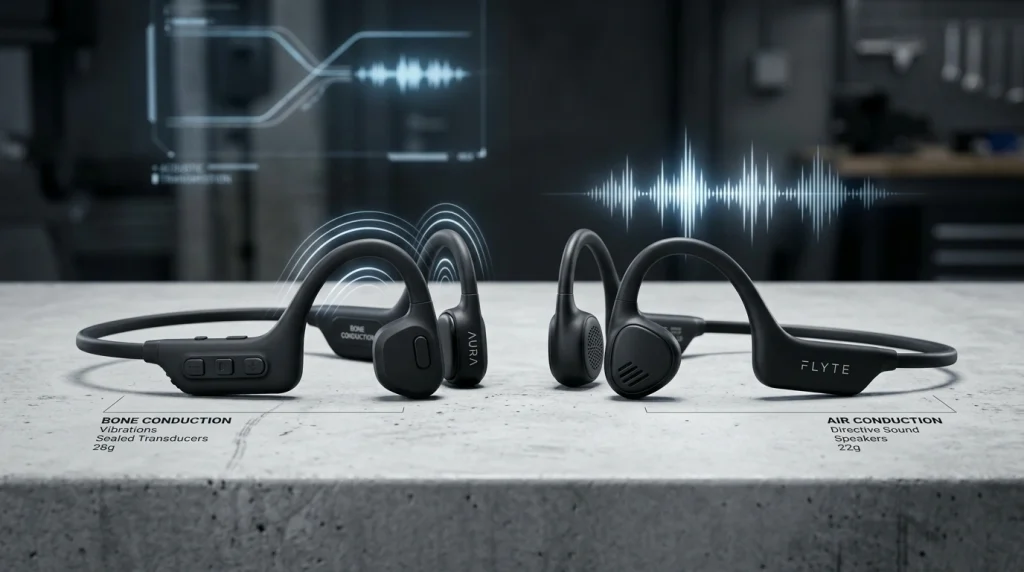
When comparing bone conduction vs air conduction headphones, the primary difference lies in sound transmission: bone conduction headphones bypass the eardrum by transmitting sound vibrations directly through the skull bones to the inner ear, whereas air conduction headphones project sound waves through the air into the ear canal using directional micro-speakers. For professional buyers sourcing via a bone conduction headphones manufacturer, bone conduction offers superior situational awareness, structural longevity, and true IPX8 waterproofing for swimming applications.
Detailed Answer
Understanding the acoustic and mechanical divergence between bone conduction and open-ear air conduction technologies is essential for any B2B buyer, e-commerce brand, or Amazon importer. While both categories dominate the rapidly expanding open-ear sports audio market, their internal architectures, manufacturing processes, and target user bases differ significantly.
Bone conduction technology utilizes electromechanical transducers (frequently referred to as bone vibrators) that convert audio signals into physical mechanical vibrations. These components press against the user’s cheekbones or temporal bones, passing the sound directly to the cochlea via cranial bone conduction. This completely bypasses the outer ear and tympanic membrane (eardrum). From a production standpoint, a specialized bone conduction headphones manufacturer must maintain strict tolerances during transducer housing assembly to minimize stray sound leakage while maximizing vibrational efficiency.
Conversely, open-ear air conduction headphones use miniature, highly directional dynamic drivers or balanced armature speakers situated just outside or above the ear canal. They project acoustic waves through the air directly toward the ear drum, utilizing targeted wave-cancellation algorithms to prevent nearby individuals from hearing the audio. This method relies heavily on acoustic tuning and precise speaker placement rather than mechanical vibration.
For international distributors looking to launch private label bone conduction headphones, the differentiation affects product positioning. True bone conduction headphones provide an entirely open-ear experience, making them the preferred choice for extreme sports, runners, and industrial environments where environmental awareness is a safety requirement. Furthermore, because bone conduction units feature fully sealed enclosures without open speaker grills, they are structurally optimal for aquatic sports. If your brand aims to sell to swimmers, partnering with an established swimming headphones manufacturer ensures access to fully encapsulated designs capable of handling continuous submersion. Air conduction alternatives, due to their necessary acoustic ports, struggle to achieve true long-term IPX8 waterproofing.
Comparison Table
| Feature / Parameter | Bone Conduction Headphones | Air Conduction (Open-Ear) Headphones |
| Sound Transmission Method | Mechanical vibrations through cranial bones directly to the cochlea | Acoustic sound waves propelled through air into the ear canal |
| Acoustic Component | Sealed magnetic or piezoelectric transducers | Directional dynamic or balanced armature micro-speakers |
| Waterproofing Capacity | Easily achieves true IPX8 (fully sealed, seamless housing) | Typically limited to IPX4–IPX7 due to open acoustic grilles |
| Audio Profile Focus | Mid-range and high frequencies, clear vocals for sports safety | Superior bass response and natural wider soundstage |
| Target Sourcing Cost | Higher due to specialized transducer components and assembly | Lower component costs for standard dynamic moving coils |
| Primary Use Cases | Swimming, running, cycling, high-noise industrial work | Casual gym use, office settings, daily commuting |
Industry Insight
From a B2B supply chain perspective, product differentiation is a core driver for profit margins on platforms like Amazon. Air conduction models have lower entry barriers, flooding the low-end market with generic public molds. Conversely, manufacturing high-performance OEM bone conduction headphones requires sophisticated testing equipment, such as artificial mastoids, to measure vibrational frequency response and force levels accurately. Developing proprietary structural molds for ODM bone conduction headphones allows premium brands to escape price wars by offering unique ergonomic fits and reduced acoustic leakage. Wholesalers and sourcing agents should note that true bone conduction commands higher retail price points and better customer retention in the premium fitness segment, balancing out the slightly higher initial Bill of Materials (BOM) costs.
Buyer Tips
- Evaluate the Waterproof Structure: If you plan to market products for watersports, verify the engineering design with your swimming headphones manufacturer. Ensure the unit uses internal flash memory because Bluetooth cannot penetrate water effectively.
- Audit Acoustic Leakage Technologies: Request samples to evaluate structural sound leakage. Premium suppliers utilize anti-phase sound wave cancellation or physical sealing structures to contain audio privacy.
- Check Structural Materials: High-quality sports headphones must use nickel-titanium memory alloy wires covered in medical-grade silicone to guarantee structural durability during repetitive twisting.
- Verify Certification Portfolios: Ensure the factory can supply independent test documentation for CE, FCC, RoHS, and battery MSDS sheets registered under valid manufacturing entities.
Common Mistakes
- Confusing Air Conduction for True Bone Conduction: Sourcing low-cost open-ear air conduction models labeled deceptively as bone conduction leads to immediate negative customer reviews on Amazon regarding poor waterproofing and excessive sound leakage.
- Overlooking Patent Risk Profiles: Sourcing unverified models without examining the engineering background of ODM bone conduction headphones exposes your listing to intellectual property claims from patent holders over specific transducer designs.
- Skipping Pre-Shipment Inspection: Neglecting to hire a third-party QC agency to inspect the final batch under your private label bone conduction headphones brand risks receiving sub-standard inventory with loose transducer housings or mismatched acoustic profiles.
Recommended Internal Links
Related Questions
- How do I test if an open-ear headphone uses genuine bone conduction or air conduction?
- Why do bone conduction headphones require built-in memory for swimming?
- What are the typical development timelines for custom ODM bone conduction headphones?
- Can I customize the Bluetooth pairing name on private label sports headphones?
Summary
In summary, choosing between these two open-ear technologies depends heavily on your brand’s market strategy and target audience. For brands aiming to target professional athletes and swimmers, partnering with an experienced manufacturer to launch private label bone conduction headphones delivers unmatched structural reliability and true waterproofing. While high-quality OEM bone conduction headphones require a larger initial investment and structured factory MOQ commitments compared to generic air conduction lines, the resulting premium market positioning protects your business from intense e-commerce price competition and ensures sustainable, long-term brand equity.