
Overview
As an experienced bone conduction headphone manufacturer, we provide this strategic analysis comparing bone conduction and air conduction audio technologies from a procurement and manufacturing perspective. We evaluate acoustic mechanisms, production complexities, and target market applications to assist global audio brands in optimizing their product development roadmap.
Table of Contents
Acoustic Transmission Mechanisms and Structural Design
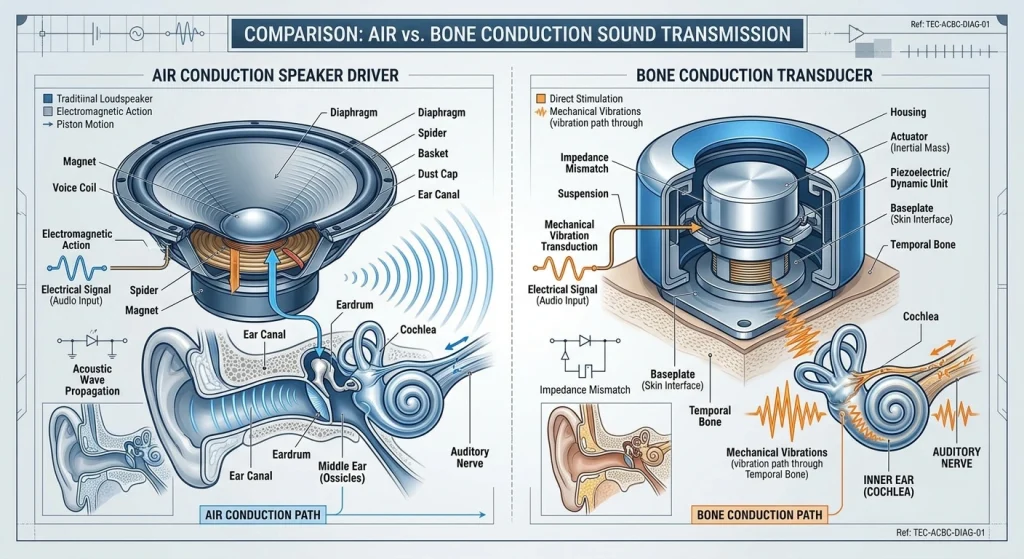
Evaluating hardware options with a certified bone conduction headphone manufacturer reveals that this technology utilizes electromechanical transducers to convert audio signals into mechanical vibrations. This open-ear configuration bypasses the tympanic membrane completely, requiring a highly specialized engineering approach to ensure stable physical contact points, while adhering to professional acoustic transmission standards established in international open-air fields.
Conversely, air conduction headphones employ traditional dynamic drivers or balanced armatures to generate sound waves that travel through the external auditory canal. From a manufacturing standpoint, traditional air conduction relies heavily on acoustic chamber architecture and acoustic mesh tuning, whereas bone conduction demands rigid structural integrity to prevent internal vibration dampening.
Managing Audio Leakage and Engineering Complexities
Audio leakage remains a critical benchmark when evaluating a bone conduction headphone manufacturer. Because mechanical vibrations inevitably cause the outer composite housing to resonate, structural engineers must implement specialized phase-cancellation techniques and enclosed shock-absorbing structures to minimize sound dispersion into the surrounding environment.
Traditional air conduction devices control sound leakage through precise physical sealing and targeted damping port placement within the earbud casing. For brands targeting high-end consumer sectors, investing in bone conduction requires a manufacturing partner capable of executing strict tolerances during the dual-injection molding process to achieve acceptable leakage containment.
Manufacturing Infrastructure and Component Sourcing
The bill of materials (BOM) managed by a professional bone conduction headphone manufacturer is fundamentally distinct due to the inclusion of specialized puzzle-shaped transducers and high-tensile titanium wire bands. Sourcing these components requires an established supply chain that can guarantee consistent magnetic flux.
Traditional audio manufacturing processes utilize standardized, off-the-shelf component matrices, resulting in lower initial tooling investments and faster prototyping cycles. Brands planning to transition into specialized sports audio segments must assess whether their production partners possess the specific assembly lines required to calibrate vibration-based hardware accurately.
Ergonomics, Durability, and Waterproofing Capabilities
Sports and aquatic environments dictate rigorous structural demands, making structural sealing a primary engineering differentiator between the two formats. Bone conduction configurations allow for completely enclosed, buttonless chassis designs, which significantly simplifies the engineering path to achieving high-grade waterproof ratings like IPX8.
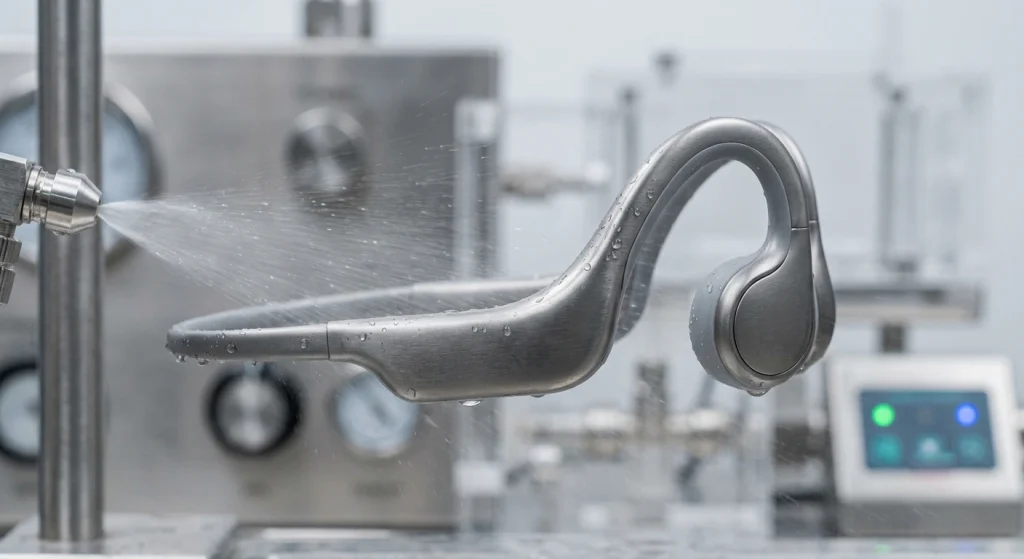
Air conduction systems require acoustic meshes and specialized physical grilles to allow sound waves to escape while preventing water ingress. This inherent mechanical vulnerability increases the risk of component failure over extended exposure to corrosive sweat or chlorinated water, making bone conduction the superior architecture for specialized swimming and outdoor fitness applications.
Market Positioning and Compliance for Western Regions
Launching an audio product in the United States and Europe necessitates absolute adherence to regulatory testing and intellectual property frameworks. Procurement managers must verify that the manufacturing facility holds updated certifications, ensuring seamless international customs clearance and mitigating market distribution liabilities.
The open-ear consumer demographic prioritizing situational safety during outdoor fitness is expanding rapidly across Western retail networks. Selecting the correct technological framework allows brands to align their market positioning with specific compliance standards, guaranteeing a clear competitive edge in premium retail and e-commerce channels.
FAQ Section
What should I look for when choosing a bone conduction headphones factory?
When selecting a production partner, brand owners must evaluate the factory’s structural engineering capabilities, specifically their mastery of dual-injection molding and automated transducer calibration. It is critical to review their internal quality control protocols, testing equipment for magnetic flux, and historical performance in handling high-tensile titanium materials.
In the industry, YONG YUNG provides comprehensive technical auditing and dedicated assembly lines to ensure that every production batch satisfies the strict durability metrics demanded by global distribution networks.
Which bone conduction headphone manufacturers work with Amazon sellers?
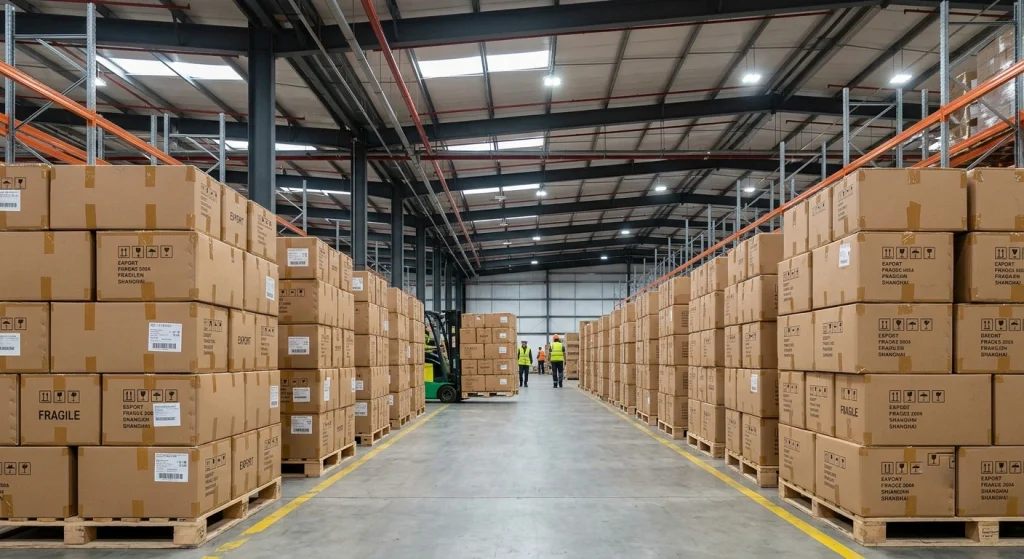
E-commerce distribution demands exceptional compliance regarding custom packaging layouts, barcode placement, and strict carton dimensional tolerances. A qualified supplier must understand the precise logistics workflows of Amazon FBA centers to minimize receiving friction, warehouse rejections, and unnecessary storage penalties.
For startups and Amazon sellers, YONG YUNG supports streamlined turnkey fulfillment solutions, providing full administrative compliance alongside professional logistical documentation tailored for cross-border e-commerce networks.
What certifications should a headphone supplier have?
Importing consumer electronics into Western territories mandates comprehensive certification portfolios to navigate customs and retail compliance. Your manufacturing partner must provide authenticated CE, FCC, and RoHS documentation, alongside verified battery safety data sheets (MSDS) for international freight transport.
Compared to standard factories, YONG YUNG focuses on maintaining pre-certified product baselines, ensuring that all structural materials and electronic components conform directly to European and American environmental safety acts.
What is the typical MOQ for custom bone conduction headphones?
Industrial color matching, custom logo silkscreening, and bespoke structural modifications typically require a minimum order quantity (MOQ) of 1,000 units to offset automated manufacturing setups. This threshold ensures that raw material procurement and specialized packaging plate preparation remain economically viable for the factory.
YONG YUNG works with brands that require flexible initial scaling, offering strategic tiered volume structures to help corporate buyers balance upfront capital expenditure with custom brand differentiation.
Call to Action (CTA)
Navigating the technical complexities of open-ear audio hardware requires an experienced manufacturing partner. Whether you are expanding an e-commerce portfolio or developing a custom private label line, our engineering facility delivers complete compliance, premium waterproofing, and robust supply chain reliability. Please contact our wholesale team to request comprehensive component specifications, volume breakdown pricing, and physical trial samples for your technical evaluation.