
Quick Answer
Choosing a reliable OEM bone conduction headphones supplier requires evaluating manufacturing experience, product quality, certification capability, customization options, MOQ requirements, and after-sales support. A qualified supplier should provide stable production, transparent communication, reliable testing processes, and experience supporting brands, distributors, and Amazon sellers with OEM and ODM projects.
Detailed Answer
Selecting the right supplier is one of the most important decisions when developing bone conduction audio products. Unlike standard consumer electronics, bone conduction headphones involve specialized acoustic components, vibration transducers, waterproof structures, battery systems, and ergonomic designs. Understanding how bone conduction technology works helps buyers better evaluate supplier engineering capabilities.. A supplier’s engineering capability directly affects product reliability, user experience, and long-term brand reputation.
The first factor to evaluate is manufacturing experience. A professional bone conduction headphones manufacturer should have a proven understanding of open-ear acoustic technology, including transducer performance, vibration efficiency, sound leakage control, and structural durability. Suppliers with experience in sports audio products usually have better knowledge of outdoor requirements such as sweat resistance, lightweight materials, and stable wearing comfort.
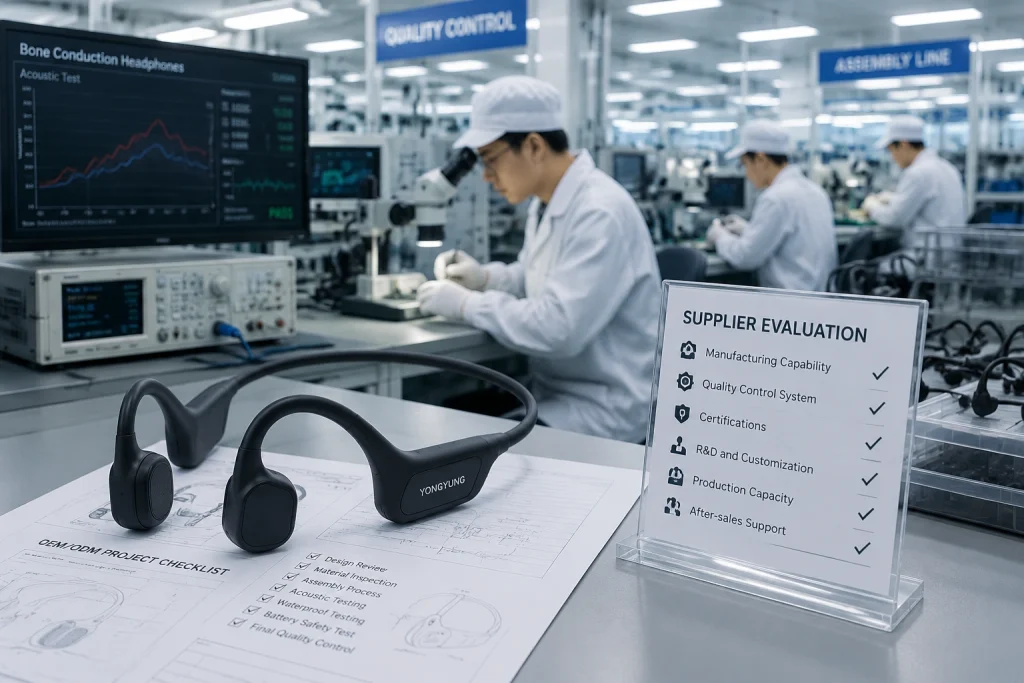
Production capability is another key consideration. Brands should review whether a supplier operates its own factory or relies heavily on third-party production. A reliable factory should have clear production processes covering material inspection, assembly, acoustic testing, waterproof testing, aging tests, and final quality inspections. These processes reduce the risk of inconsistent batches and customer complaints.
Customization capability is also important for companies looking for OEM bone conduction headphones. Depending on the business stage, buyers may require different levels of customization, from logo printing and packaging design to hardware adjustments and complete product development. Suppliers offering both OEM and ODM bone conduction headphones services can support brands from simple customization to full product creation.
Certification and compliance should also be verified before cooperation. International buyers should confirm whether the supplier can support required certifications such as CE, FCC, RoHS, Bluetooth qualification, and waterproof testing reports. This is especially important for brands selling through global marketplaces or regional distributors.
MOQ is another practical factor. A supplier with flexible MOQ options allows startups and growing brands to test the market before committing to large inventory. However, extremely low MOQ offers may indicate limited customization capability or unstable production resources. Buyers should balance order quantity with product requirements, pricing, and quality expectations.
Communication and project management are often overlooked. A reliable supplier should provide clear timelines, technical feedback, sample updates, and production tracking. For brands developing private label bone conduction headphones, efficient communication can significantly reduce development delays and unexpected costs.
For specialized categories such as swimming audio products, buyers should also evaluate whether the supplier has experience as a swimming headphones manufacturer. Waterproof audio products require additional sealing technology, battery protection, and reliability testing compared with regular sports headphones.
Comparison Table
| Supplier Evaluation Factor | What Buyers Should Check | Importance |
|---|---|---|
| Manufacturing Experience | Bone conduction technology experience, factory history, previous projects | High |
| Quality Control | Acoustic testing, waterproof testing, production inspection process | High |
| Customization Capability | Logo, packaging, firmware, hardware, industrial design options | High |
| MOQ Flexibility | Suitable order quantities for startups and established brands | Medium |
| Certification Support | CE, FCC, RoHS, Bluetooth, IP rating documents | High |
| Communication Ability | Response speed, project management, technical support | Medium |
Industry Insight
The global demand for open-ear audio products continues to grow as consumers seek safer and more comfortable listening solutions for sports, outdoor activities, and professional environments. For brands entering this market, selecting the right supplier is not only about finding the lowest production price but also about securing consistent quality and technical support.
Experienced suppliers can help reduce development risks by providing mature designs, optimized components, and manufacturing knowledge. In competitive markets, companies that cooperate with capable OEM partners are more likely to build reliable products, maintain customer satisfaction, and expand their product lines efficiently.
Buyer Tips
- Review the supplier’s previous bone conduction projects and request product samples before placing bulk orders.
- Confirm testing capabilities, including waterproof performance, battery reliability, acoustic testing, and production quality inspections. Buyers should also understand international IP waterproof rating standards when evaluating suppliers.
- Evaluate whether the supplier can provide OEM and ODM support based on your brand’s development stage.
- Verify certifications and compliance documents required for your target markets before mass production.
- Discuss MOQ, lead time, packaging requirements, and customization details clearly before signing agreements.
Common Mistakes
- Choosing suppliers only based on the lowest price without checking manufacturing capability and quality control systems.
- Ignoring sample testing and moving directly into mass production without verifying sound quality, comfort, and durability.
- Selecting a supplier without confirming experience in international markets, certifications, and export requirements.
Recommended Internal Links
Related Questions
- What certifications should an OEM bone conduction headphones supplier provide?
- What is the typical MOQ for private label bone conduction headphones?
- What is the difference between OEM and ODM bone conduction headphones?
- How long does it take to develop custom bone conduction headphones?
- How can buyers verify a bone conduction headphones manufacturer before ordering?
Summary
Choosing a reliable supplier requires more than comparing prices. Brands should evaluate technical expertise, production capability, quality control, certifications, MOQ requirements, and communication reliability. A qualified bone conduction headphones manufacturer can support product development from initial concepts to large-scale production. Whether choosing OEM bone conduction headphones, ODM solutions, or private label bone conduction headphones, the right supplier helps reduce risks and create competitive products for global markets. Careful supplier evaluation ensures better quality, predictable timelines, and long-term business growth.