
Quick Answer
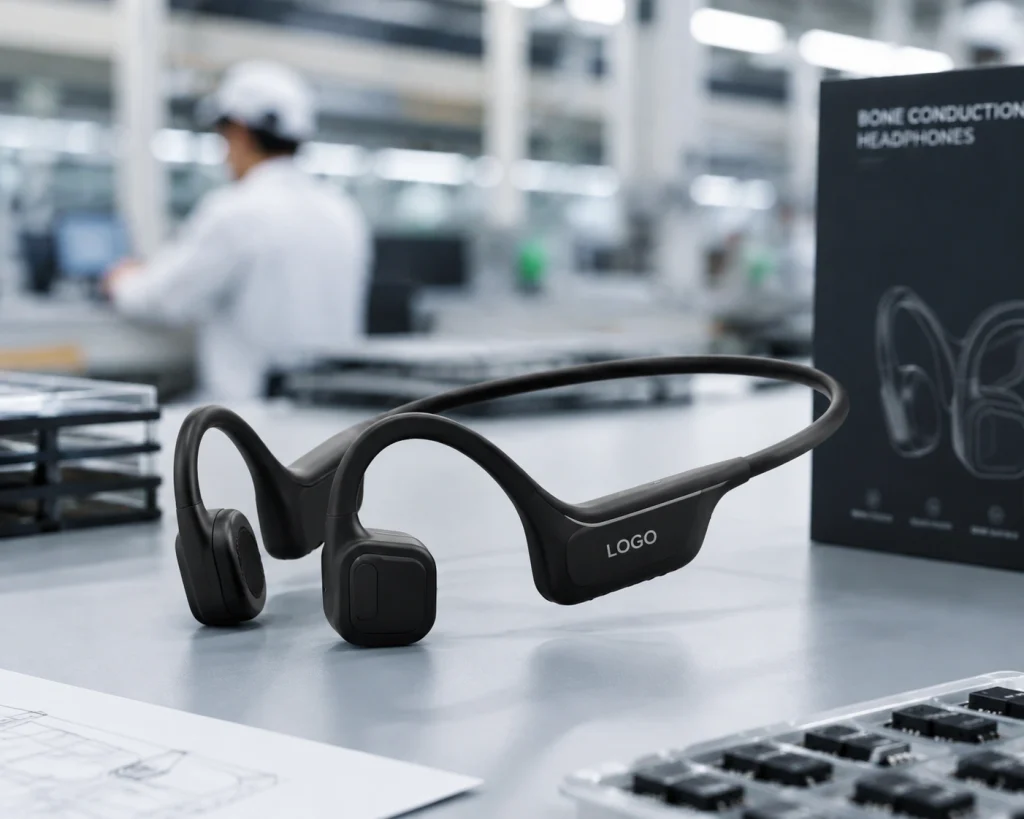
OEM (Original Equipment Manufacturer) bone conduction headphones are open-ear audio devices designed and manufactured by a specialized factory, which are then customized, branded, and sold under another brand’s name. Under this model, a B2B buyer or Amazon seller utilizes the manufacturer’s pre-existing physical molds, internal circuits, and engineering designs to launch high-quality sports and swimming headphones quickly without investing in expensive, custom injection tooling.
Detailed Answer
To understand OEM bone conduction headphones, it is essential to first understand how the core technology operates. Unlike traditional audio designs that rely on air conduction to pass sound waves through the outer ear canal, bone conduction technology utilizes specialized mechanical transducers (vibrators). These transducers convert electrical signals into physical vibrations that travel directly through the cheekbones to the temporal bone, bypassing the need to enter the inner ear (cochlea). Learn more about how bone conduction technology works.
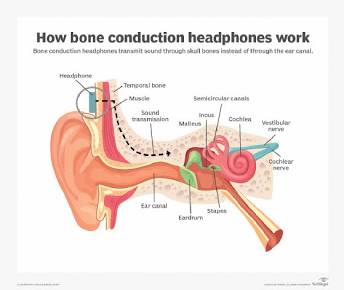
Anatomy Guide: Bone Conduction Sound
Transmission Pathway. 来源:TechTarget
For global brands, importers, and e-commerce retailers, developing these delicate acoustic instruments from scratch is highly cost-prohibitive. Choosing a reliable bone conduction headphones manufacturer allows brands to bypass the millions of dollars required for initial research, development, and acoustic tuning.
Under an OEM arrangement, the manufacturing factory owns the proprietary structural design (the physical plastic or silicone molds) and the internal electronic assembly (the Printed Circuit Board or PCB). The factory provides this ready-to-use hardware platform as a baseline, which buyers can customize to fit their brand identity.
Customization options under an OEM model typically include:
- Custom Logo Placement: Pad-printing or laser-engraving the buyer’s brand logo on the headphone frame or battery compartment.
- Aesthetic Adjustments: Modifying the outer silicone skin to match custom Pantone colorways.
- Firmware Tuning: Customizing the Bluetooth broadcast name and localized voice prompt systems (e.g., custom voice recordings for power on, connection, or low battery).
- Retail Packaging: Designing a unique retail box, customized instructions, and branded carrying accessories.
While OEM bone conduction headphones rely on pre-existing physical structures, ODM bone conduction headphones involve the factory engineering a completely new, proprietary physical housing and PCB layout from the ground up. For the majority of consumer brands, utilizing OEM services offers a significantly faster time-to-market and lower capital risk. This model is especially beneficial when entering highly demanding niches, where working with a specialized swimming headphones manufacturer ensures that the standardized waterproof designs have already undergone rigorous pressure-chamber testing to guarantee a reliable IPX8 rating. Sourcing private label bone conduction headphones via an OEM model is therefore the most efficient bridge between technical audio engineering and successful brand commercialization.
Comparison Table
| Customization Tier | Typical MOQ | Key Modifications Included | Best Suited For |
| Basic OEM (Logo Only) | 300–500 units | Laser-engraved brand logo, default firmware, standardized retail packaging. | Amazon start-ups and regional niche testing. |
| Standard OEM (Custom Packaging) | 500–1,000 units | Logo on device, custom designed retail box, translated custom user manuals. | Mid-market brands and established regional distributors. |
| Deep OEM (Full Brand Assets) | 1,000–2,000 units | Custom Bluetooth pairing name, customized voice prompts, custom Pantone colors, custom packaging. | Growing electronics brands and national importers. |
| Full ODM (Custom Tooling) | 2,000+ units | Custom physical housing design, bespoke PCB architecture, proprietary acoustic structure. | Large enterprise brands and professional athletic agencies. |
Industry Insight
The global market for sports audio has experienced a massive shift toward open-ear wearability. Consumers actively prioritize situational safety during outdoor runs, cycling, and water sports, driving a surge in demand for durable, open-ear options. For B2B procurement managers, this shift requires a deeper focus on quality control over simple unit pricing. Defect rates in low-cost bone conduction units are historically high due to poor seal integrity and weak transducer housing, which lead to sweat and water ingress. Partnering with an experienced bone conduction headphones manufacturer guarantees that the patented structural seals and internal nano-coatings are compliant with international IPX ratings. This structural reliability is crucial for products meant for aquatics, where choosing an elite swimming headphones manufacturer is essential to prevent high return rates and protect brand health on global marketplaces.
Buyer Tips
- Verify Patent Clearances: Bone conduction and open-ear transducer designs are heavily protected by global utility patents. Ensure your manufacturing partner holds legitimate licenses and design patents in your target sales regions (such as the US and EU) to avoid legal challenges or listing removals on e-commerce platforms.
- Demand Real IPX8 Verification: If sourcing for swimmers, require a certified waterproof test report. True IPX8 requires continuous immersion in water under pressure, which is technically difficult to achieve without specialized vacuum-sealing machinery during factory assembly.
- Test the Transducer Leakage Rate: Lower-grade bone conduction devices often act as micro-speakers, leaking sound to the surrounding environment. Request physical pre-production samples to evaluate sound leakage at 70% volume; professional-grade designs incorporate physical phase-inversion systems to minimize sound leakage.
- Plan for Lithium Battery Logistics: Bone conduction headphones contain built-in rechargeable batteries. Confirm that your manufacturer provides updated UN38.3, MSDS, and IEC62133 certifications to ensure seamless sea or air freight customs clearances.
Common Mistakes
- Underestimating MOQ Negotiation Flexibility: Many procurement teams assume minimum order quantities are set in stone. In reality, factories are often willing to lower initial device MOQs if you pay for the custom retail packaging (e.g., ordering 1,000 packaging boxes but only assembling 300 headphones in the first production run).
- Failing to Test Multi-Device Bluetooth Interferences: Low-cost chipsets frequently experience dropouts in crowded urban environments. Always test samples in high-interference areas to ensure your brand’s devices utilize stable, modern Bluetooth versions (Bluetooth 5.3 or higher).
- Confusing Air Conduction with True Bone Conduction: Some low-cost suppliers try to pass off directional “air conduction” frames as true bone conduction. True bone conduction does not have open acoustic speaker grills pointing toward the ear; it relies on smooth, sealed contact pads to vibrate the bone structure directly.
Recommended Internal Links
Related Questions
- What is the difference between OEM and ODM bone conduction headphones?
- What certifications are required to import bone conduction headphones into the US and European markets?
- How does a swimming headphones manufacturer test for true IPX8 waterproof compliance?
- What is the average manufacturing lead time for private label bone conduction headphones?